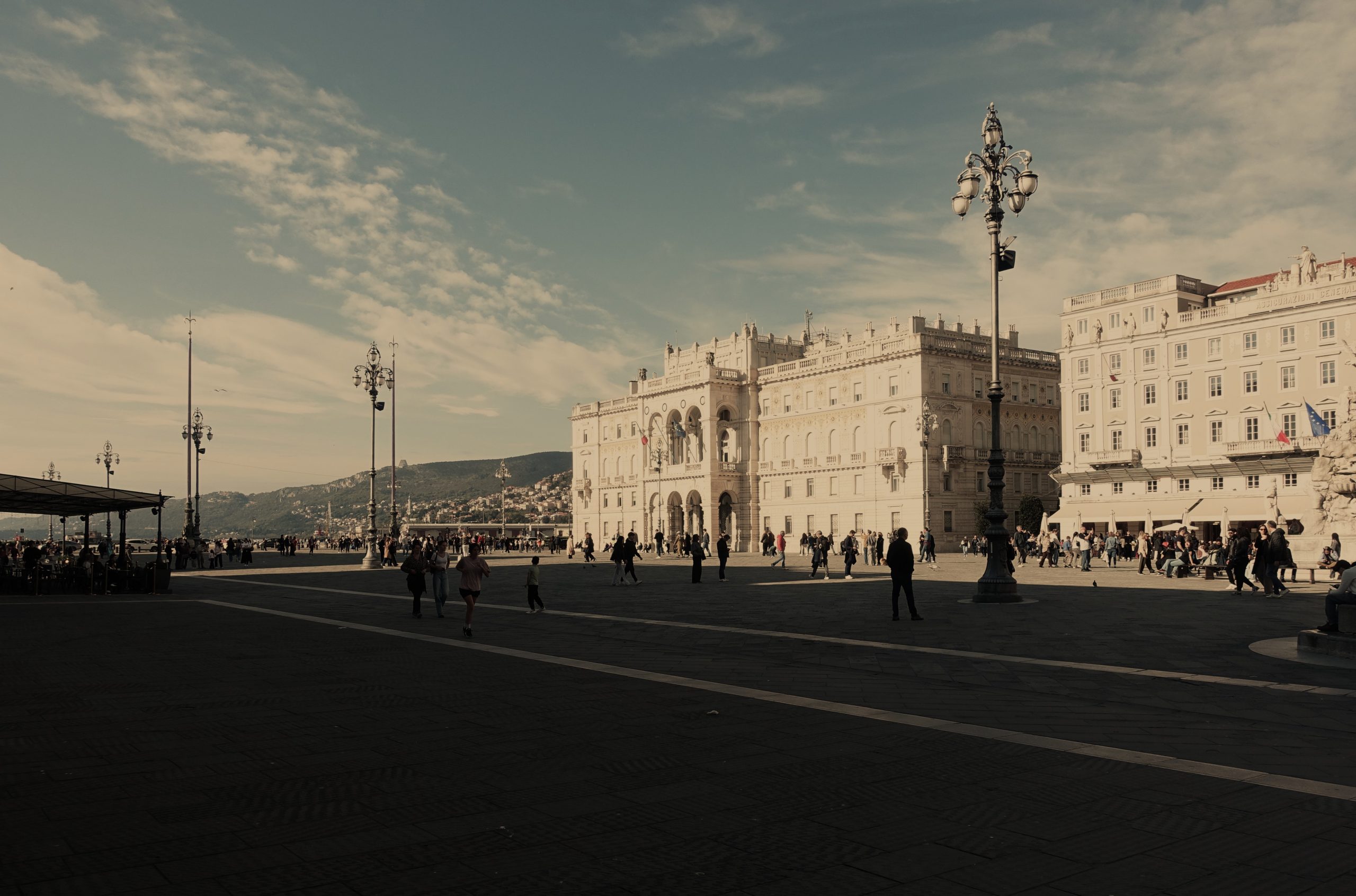
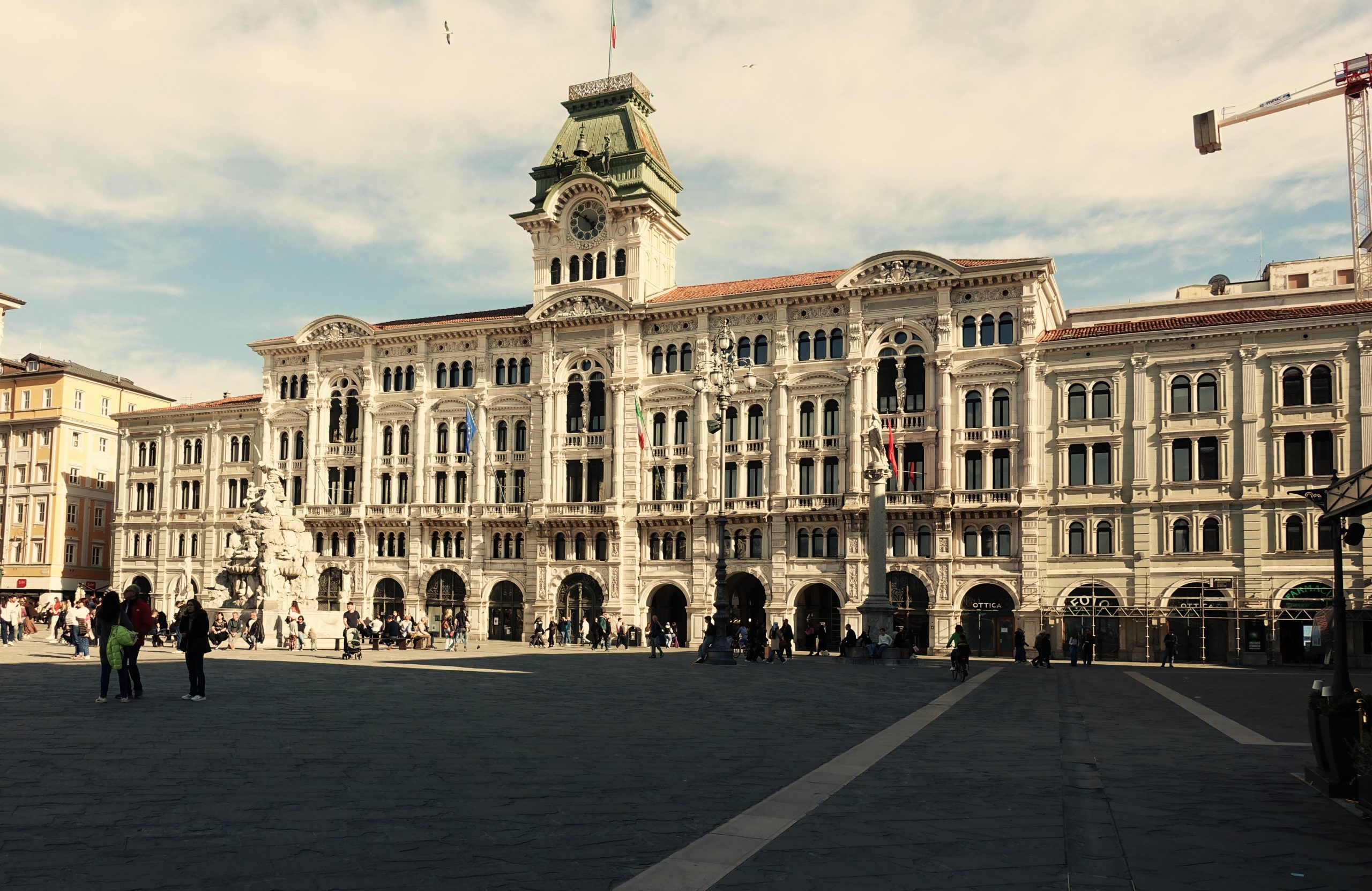
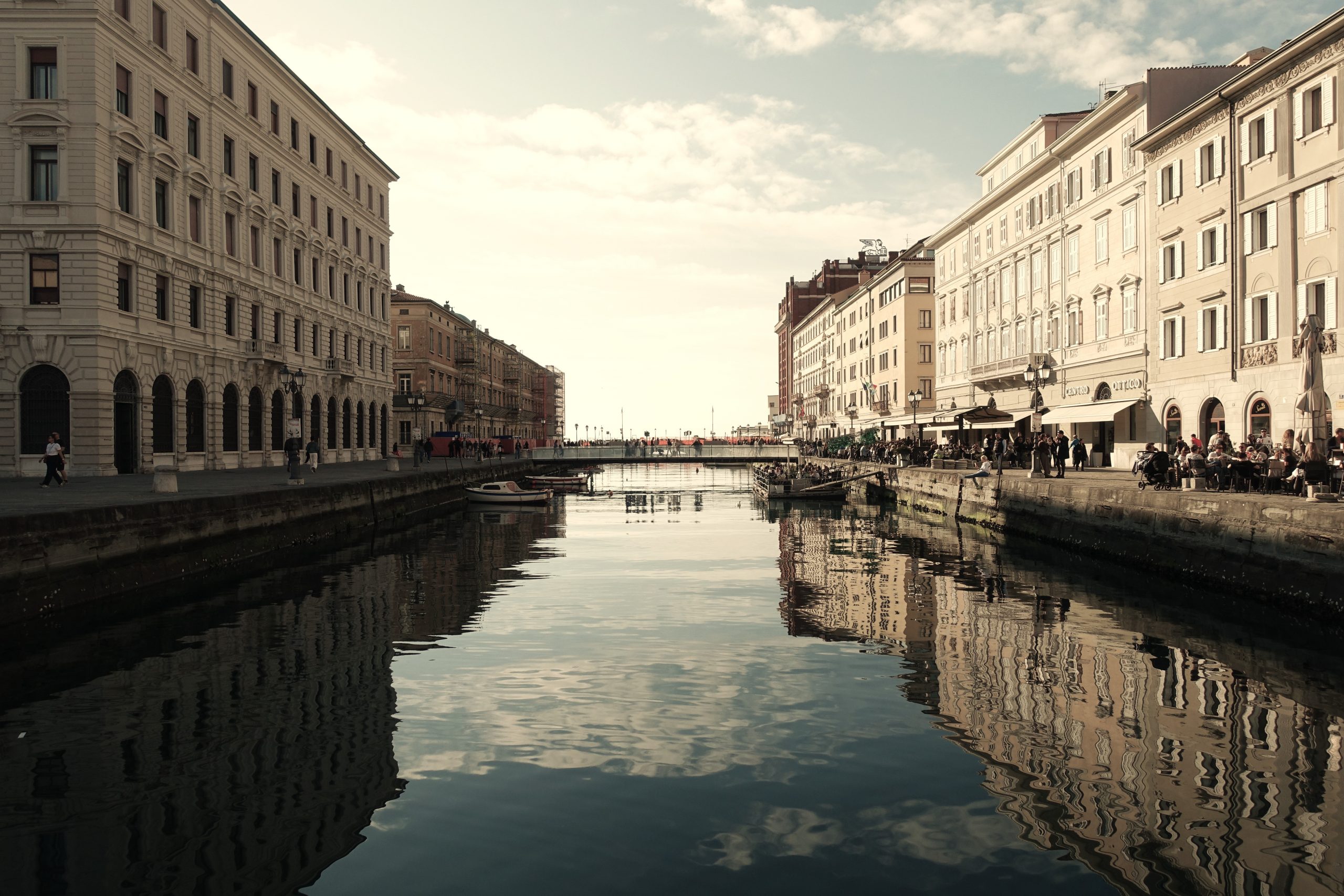
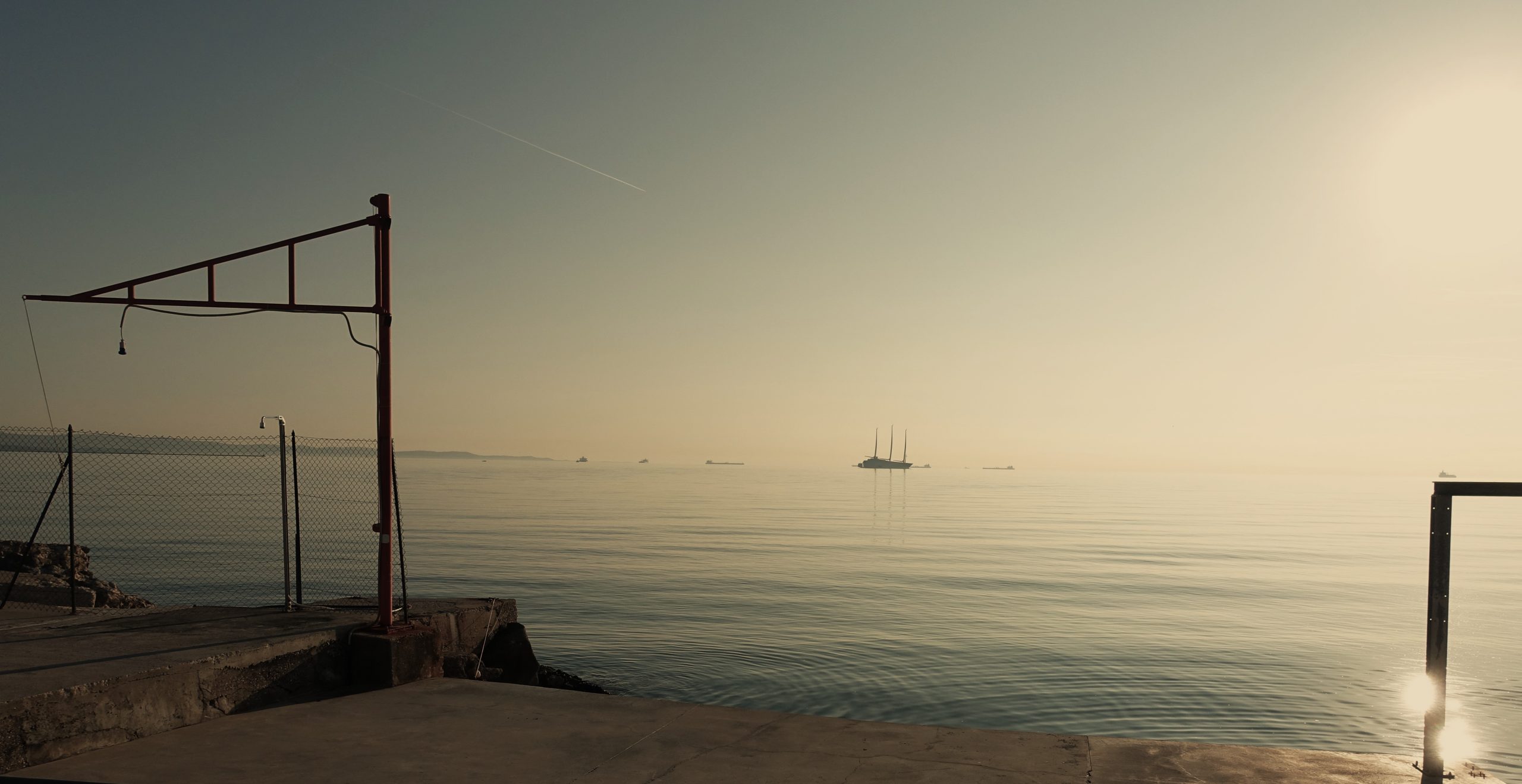
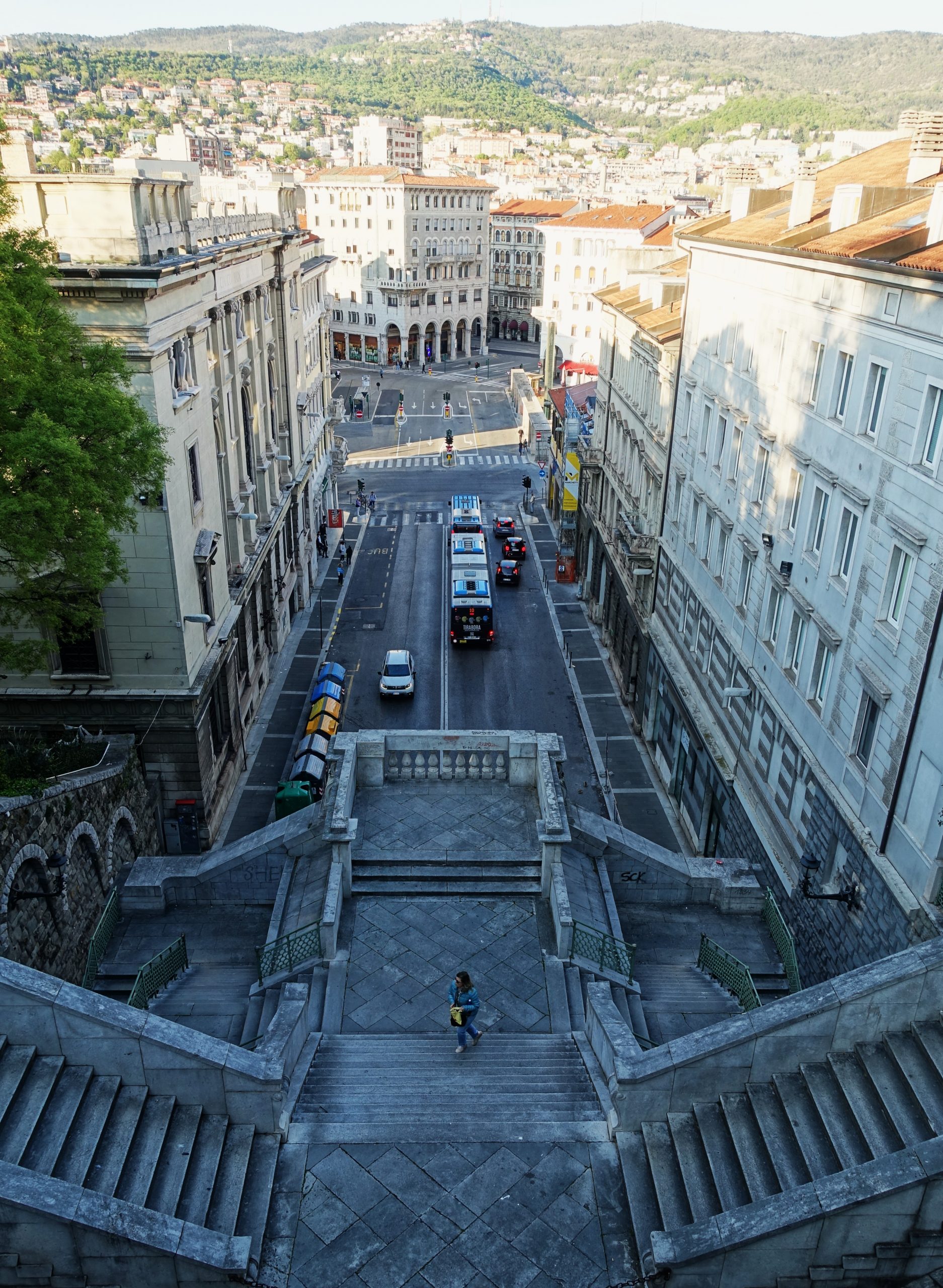
The city of Trieste is a beauty—architecturally impressive, with great craft shops. The best of them is Vud, where a highly skilled master of woodcutting and his lovely wife sell their… well, call it art… but it’s highly useful in every kitchen.
Food was not as good as in southern Italy, and yet don’t miss out on San Marco Café, one of the most beautiful cafés I’ve ever had coffee in. And again, the coffee was not exactly a masterpiece of barista-ship…, but the place has the overdecorated grandezza of the old Austro-Hungarian Kingdom, which Trieste was part of until 1918.
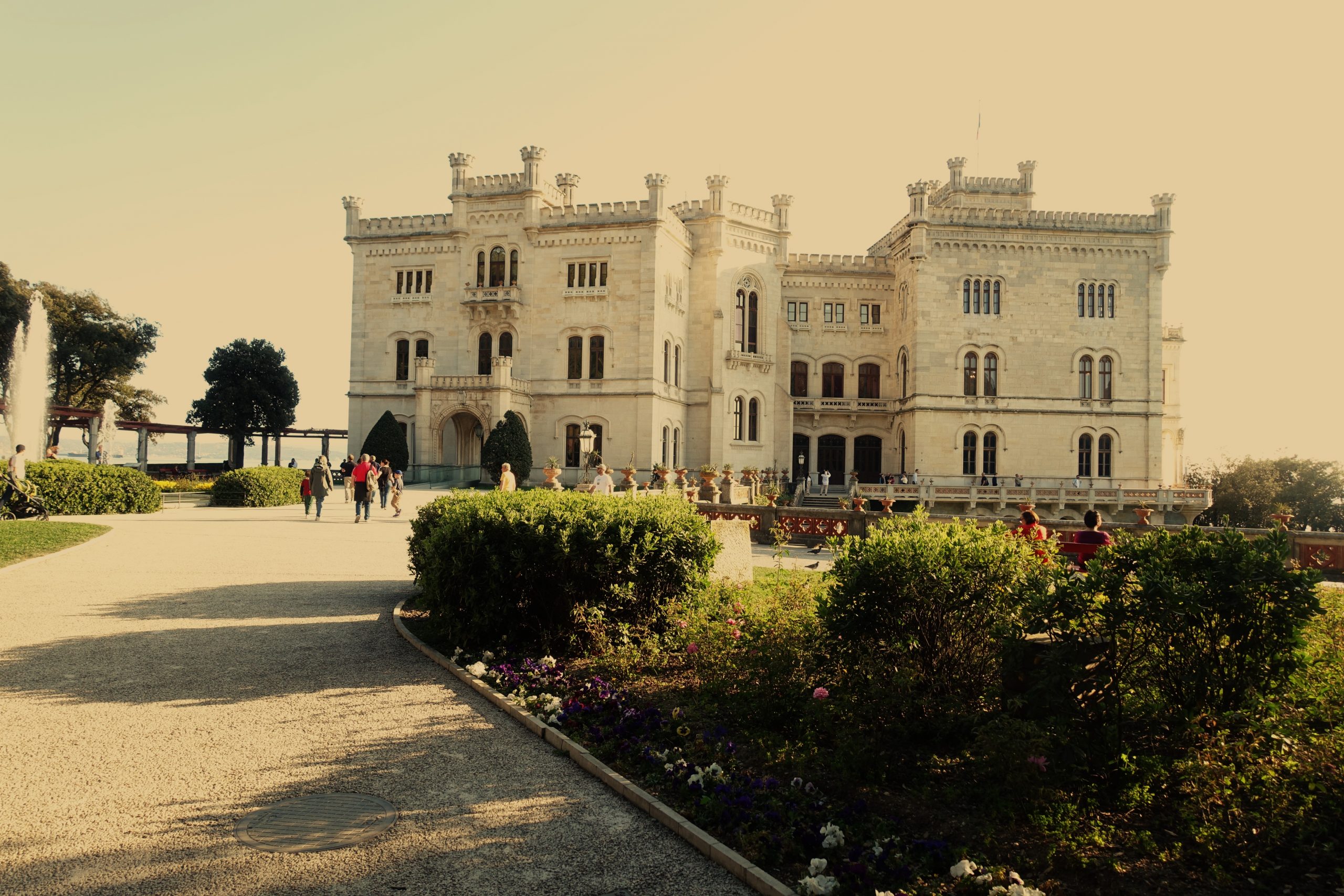
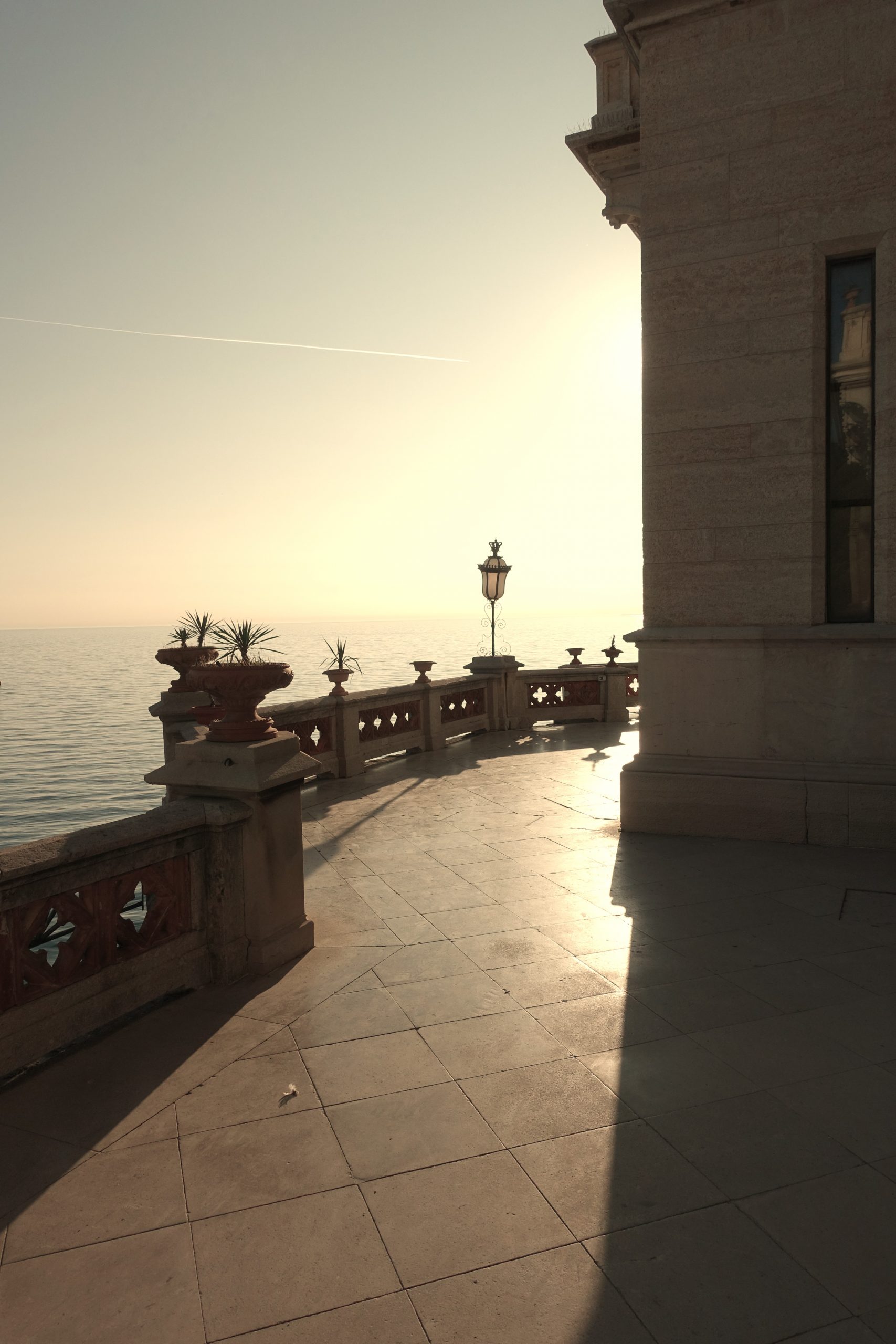
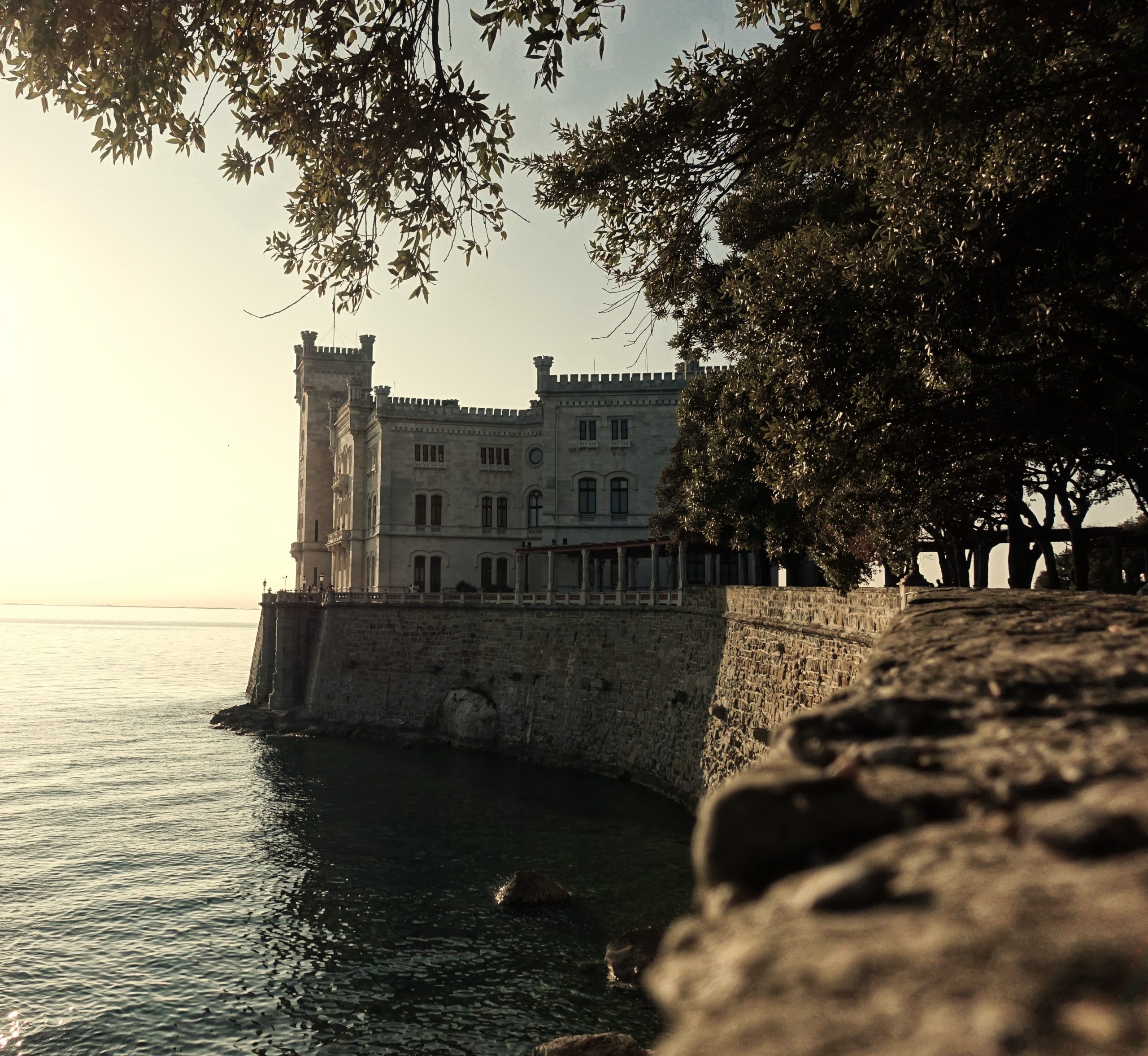
So the real gem was Miramare, a beautiful palace built by the Emperor’s brother, Ferdinand Maximilian, the Archduke of Austria until 1860. It looks like it’s straight out of a fairy tale, and the surrounding park is worth more than a stroll. Best take a book and a blanket and sprawl on the ground, as the many Italians do here (as Trieste seems to be mainly a destination for Italian tourists). There is also a museum inside the castle, and since all this is located on the Adriatic Sea, it forms a highly protected sanctuary for the very biodiverse nature here. There is also a highly interactive museum dealing with maritime matters.
This is a city I will definitely return to.
Liked this post? Email me to say hi and I’ll sign you up for more articles like this: send mail
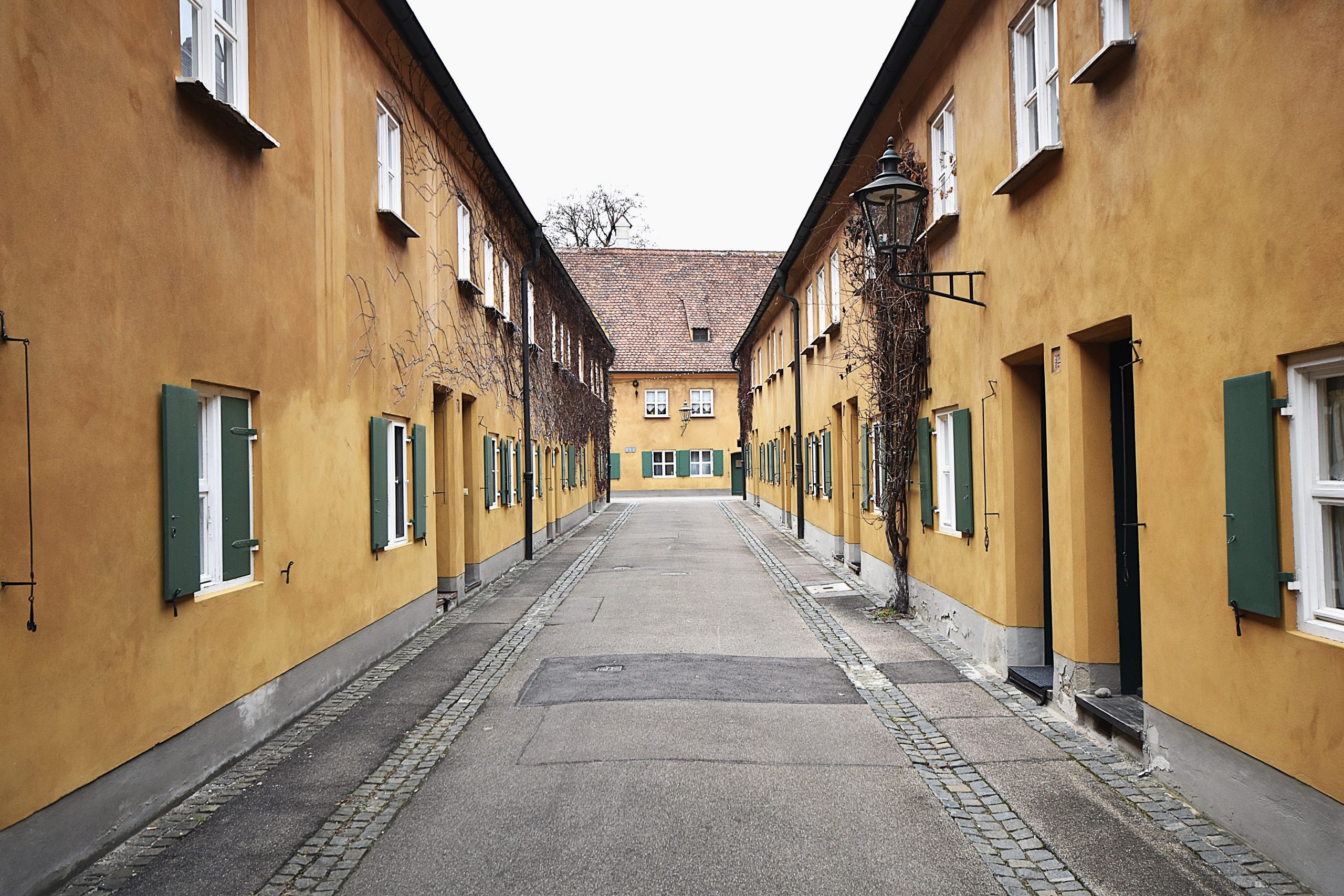
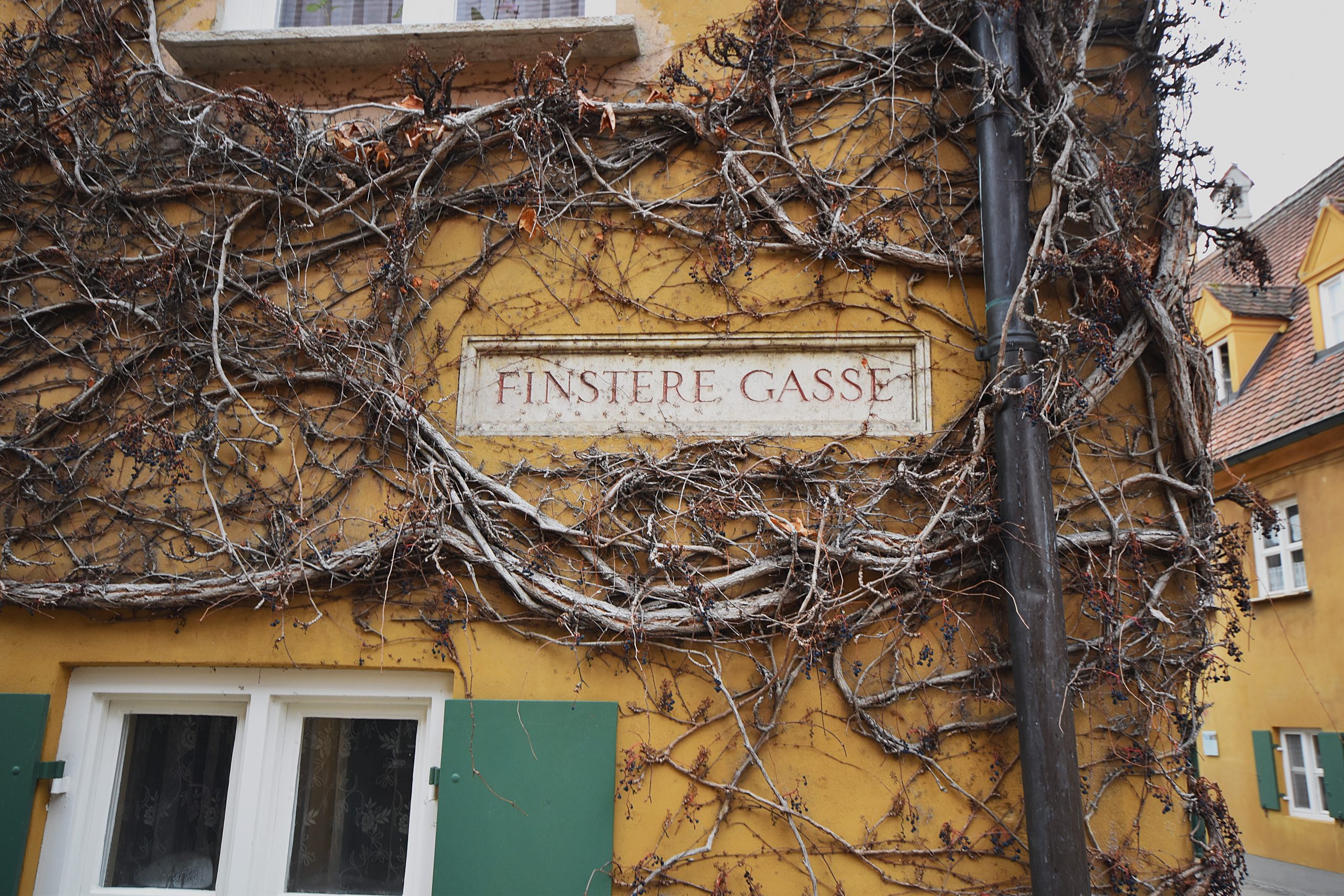
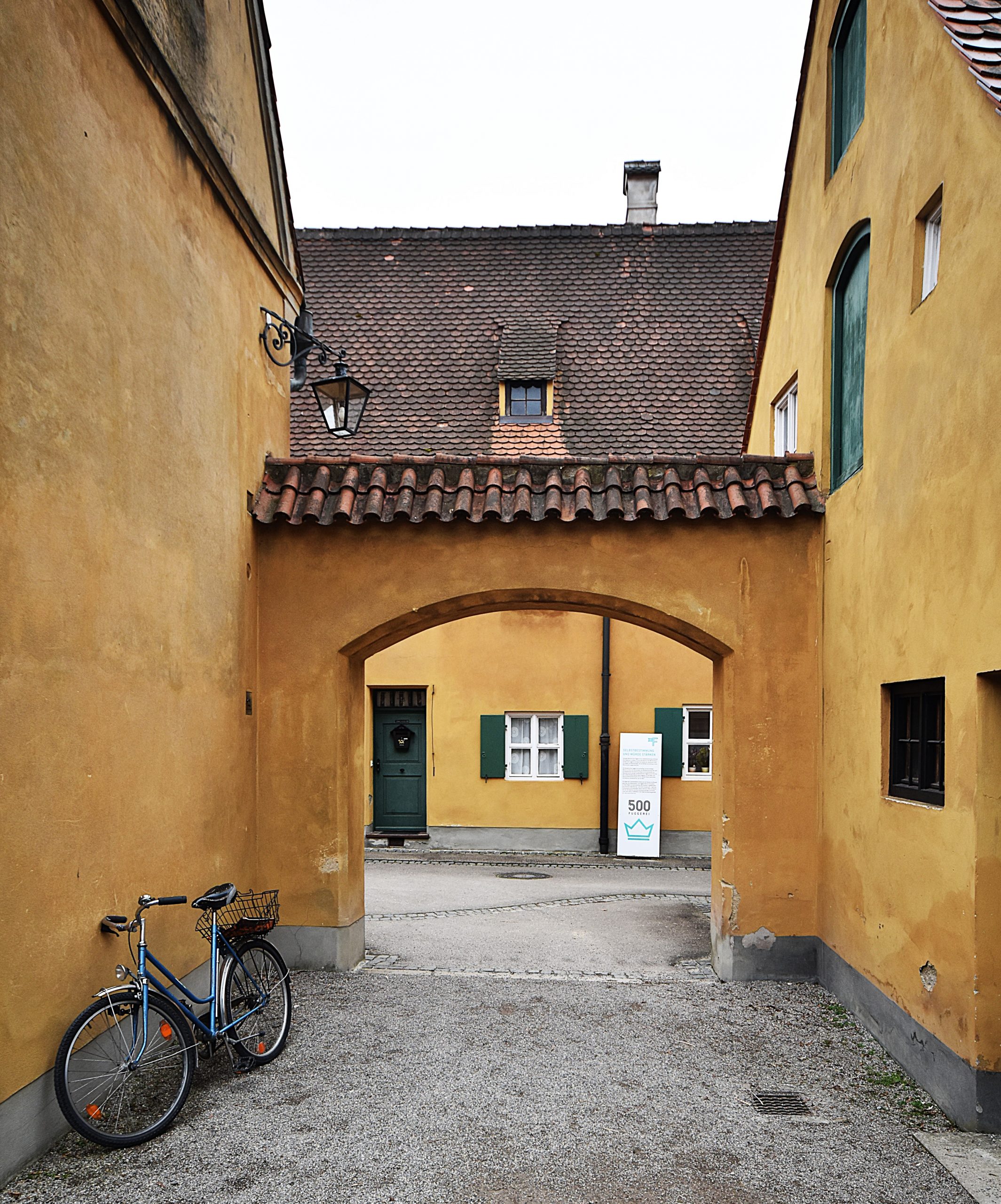
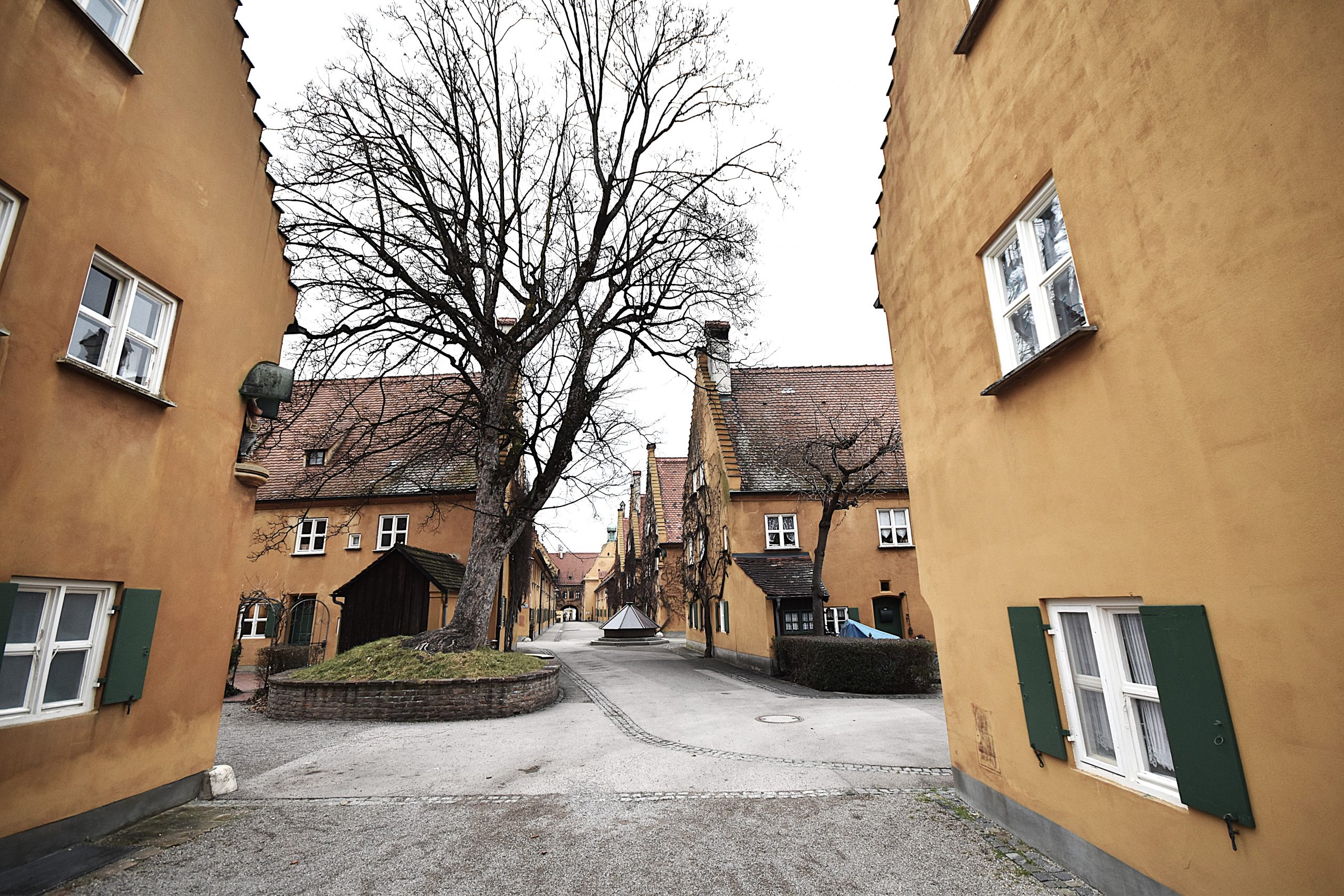
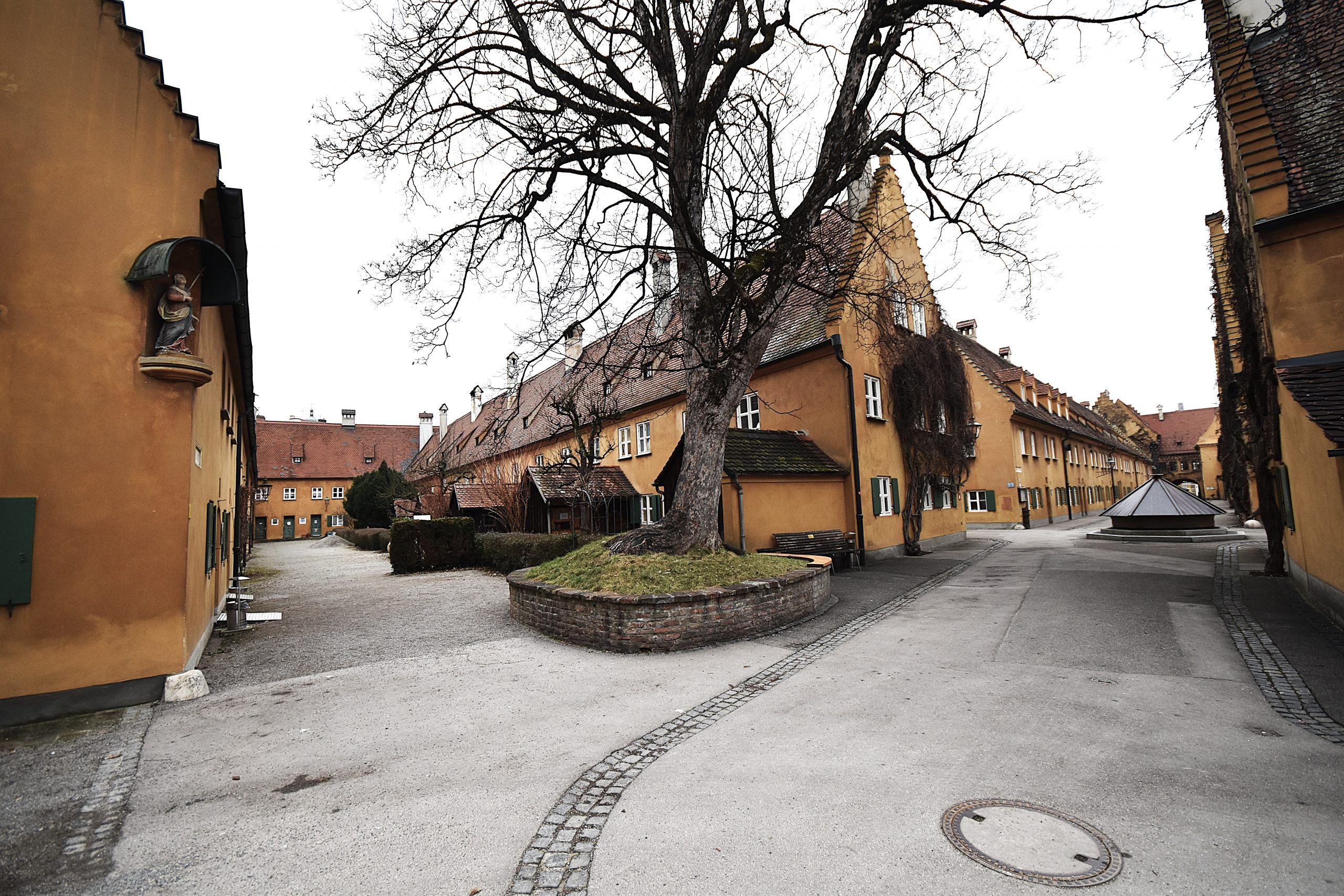
Walking through the city of Augsburg (Bavaria), at some point one comes across a place called the Fuggerei. It is a walled neighborhood made up of 67 houses dating back to the early sixteenth century (the first houses were built in 1521). These houses were financed by Jakob Fugger, a merchant and devout Catholic citizen of Augsburg. The richest man of his time—and often considered one of the richest of all time (today he would be worth approximately 400 billion USD)—he bought land in his hometown and provided apartments for people in need. In fact, it is considered the first social housing project ever.
What makes this place truly special, however, is that it still serves the same purpose to this day. The heirs of the Fugger family continue to maintain Jakob Fugger’s foundation. The conditions for being allowed to live in one of the 142 apartments have also remained unchanged: residents must prove they are in need, they must be Catholic, and they must be residents of Augsburg.
What has changed, though, is the obligation to pray three times a day for Jakob Fugger; this rule is no longer enforced. Some residents live here until they die, while others stay for a limited time, just a few years. What they all have in common is that they pay only the amount Jakob Fugger originally set as the yearly rent: 0.88 euros (about 1 USD) for an apartment with one to three bedrooms.
There is, however, some criticism. Who decides who may live here? The leading members of the Fugger family—and only Catholics are eligible as residents. Some argue that this is unfair, as it contradicts the principle of equal opportunities for all—one of the core principles of the German Grundgesetz (constitution) as well as of modern Germany. How can some decide who is “more equal” (George Orwell) than others? Or, more generally, should the power of wealthy philanthropists to determine the fate of individuals be limited? Shouldn’t such decisions always be made by governments based on democratically elected institutions?
However, I suppose the inhabitants of the Fuggerei don’t really mind… .
Liked this post? Email me to say hi and I’ll sign you up for more articles like this: send mail
There are lots of tourists here in Sicily. It’s the old dilemma: being one myself and, at the same time, not liking my own kind…
Consequently many places here seems to be nothing more than a setup, made of Gucci shops mixed with cheap Chinese souvenirs. So I keep asking myself: where is the real life of the real people of the real Sicily?
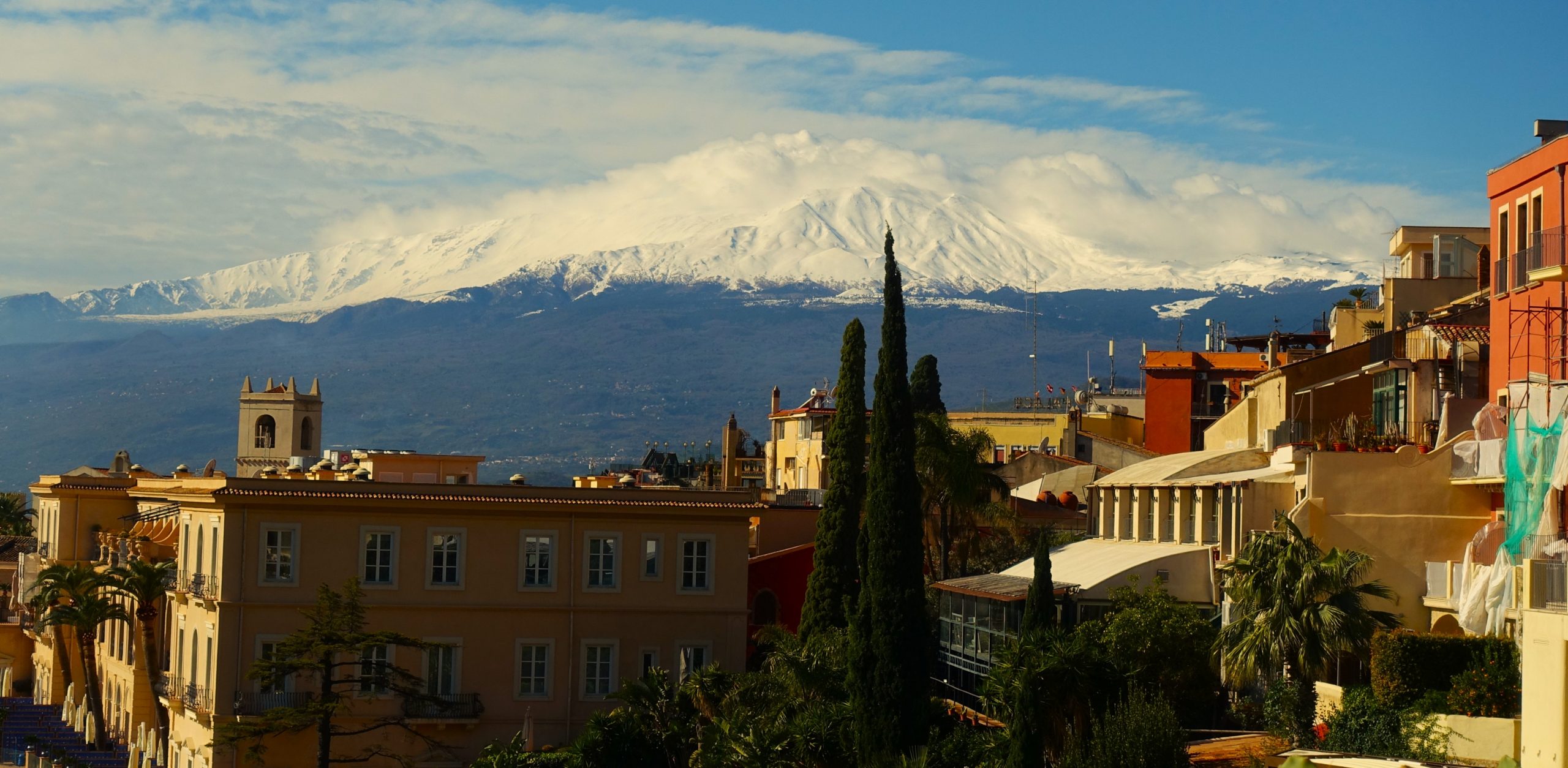
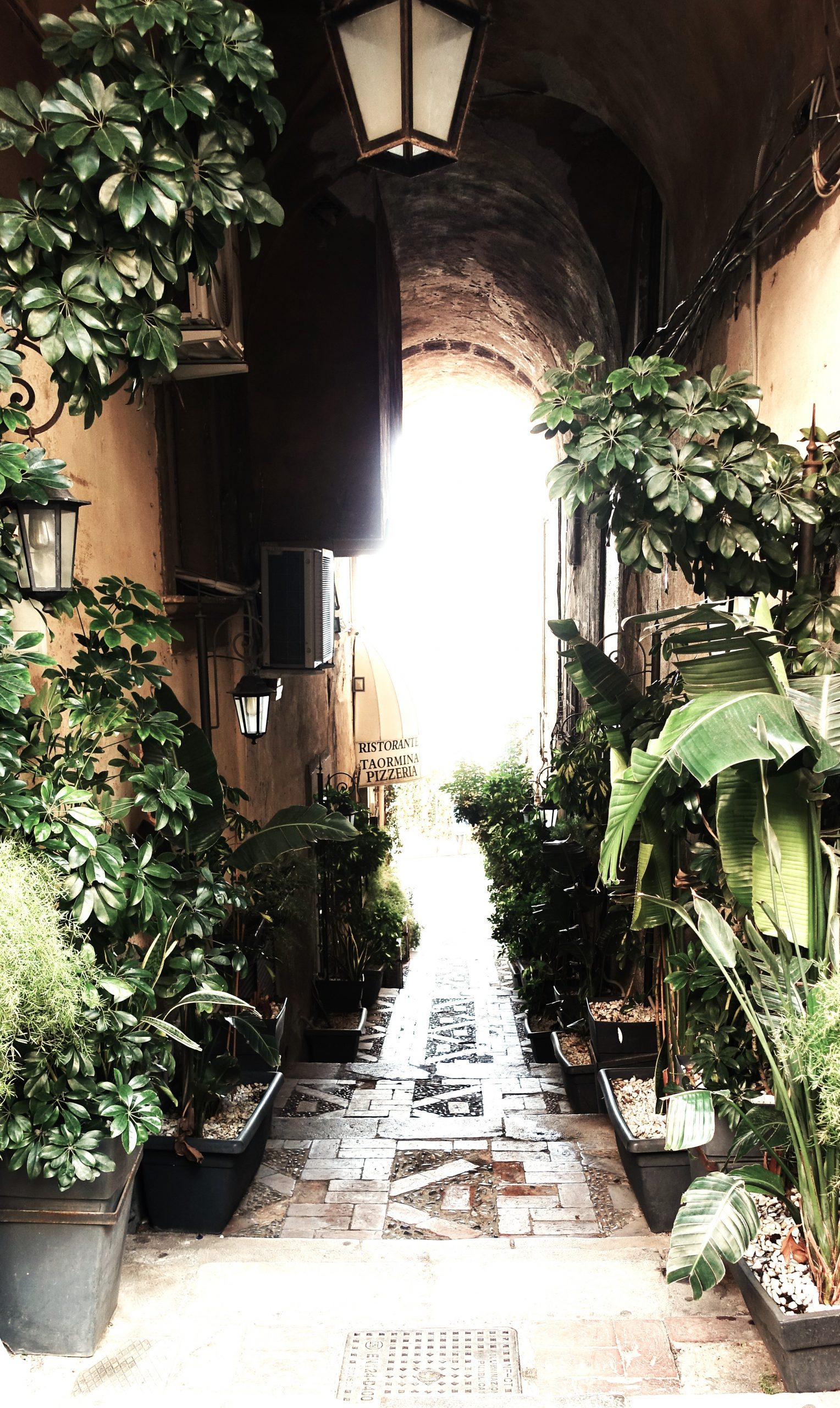
Yesterday in Taormina, that was exactly my impression. The town itself is stunning. It sits on the eastern shore of the island, where mountains rise straight up from the beach, disappearing into the clouds. Taormina up there is famous, and the list of well-known people who have lived or at least passed through is impressive: Johann Wolfgang von Goethe, Oscar Wilde, D. H. Lawrence, Truman Capote, Tennessee Williams, Greta Garbo, Elizabeth Taylor, Francis Ford Coppola. And yet, despite all this, the place feels like a tourist trap, filled with Chinese plastic goods.
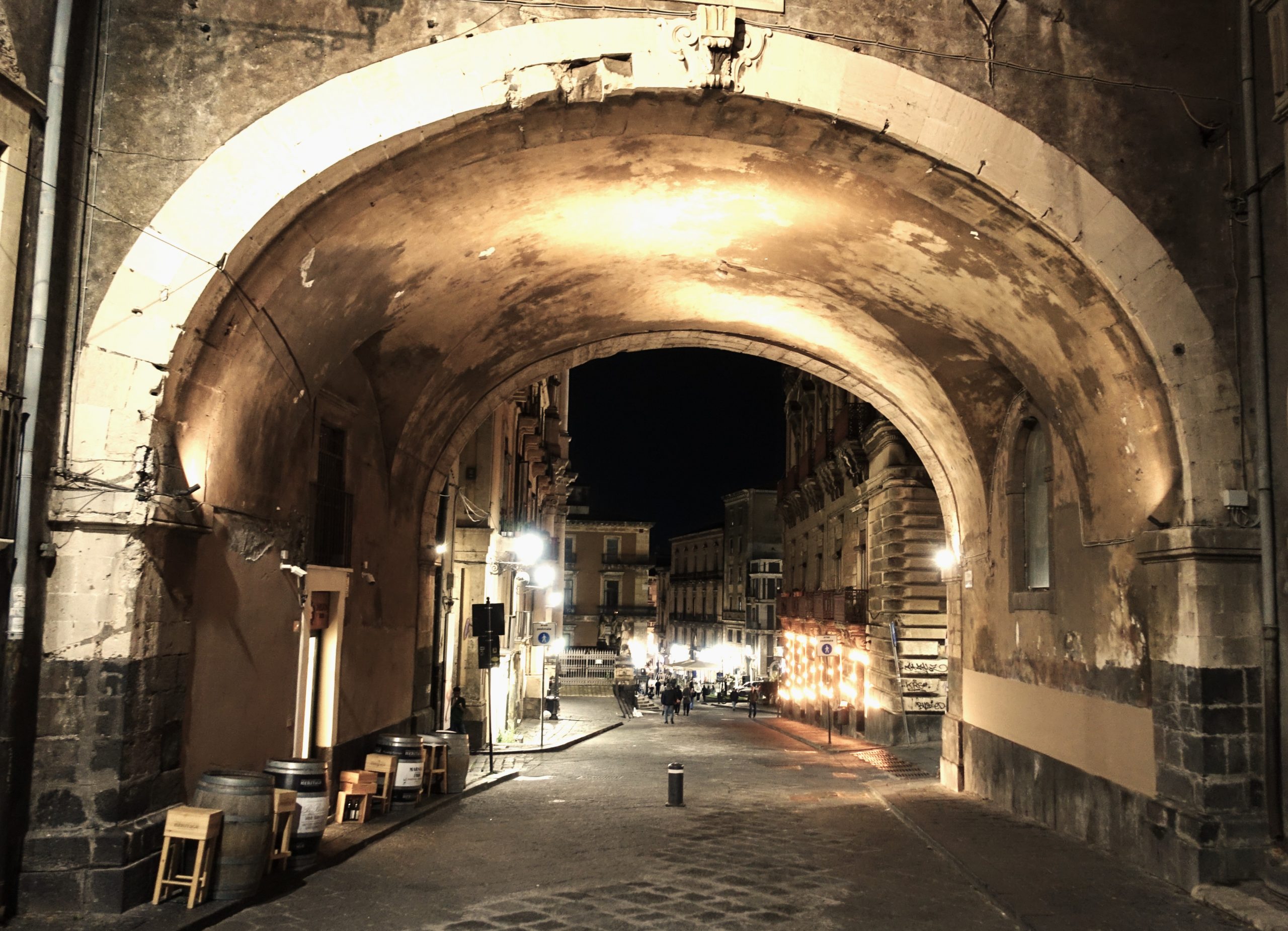
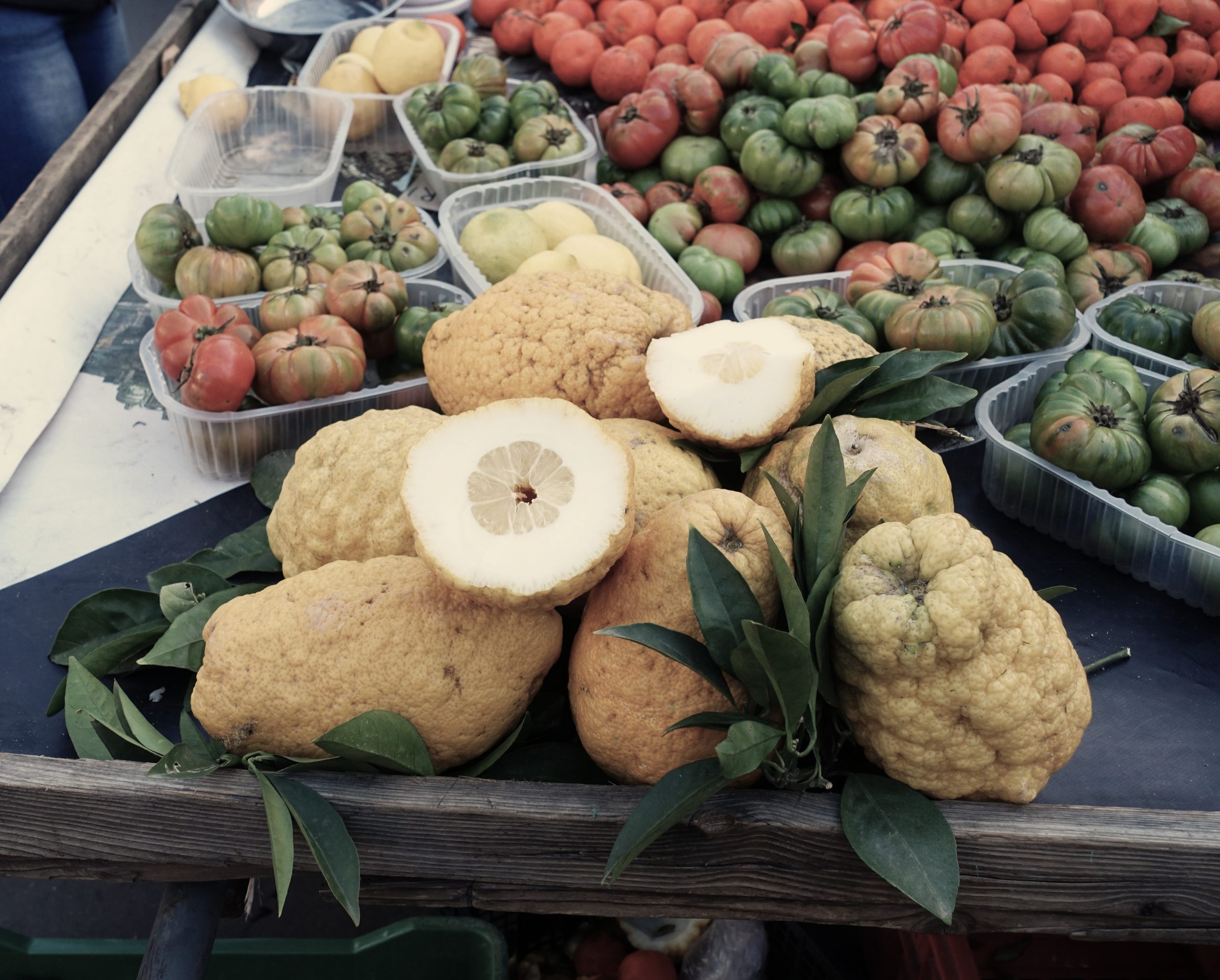
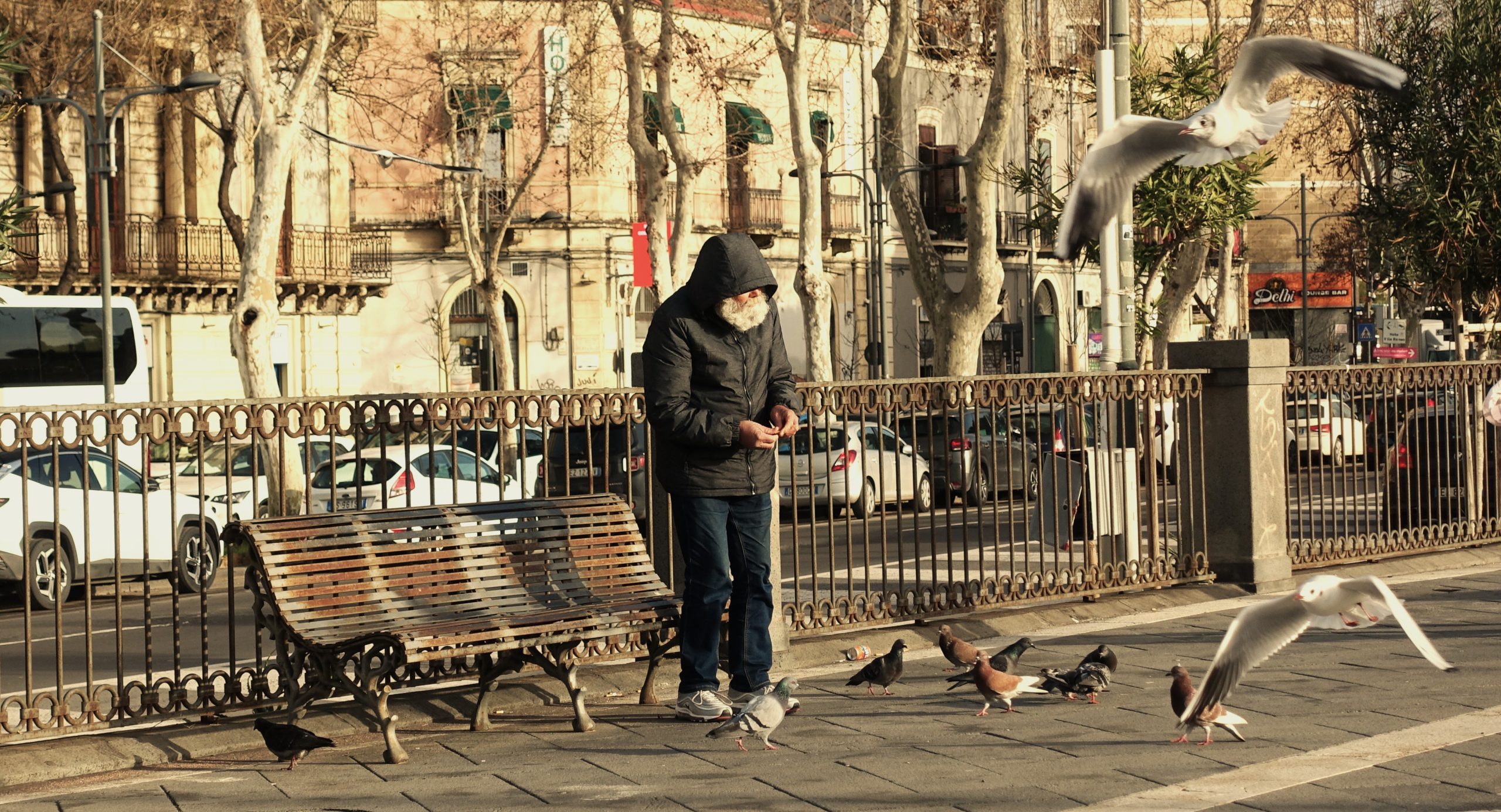
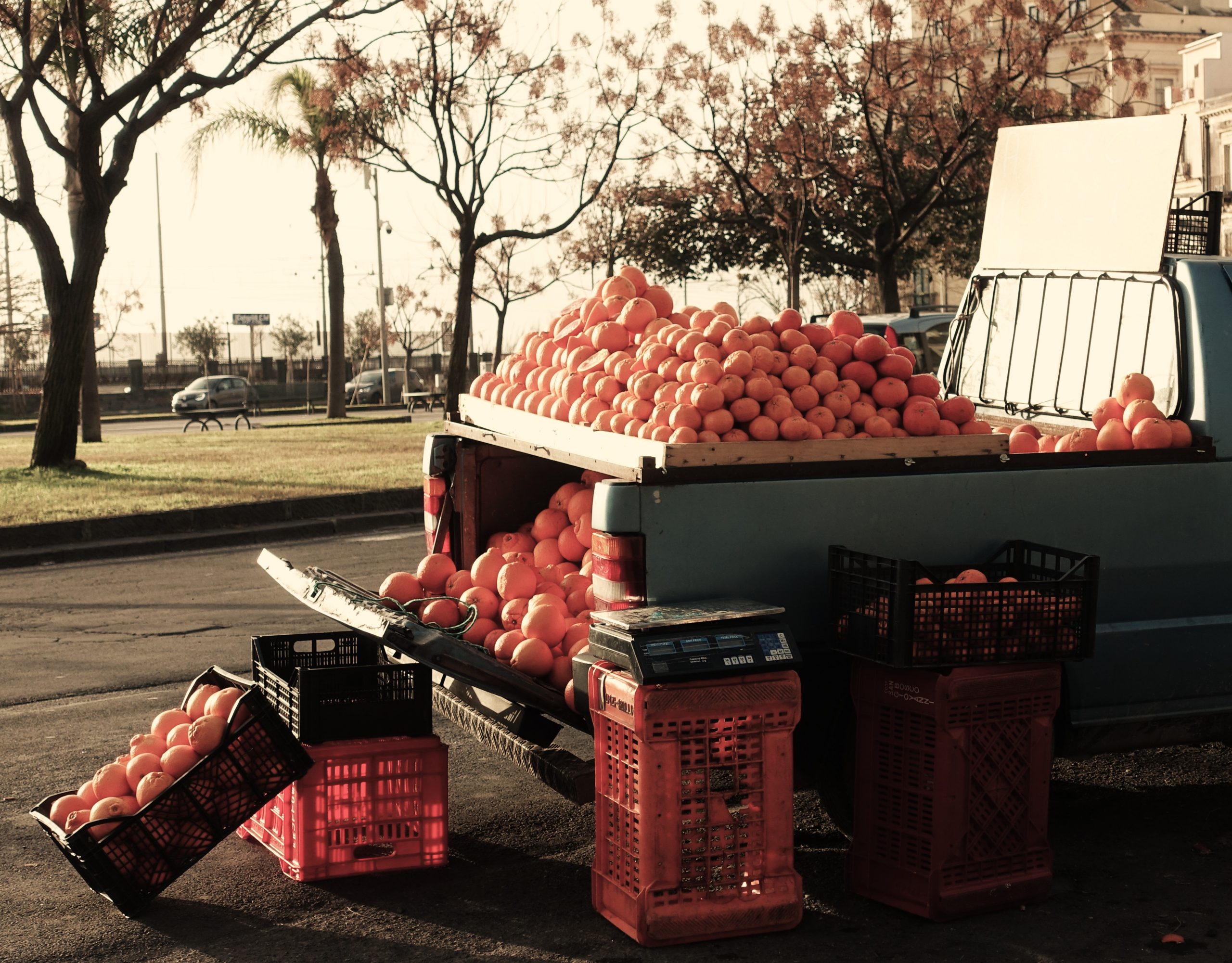
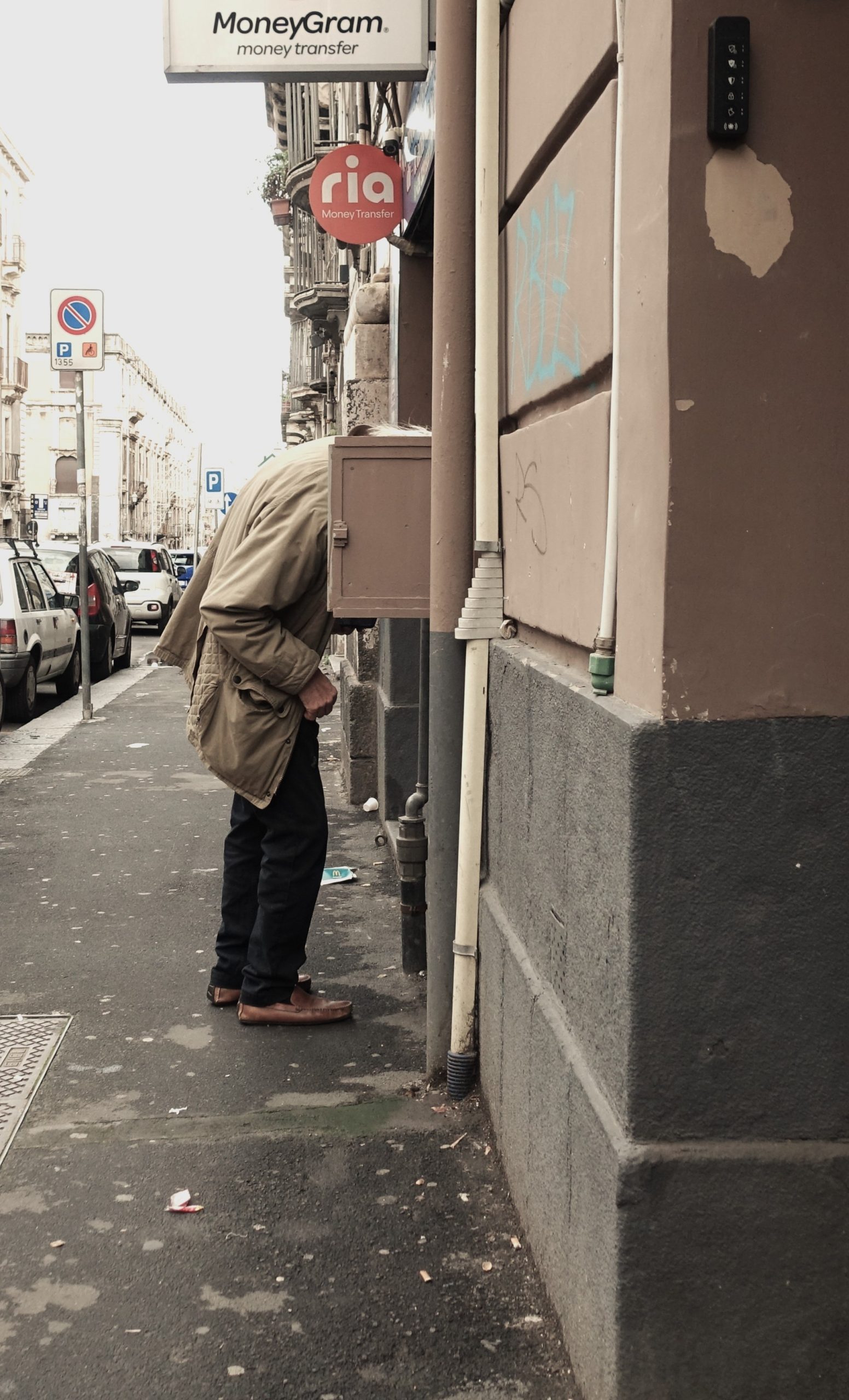
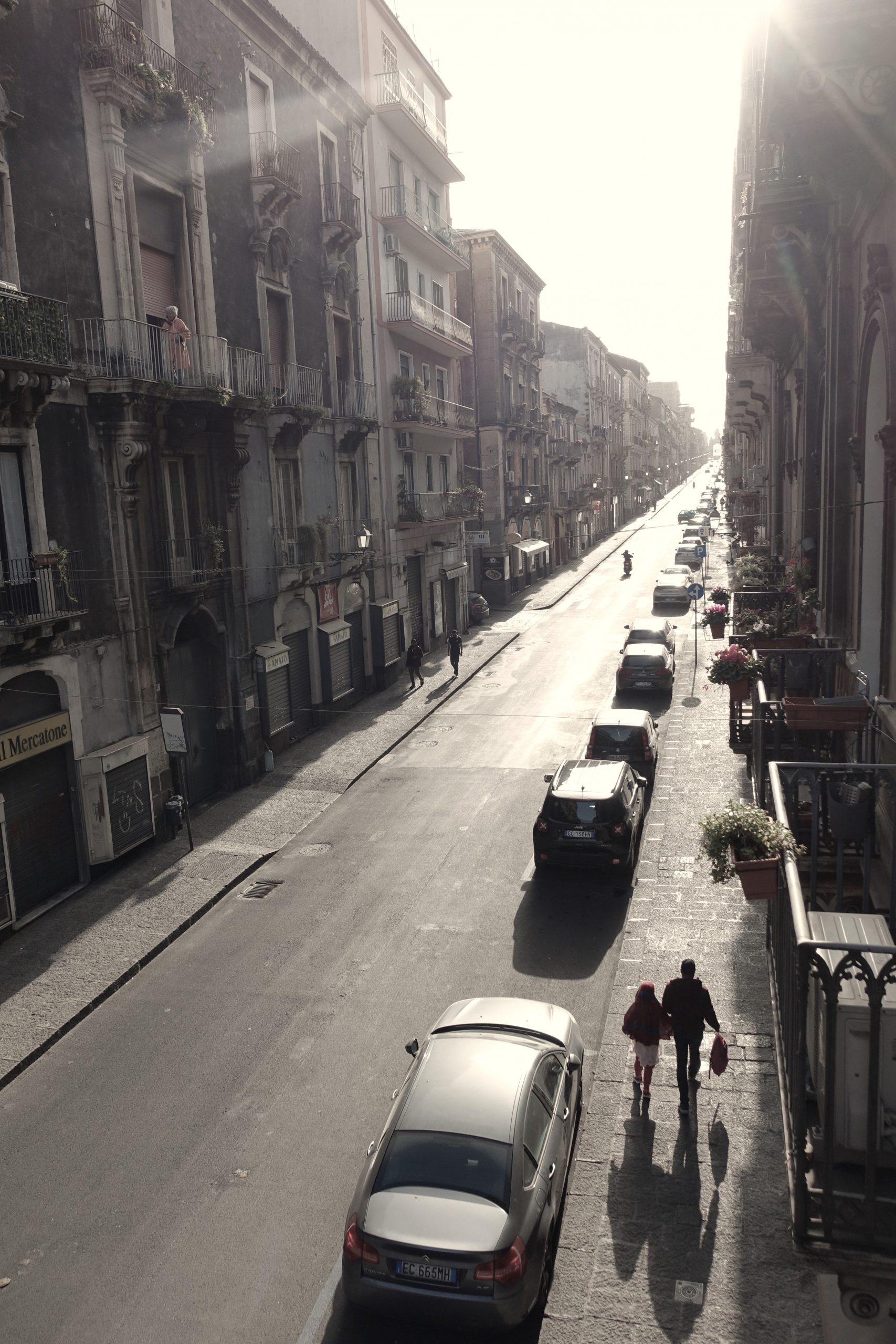
Much better is Catania. The city has around 300,000 residents, amazing eateries, beautiful architecture, and a lot of history. But what is most rewarding is this: Real people live here. Kids go to school in the morning, people discuss things out on the street, elderly men feed the pigeons, and it feels like there is a market on every corner. There are hardly any tourists, Italian is the main language, and locals are friendly and welcoming. No rip-offs.
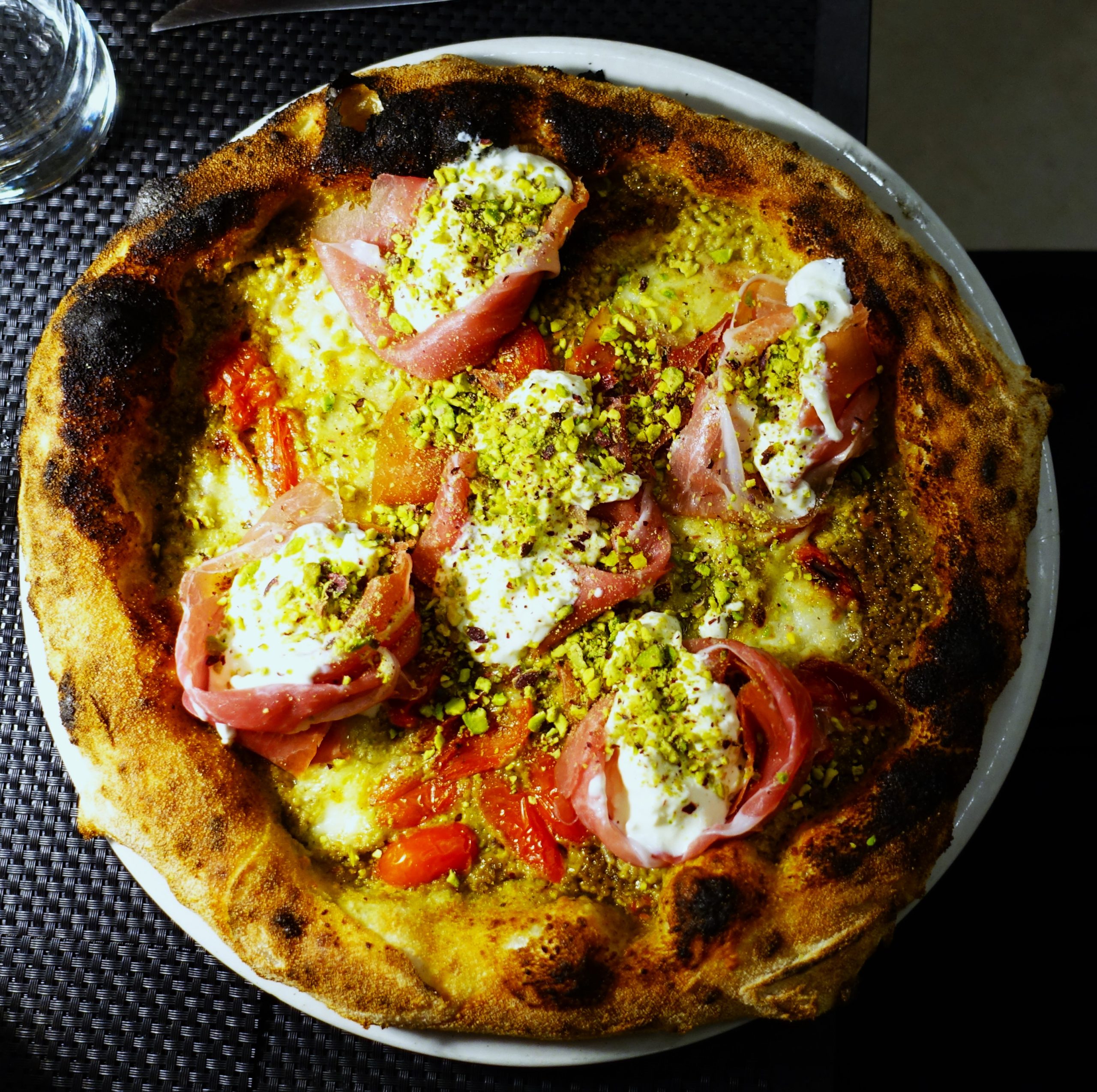
Most places are walkable, and prices are reasonable. Just 14 euros for what might be the best pizza in the world: “Piazza Duca di Genova” — mozzarella, Genoese pesto, Parmesan shavings, extra virgin olive oil. Simple, but heaven in my mouth. I’ll take care of the calories later…. You’ll find it at Al Vicolo Pizza & Vino – here.
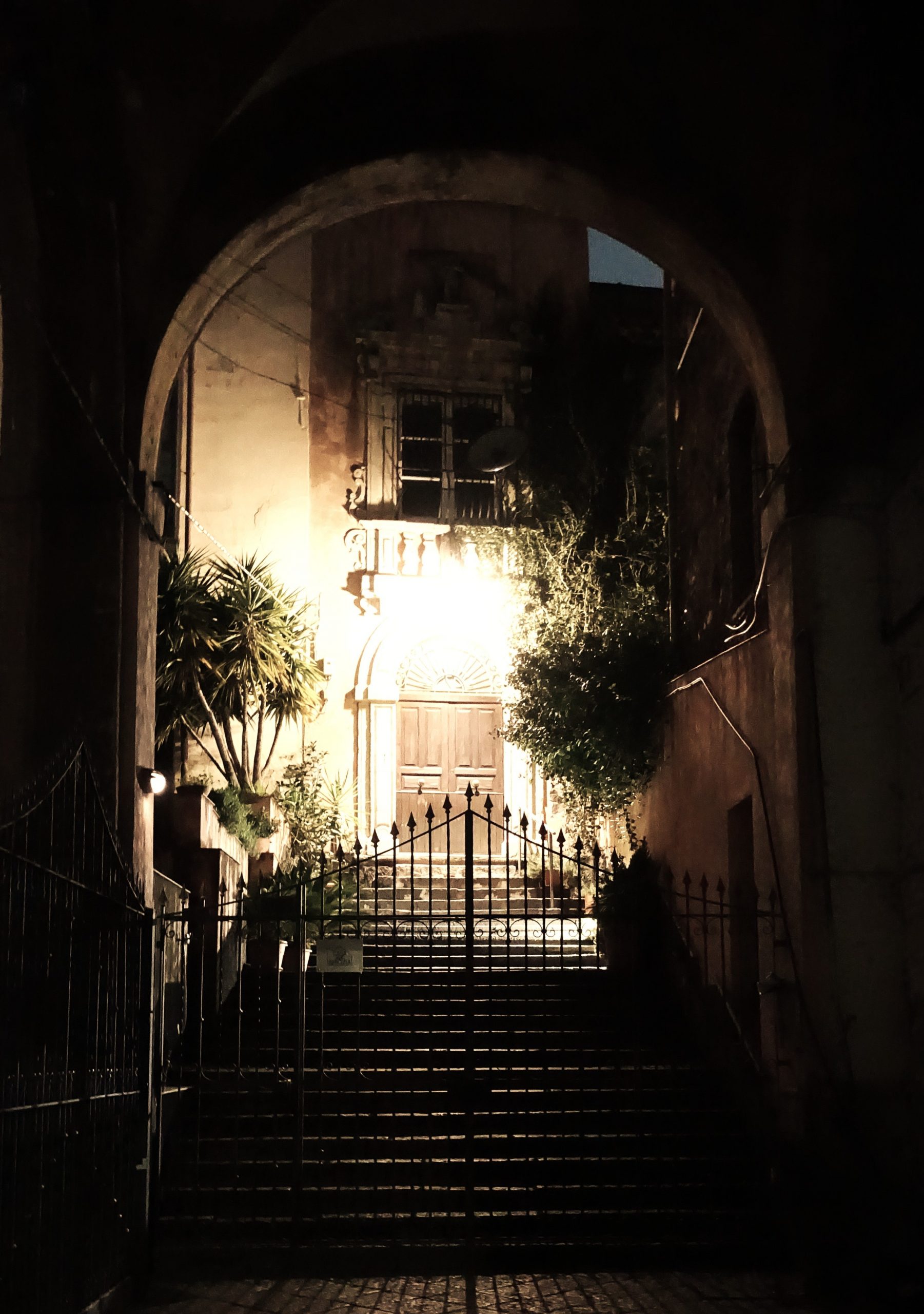
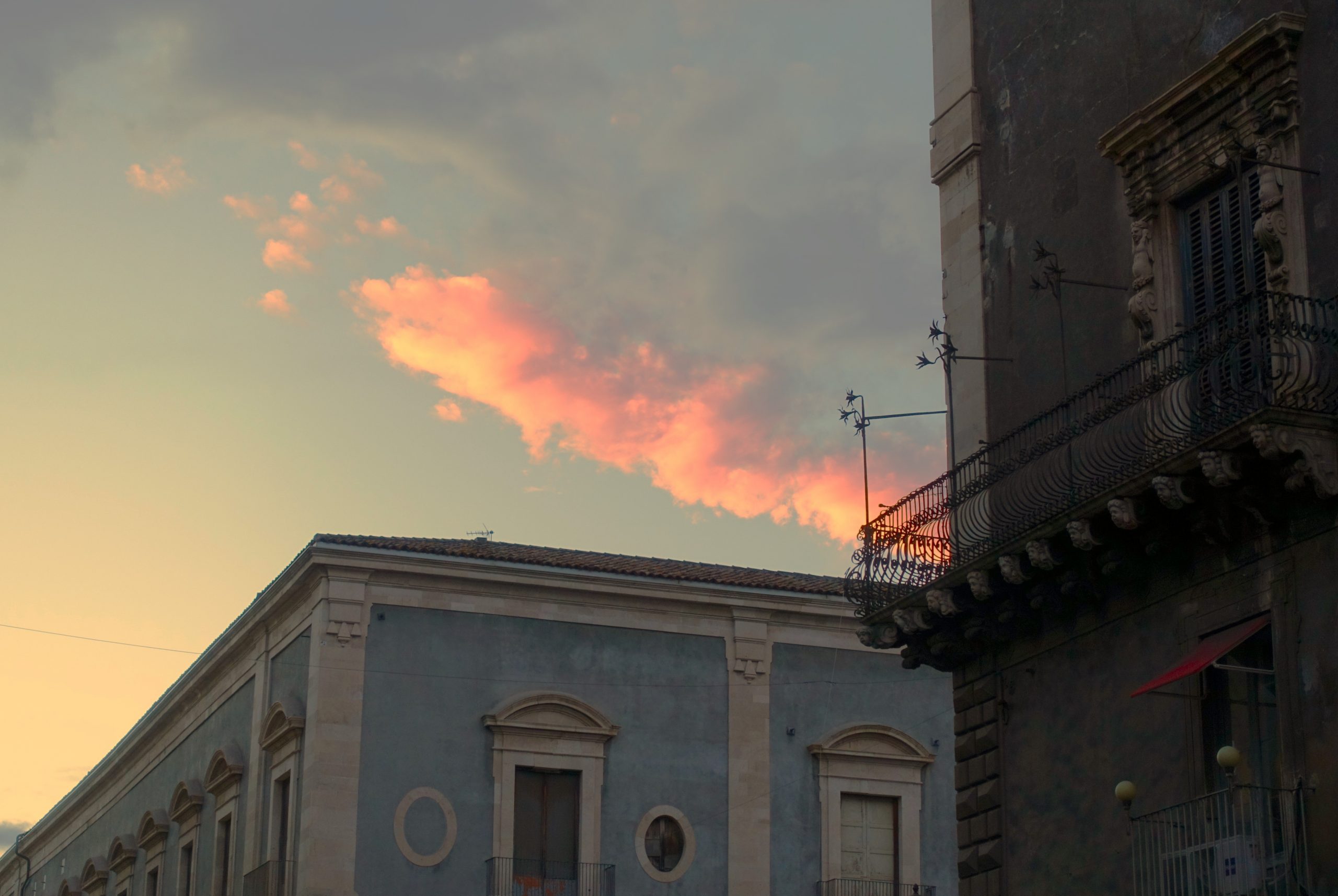
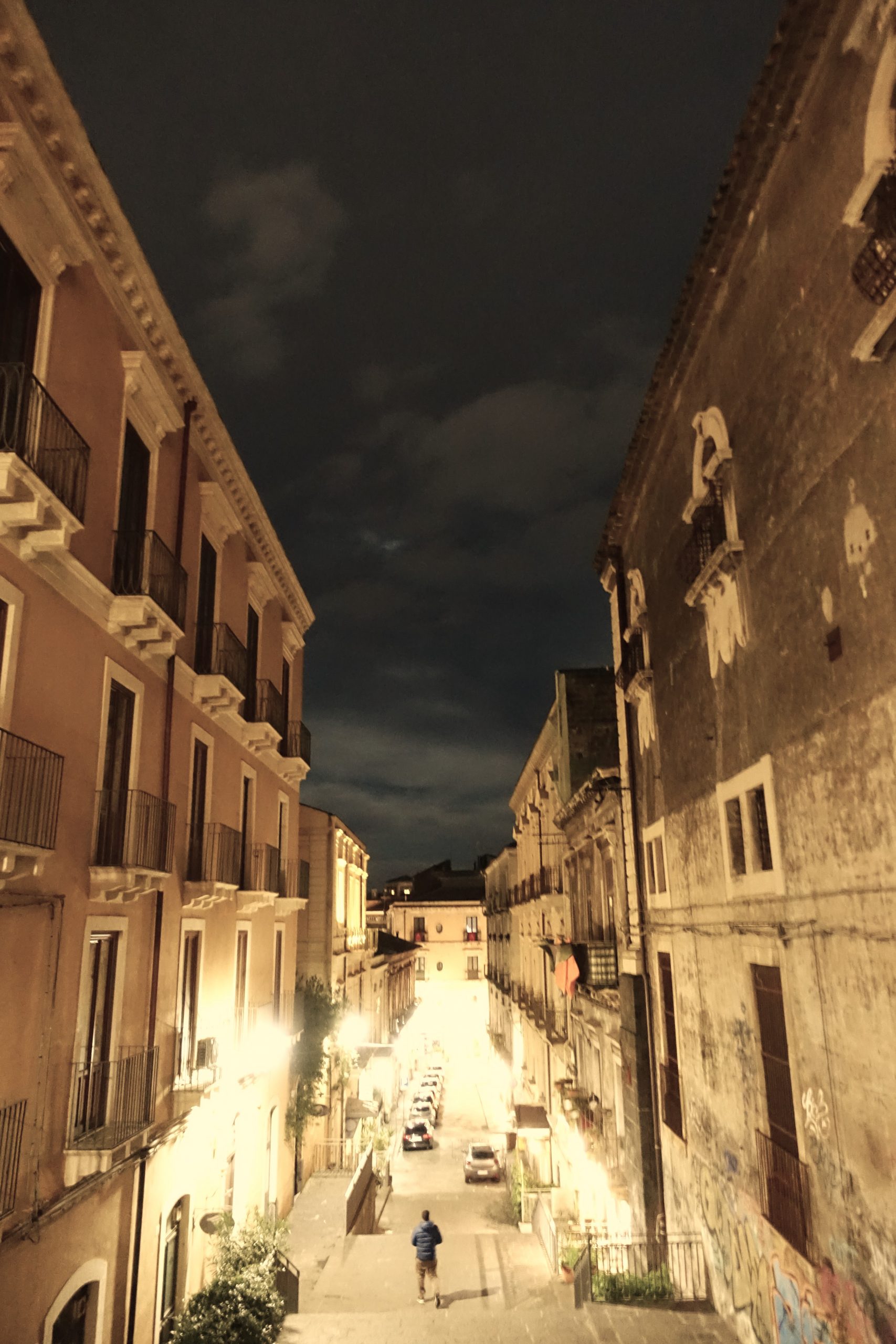
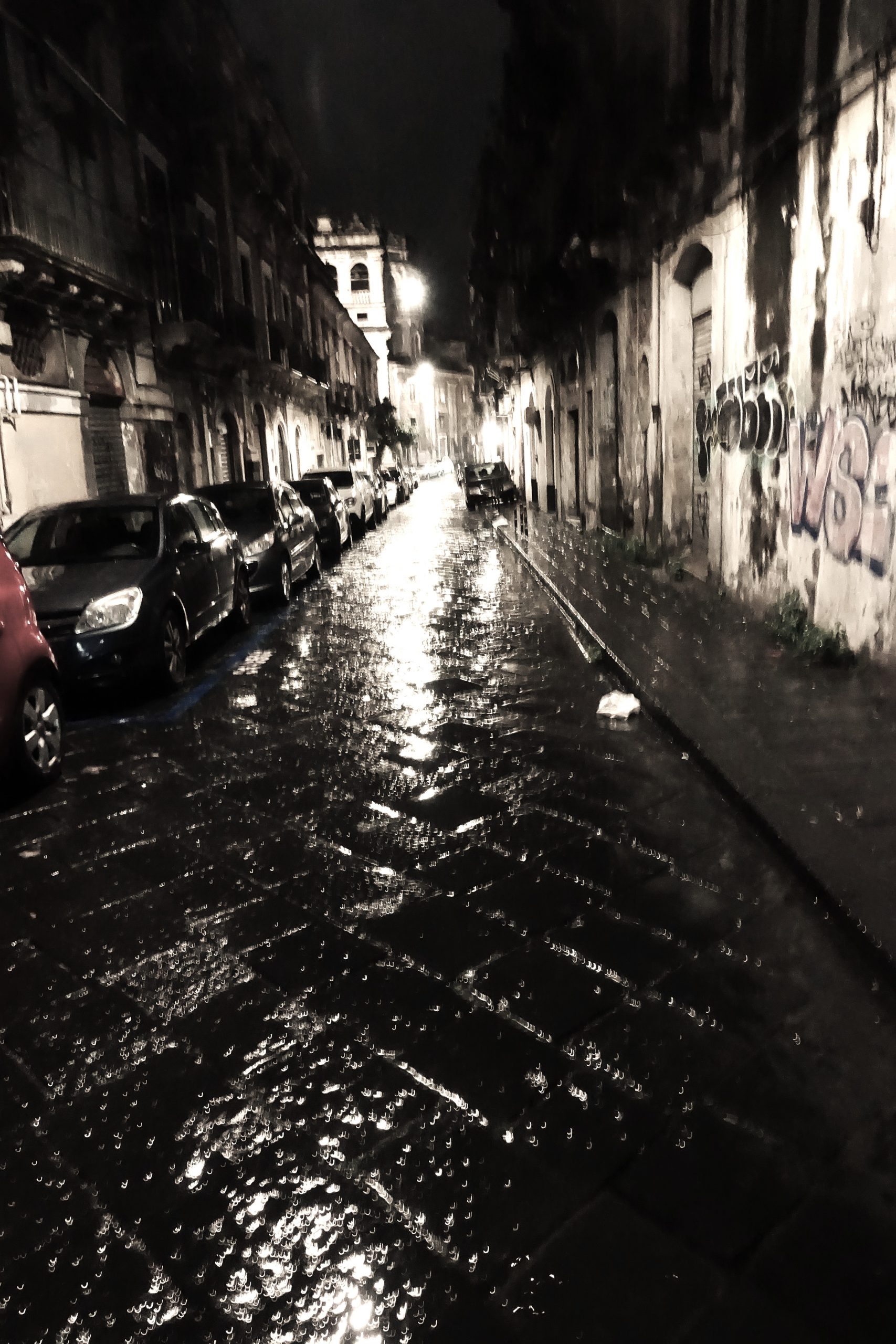
If Sicily — Catania is the perfect starting point. See pictures below.
Liked this post? Email me to say hi and I’ll sign you up for more articles like this: send mail
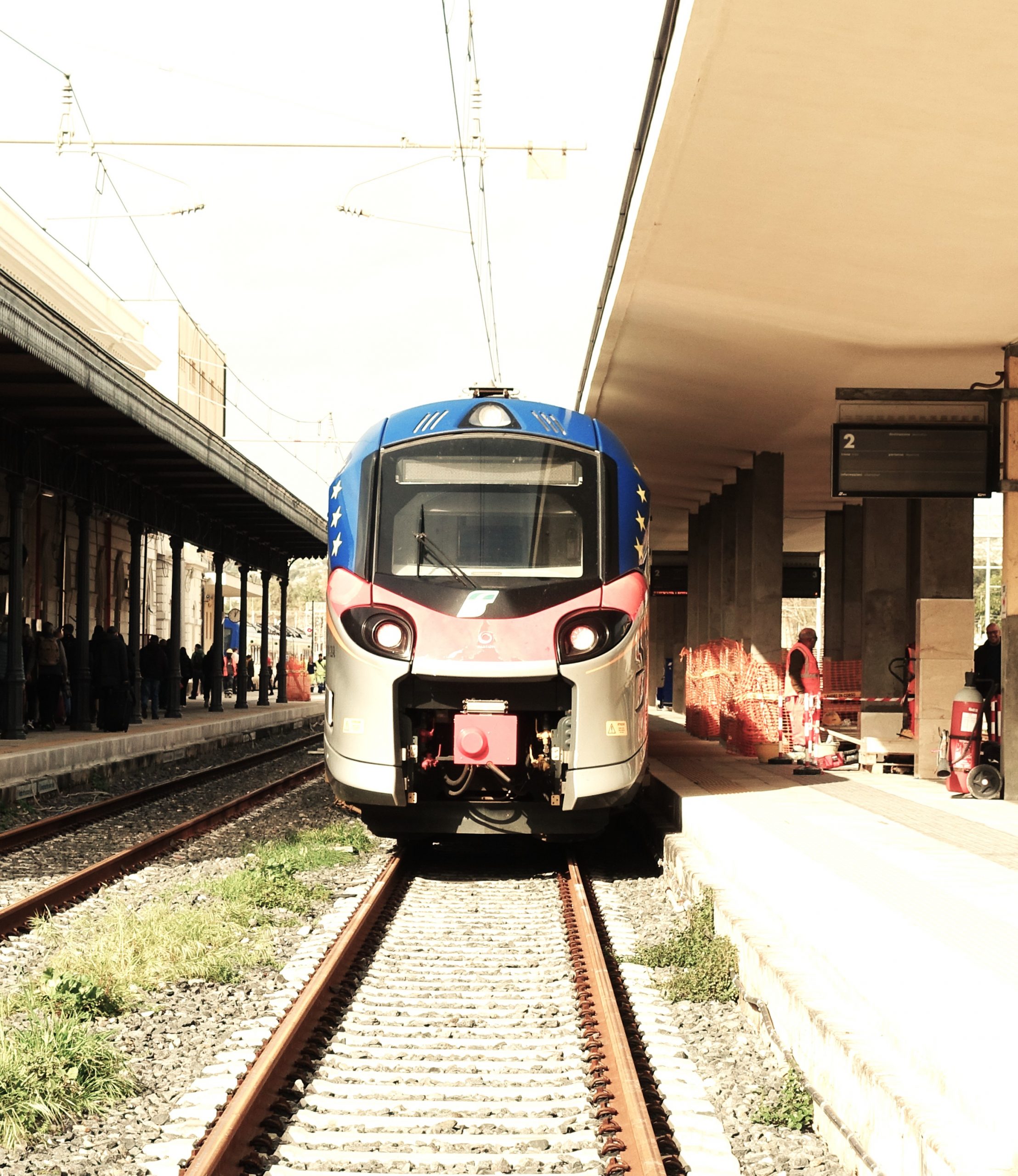
It takes a minute to understand the booking system of Trenitalia, one of the two main railway companies here. Getting to a local place requires a regional train, and it is easiest to buy tickets online via the app and pay by card—very convenient, and everything is in English.
Then it gets interesting. The ticket is valid for one day and, as it seems, only for the specific train it was bought for. But if one wants to take an earlier train, it is equally easy to change the booking, as long as it is on the same day. So instead of going back to Catania at 6:32 pm, it turned out to be no problem to take the train an hour earlier. As convenient as the booking system are the trains themselves: clean, comfy, brand new. And, unlike the infamous German Deutsche Bahn (railway) — on time! So – who needs a car anyway?
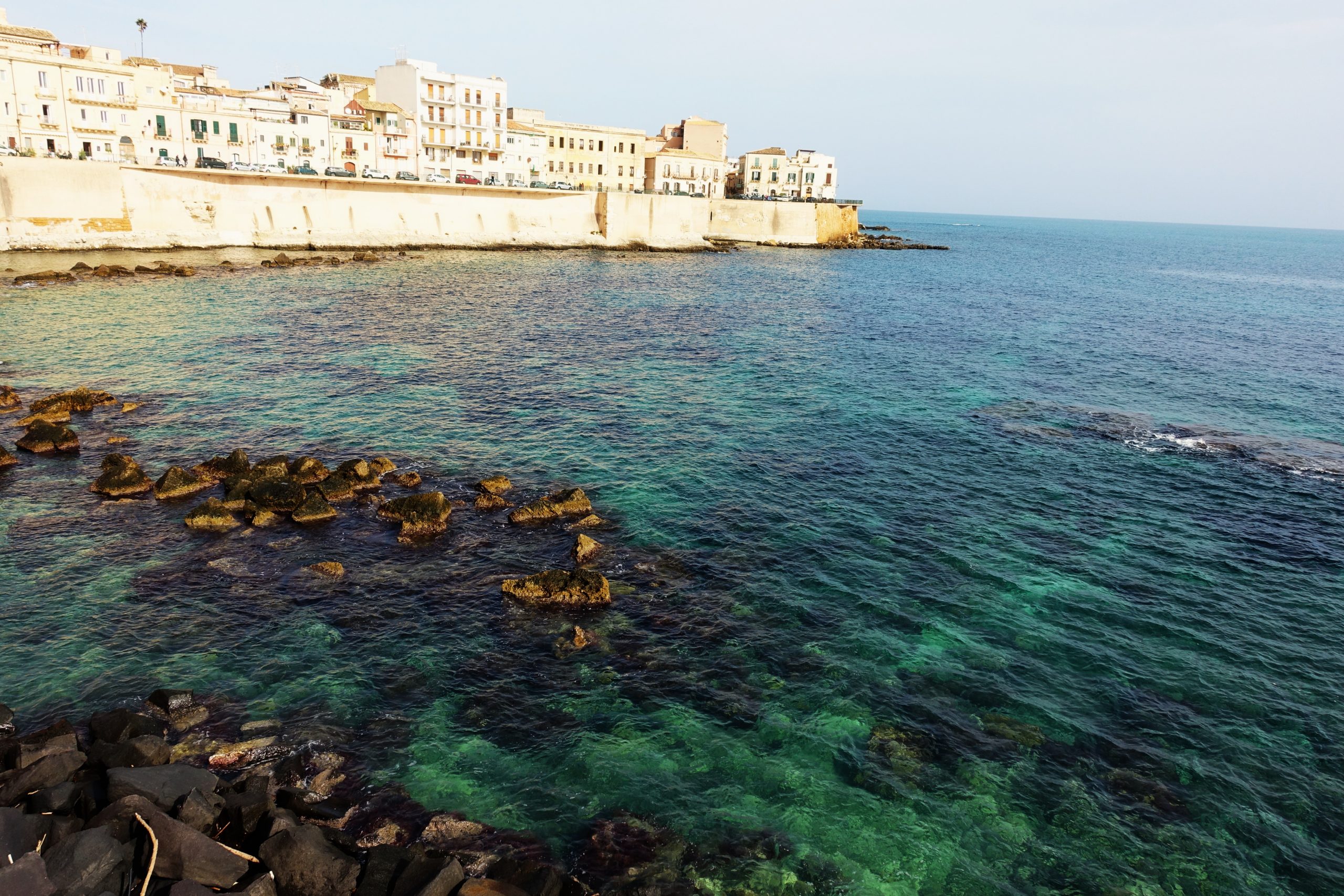
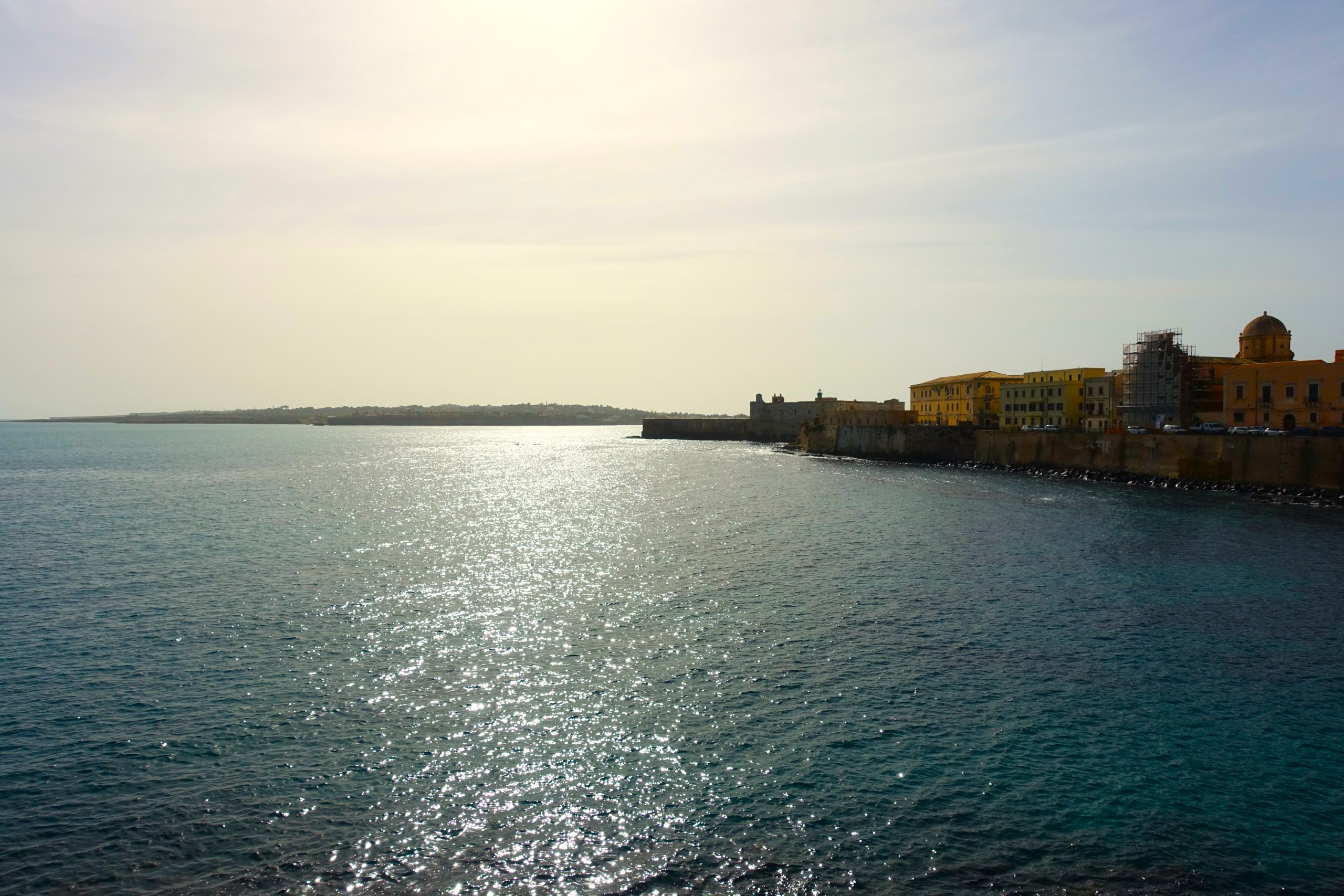
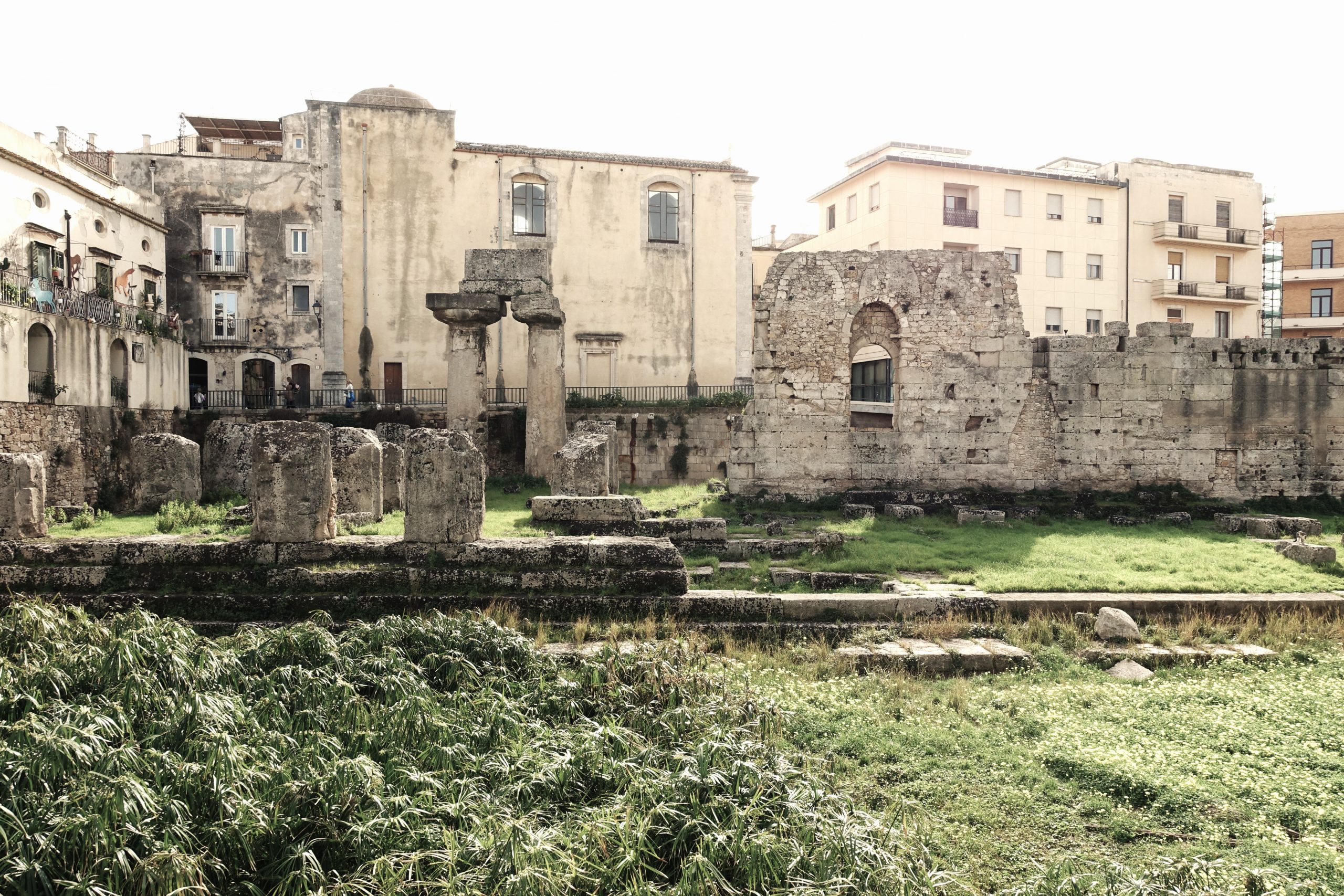
Getting to Syracuse took a bit more than an hour. The city is very walkable and wedged between two harbors on an island that one reaches only by crossing a bridge hundreds of years old. This natural fortress, which had its own freshwater well, used to have approximately 200,000 residents in the centuries before Christ’s birth. It was founded as a Greek settlement, as were many places populated by Greeks spreading their culture (“Hellenism”) all across the Mediterranean Sea. That is why, e. g., there are so many Greek archaeological sites in what is now Turkey, Troy being only the most famous of many others.
Some of the residents of Syracuse bore names that are very famous today, such as Plato and Archimedes. And this is also the place where ancient Athens lost the Peloponnesian War against Sparta, when an expedition of 40,000 men sailed across the Mediterranean Sea, trying to seize Sparta’s ally Syracuse. They suffered a serious defeat in the harbor of the city.
Later, the Romans took over Sicily, with Syracuse remaining a very influential city. Only when the Arabs conquered Sicily did they make Palermo the new main hub of the island. Syracuse fell into ruins, and it was only in the late 1980s that the local government stopped the departure of the few remaining inhabitants of the old town by reconstructing the old buildings.
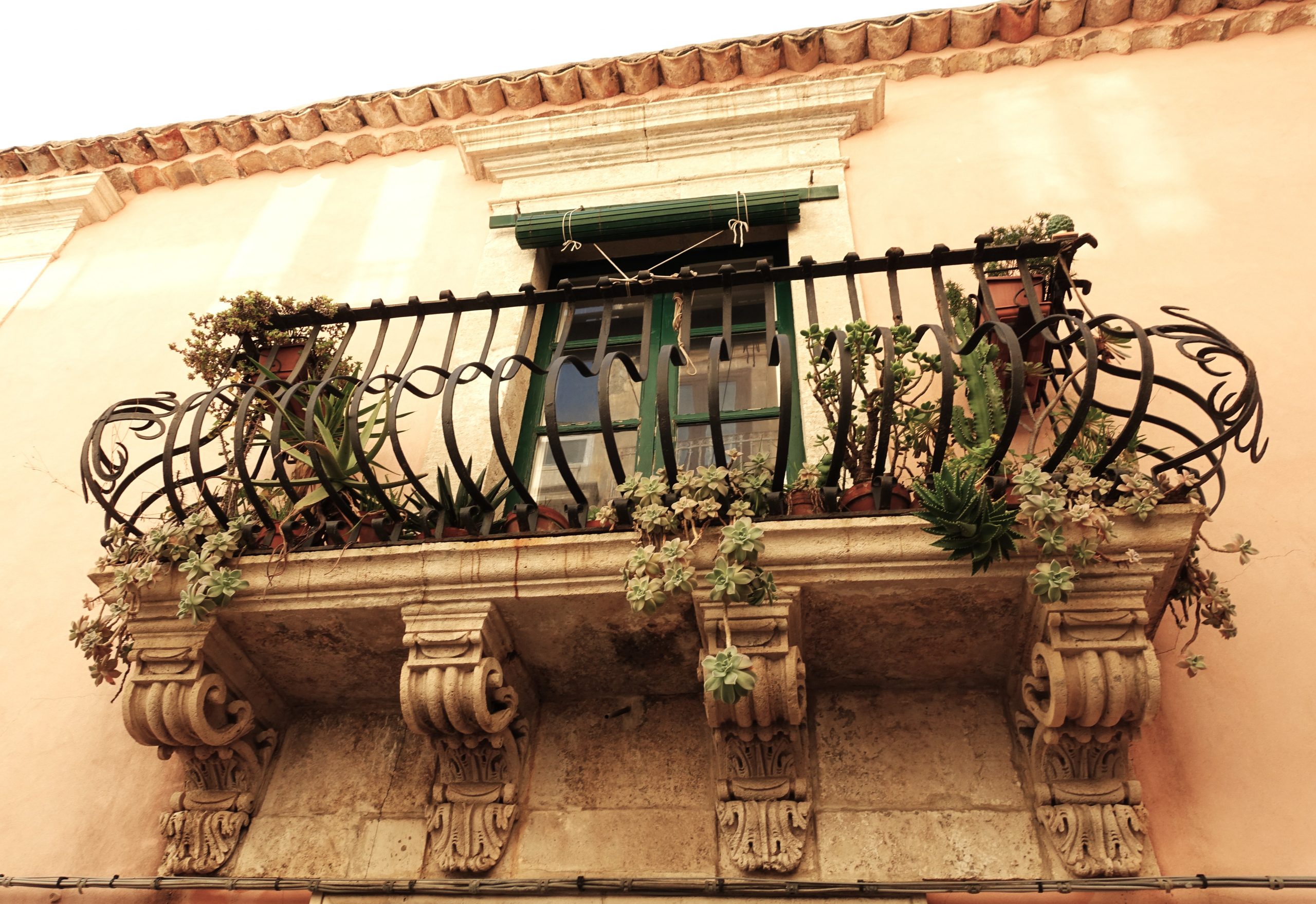
Today, Syracuse is a touristic hotspot (locals are clearly preparing for the upcoming season by hammering and fixing their vending places) and bears the omnipresent charm of Italy: accepting the scars of the past and turning them into a dreamlike image of time.
Liked this post? Email me to say hi and I’ll sign you up for more articles like this: send mail
Due to the weather in Berlin, an escape was needed. For the last couple of weeks it has been below 32°F (0°C), and sometimes it rained. The moment the raindrops hit the frozen ground, they turn into ice. As a result, ERs filled up and public transportation broke down (forget about “German efficiency”—it’s a myth). The world turned into a slippery hell. Everything was covered in a layer of pure ice, so opening the letterbox required the flame of a lighter just to unlock it. Much worse were the pavements: They’re more like slides, and even if sand was strewn on them, that only helped until the next icy rain.
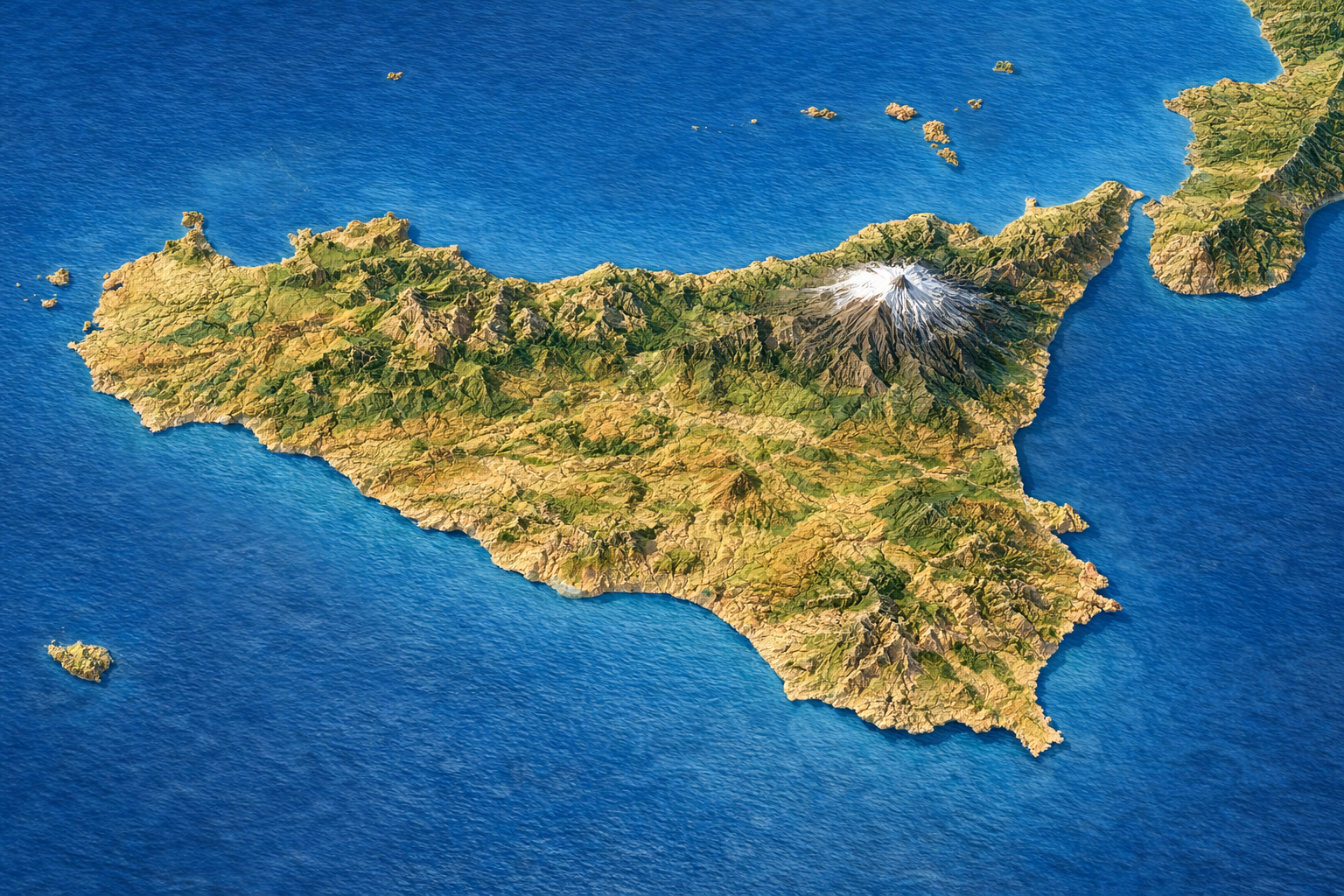
So the idea of running away wasn’t far fetched, and Europe does offer warm places in winter. Ideally the Canaries, but prices were insane. An alternative is the south of Italy, namely Sicily. And as always, certain words come up when thinking about a destination. Italy/Sicily = pizza, espresso, insane traffic plus even more insane scooters, constantly excited people chatting at high speed, morbidly neglected buildings, warm weather, lots of sun, and even more art and culture, including the occasional Roman ruin. So, in many ways, the opposite of Germany…
The escape only takes a 2.5-hour direct flight with easyJet (surprisingly good legroom) to Catania, for 180 EUR (including an extra piece of luggage, not just a small handbag), plus accommodation rather close to downtown for about 65 EUR a night. Here it’s a pleasant 60°F (17°C), and the streets are full of people eating ice cream. The pizza is as great as expected; so is the espresso. Only the sun shines rather hesitantly—today it even rains all day.
However, people must be happy about that. Every summer Sicily has a water problem, to the point that the government needs to send water trucks to supply the local population. That’s why I think this will be a trend in the future: traveling to the south of Europe while avoiding it between May and September. Over the last few years, the summer months in Spain, Italy, and Greece have been above 95°F (35°C) and more—no rain anywhere, just massive wildfires. And even the parts of the countryside not affected by these fires are brown and dead, like a picture of a dystopian future. Ask people in southern Europe about climate change…
Liked this post? Email me to say hi and I’ll sign you up for more articles like this: send mail
Before the wall came down, in the eastern part of Germany, property didn’t play a significant role. Under communism, large properties were usually in the hands of the government, and private individuals didn’t own much. And even if someone did own, for example, a house, it could be more of a burden than a privilege, since building materials were often hard to come by—an issue caused by the planned economy, which frequently resulted in chronic shortages. As a result, people who owned real estate often couldn’t maintain it and sometimes even sold it to the government for a symbolic amount. Who would risk trouble because of falling bricks when maintenance was impossible?
So, did the government care about the houses it was responsible for? It didn’t. I remember growing up in an urban landscape that looked as if the war had just ended: bare brick walls without plaster, rainwater dripping from burst pipes, broken and rotten windows and doors. No, the government didn’t take care of the old buildings—resources were missing. Instead, it turned out to be cheaper to build new high-rises out of prefabricated concrete slabs than to maintain the old structures. Often, even tearing them down was too much. Whole neighborhoods in East Berlin, Leipzig, and Dresden were abandoned and turned into ghost towns.
This is why, in 1990, after the wall had come down, many of the tenement houses in East Berlin were abandoned government property. And once the Iron Curtain had been breached, after East and West Berlin could finally meet, something unexpected happened with these buildings. During those months between revolution and reunification, 1989 to 1990, many of the old and empty houses in East Berlin became free spaces—free of anyone checking who moved in, free of rent, free to live the life one wanted, independent of financial constraints. Young people from the East had already discovered these government-free spaces, and now squatters from West Berlin seized the opportunity as well. At last, there was a place free of both political and financial restrictions: East Berlin became the Eldorado of squatting.
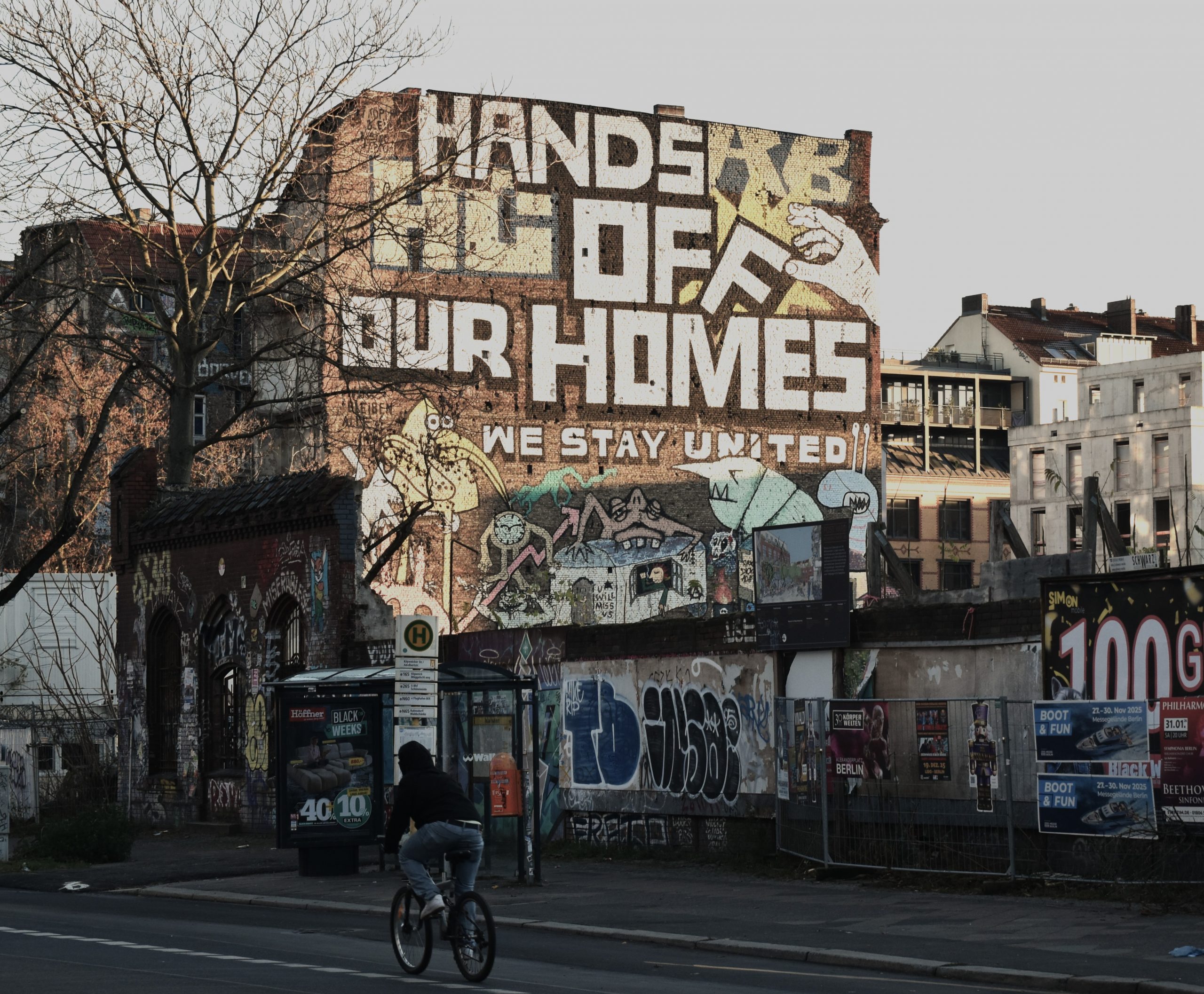
That is more than 25 years ago. Since then, things have changed. The real estate market has become big business, and properties have been assigned to new owners. The “housing initiatives” were pushed out, often after years-long legal battles, and not seldom with massive police operations. Today, only one place remains: “Köpi” (see picture above), named after its address on Köpenicker Straße. Just last year, the latest attempt by the real estate company currently owning the land to evict them failed in court.
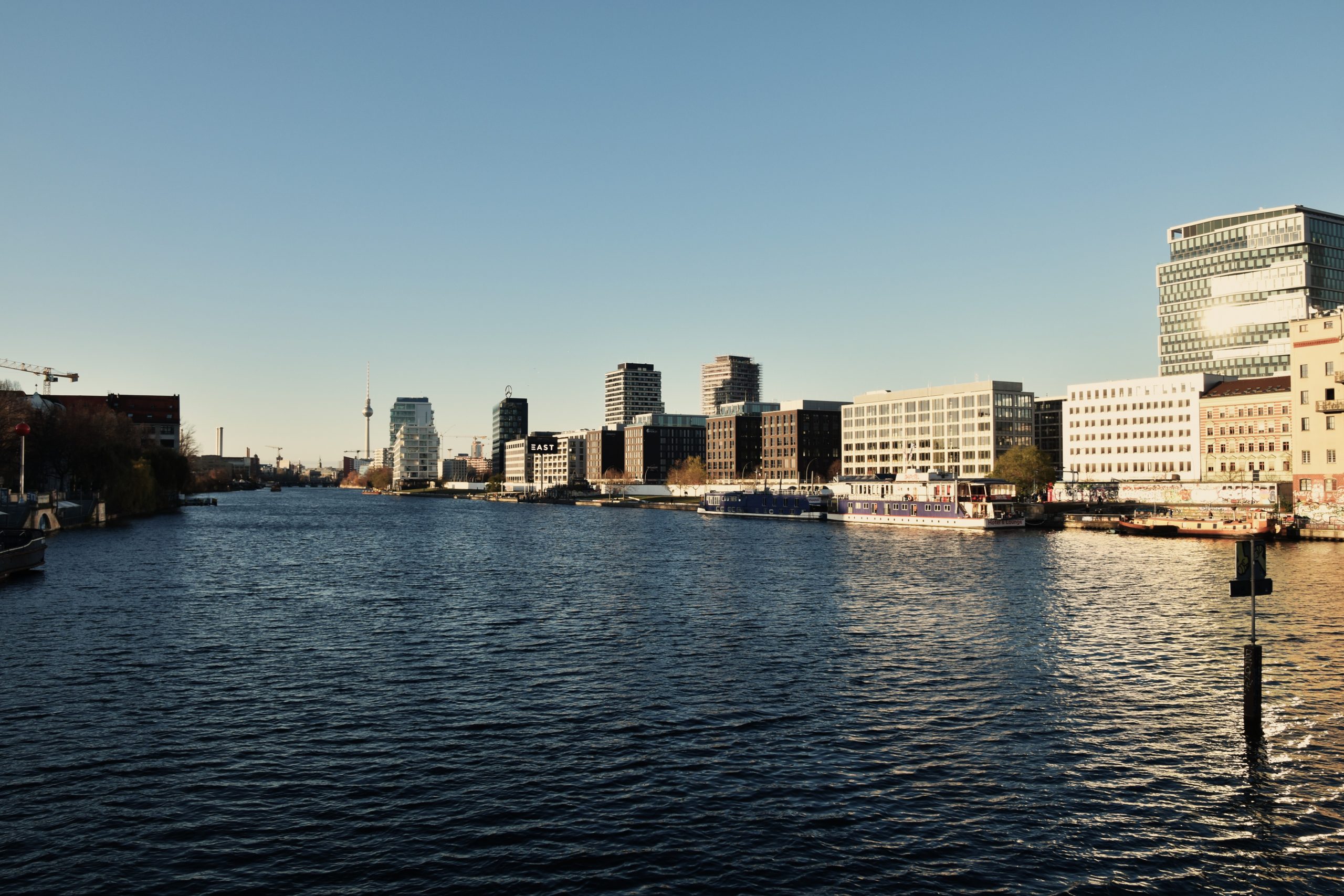
These initiatives have often been fertile ground for creativity: exceptional art projects, theaters, music, and unforgettable parties. At the same time, it is clear that Berlin benefits from international investment, as seen in the example of “Mediaspree” (see picture below), a property development project along the riverbanks of the Spree, the river flowing through Berlin. These projects create numerous jobs and generate tax revenue. In other words, it is naive to “fight capitalism” when it is difficult to name a workable alternative. And yet—the creativity that has flourished in free spaces like Köpi has been one of the major reasons for Berlin’s reputation as a center of freedom and artistic experimentation in Europe.
So the question remains: How can a city protect the freedom that fuels its creativity while still relying on an economic system that threatens to erode exactly that freedom?
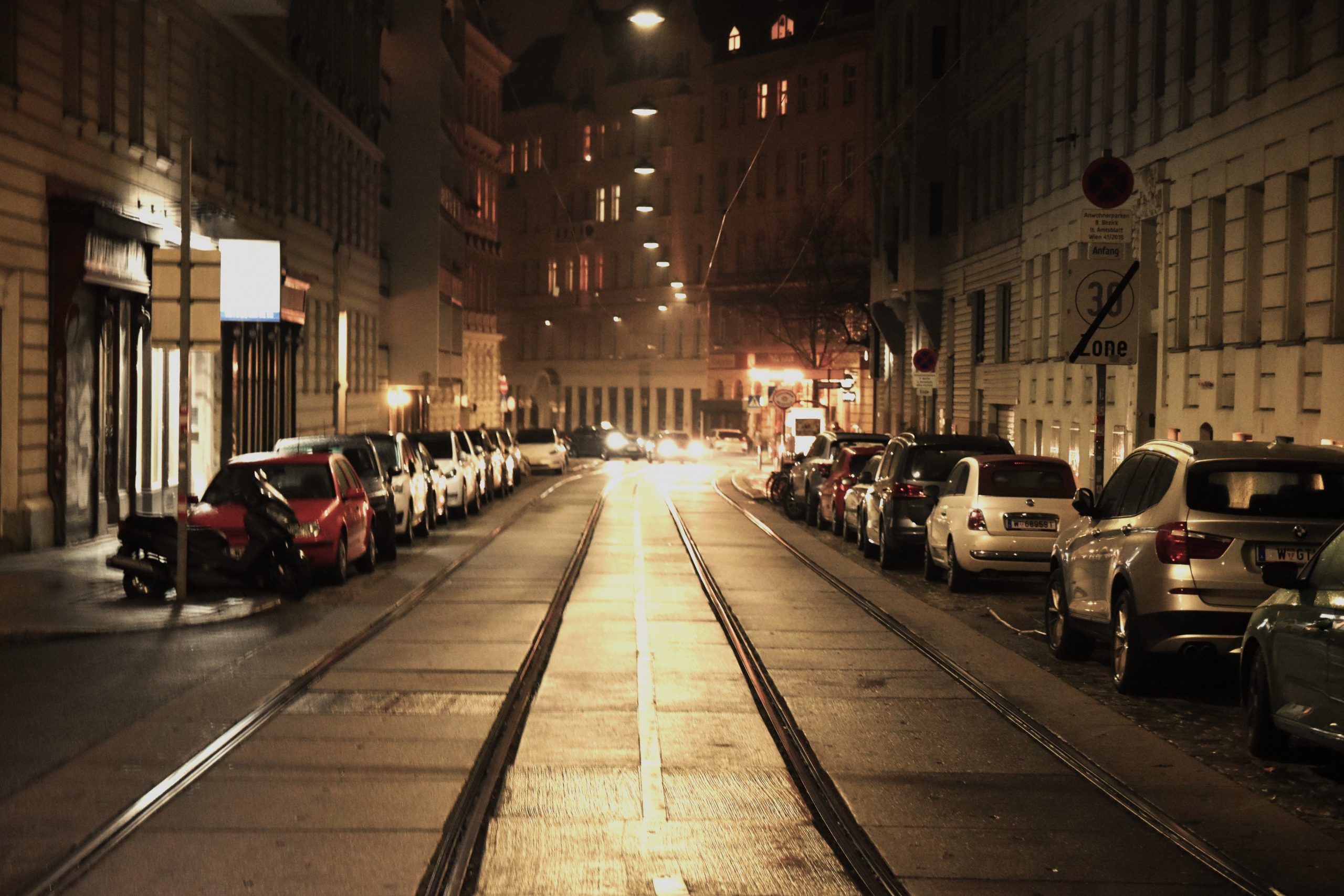
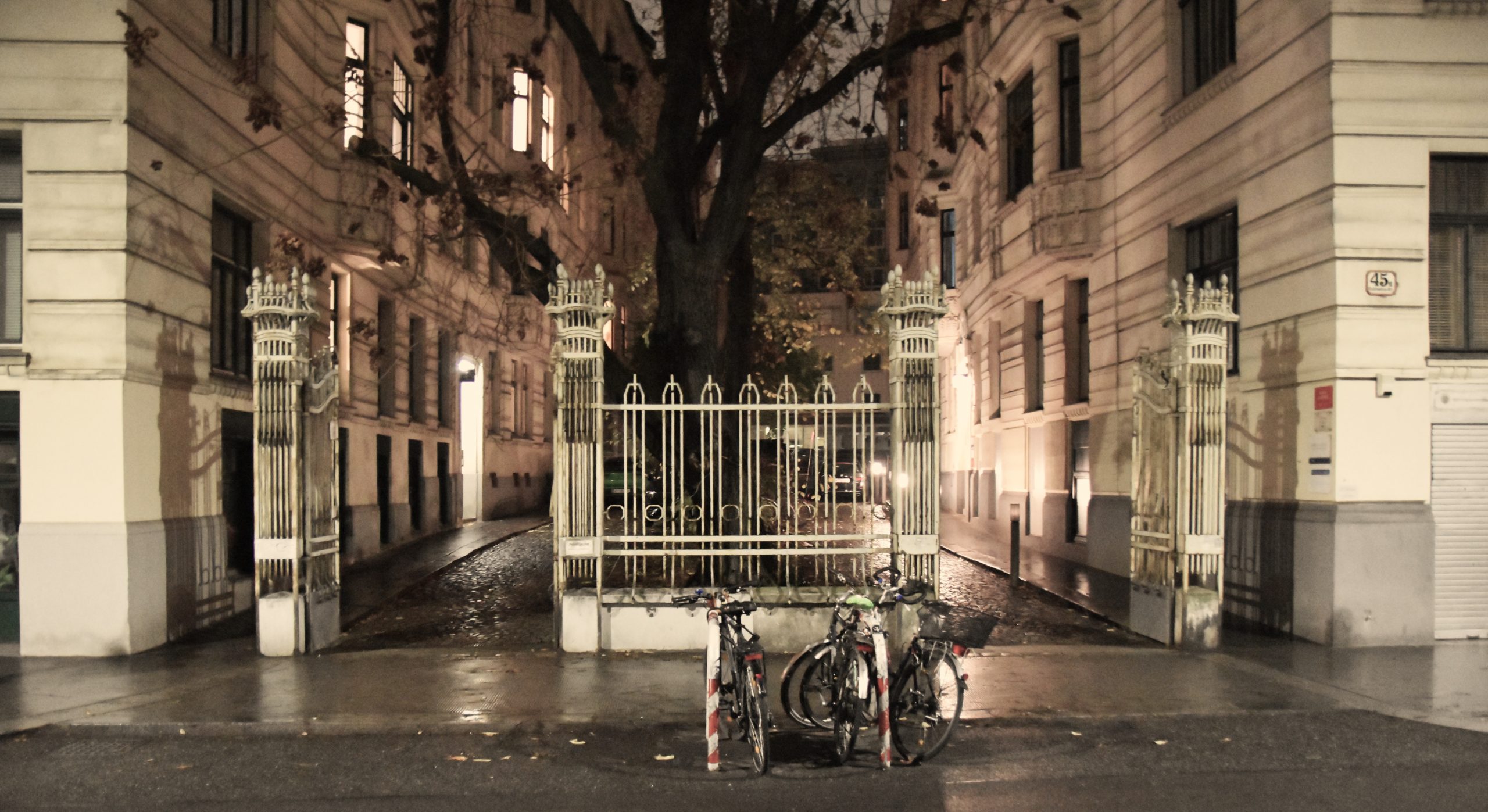
In Austria, people speak German — but it comes with its own unmistakable flavor, especially in Vienna. The city of nearly two million residents is absolutely worth a trip. It’s not only the world-class art museums, the hearty cuisine, and the flawlessly functioning infrastructure — so unlike Germany — that make Vienna such a rewarding destination. It’s also the warm, easy-going locals whose relaxed, slightly guttural Viennese dialect somehow slows down the pace of life the moment you hear it.
On a bigger scale: What makes an Austrian an Austrian? When you ask them about their identity, they often say-only half joking-it rests on three pillars: language, food, and skiing down the Alps. That last one may sound surprising, but it’s rooted in the obligatory school trips to the mountains that turn an entire nation into confident downhill racers.
On this visit, I paid a trip to the Wien Museum, which has been completely reimagined over the past few years. It now offers a comprehensive and accessible journey through the history of Vienna — and, along the way, the rather intricate story of Austria itself, with all its Josephs, Habsburgs, and Austro-Hungarian entanglements. What struck me most, however, was how the museum takes its time to highlight the everyday lives, emotions, habits, and values of Viennese people — for example, those living in the 19th century. It embodies the idea that history should be the story of ordinary people, not merely a chronicle of wealthy elderly men.
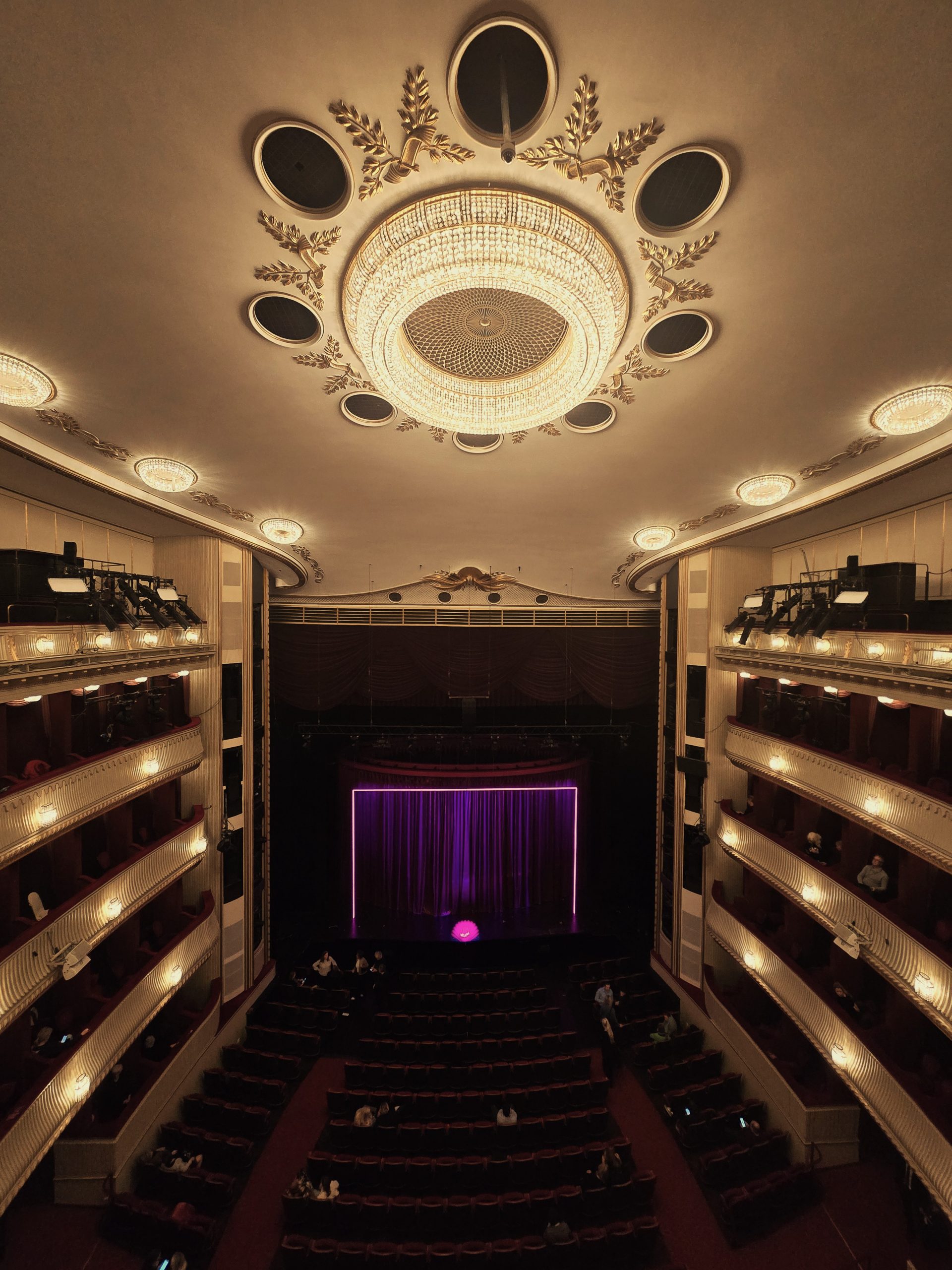
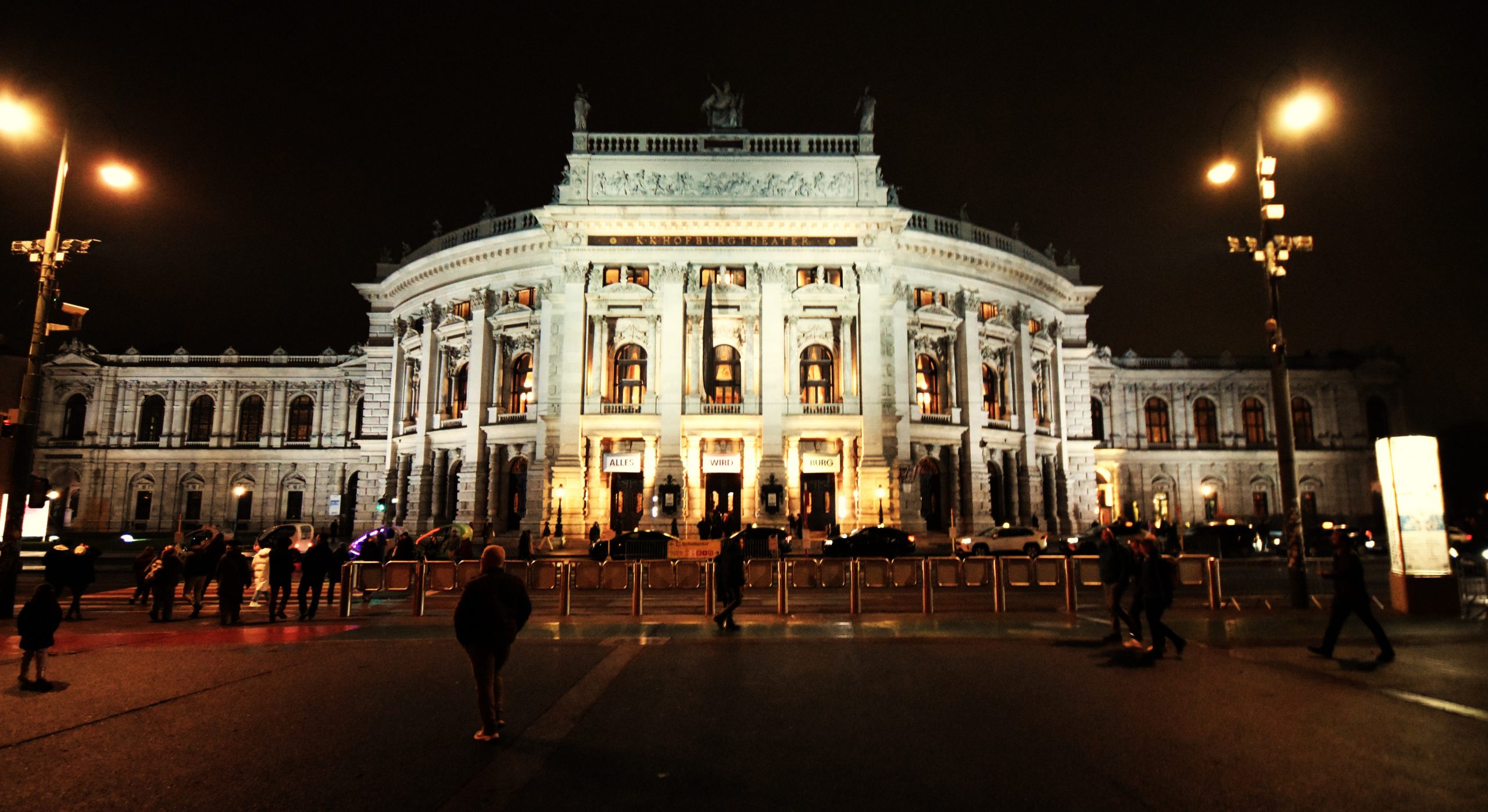
Vienna itself is wonderfully walkable and offers more culture than one could possibly absorb in a single visit. The world-renowned Opera and Philharmonic Orchestra are obvious highlights. And if you speak German, make sure to visit the Burgtheater, perhaps the most important German-language stage outside Berlin.
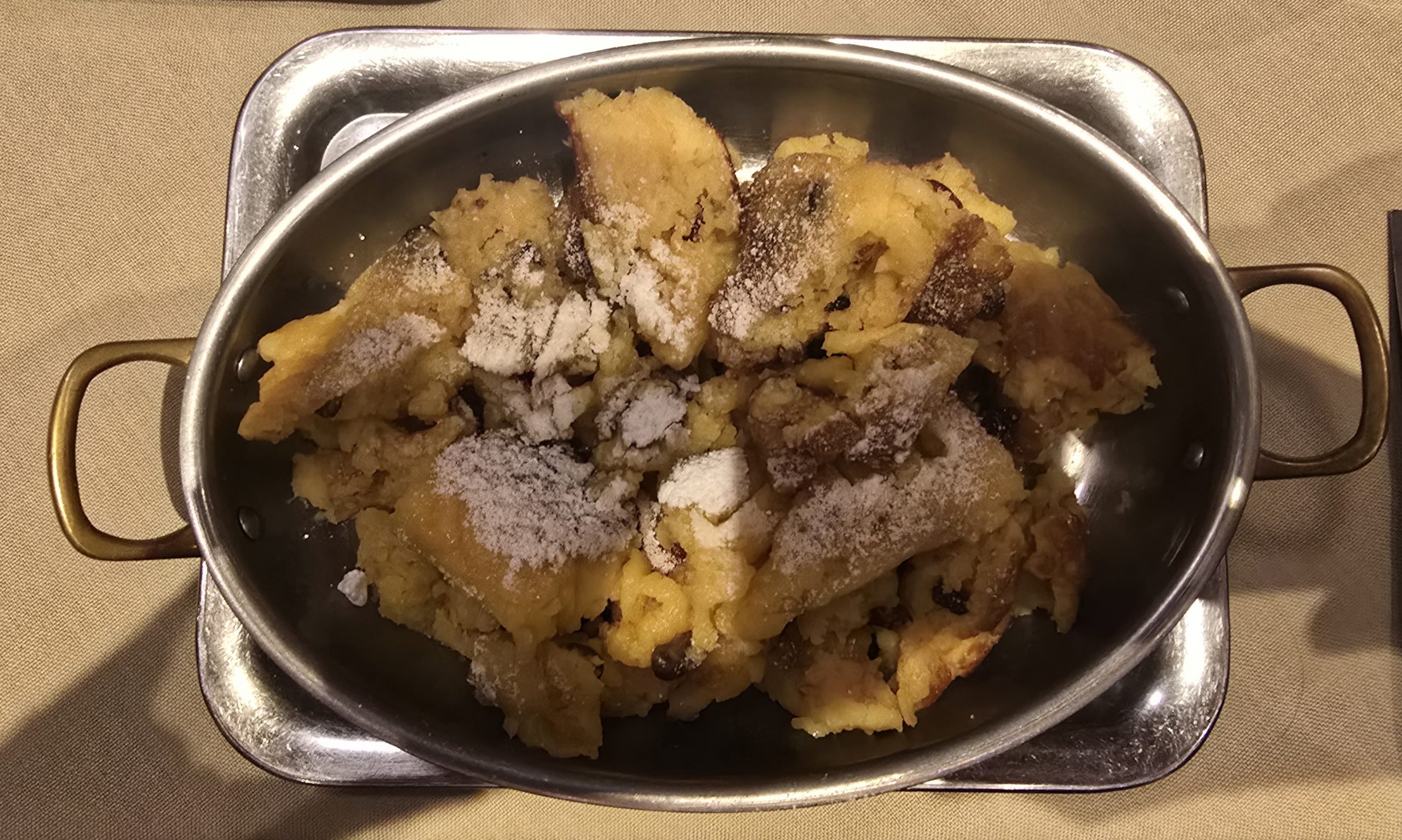
But even if your German isn’t quite there yet, don’t worry. Simply make sure to enjoy a generous portion of Kaiserschmarrn, a fluffy shredded pancake served with applesauce and raisins. It’s an unforgettable treat — and isn’t taste one of the few languages truly spoken everywhere in the world?
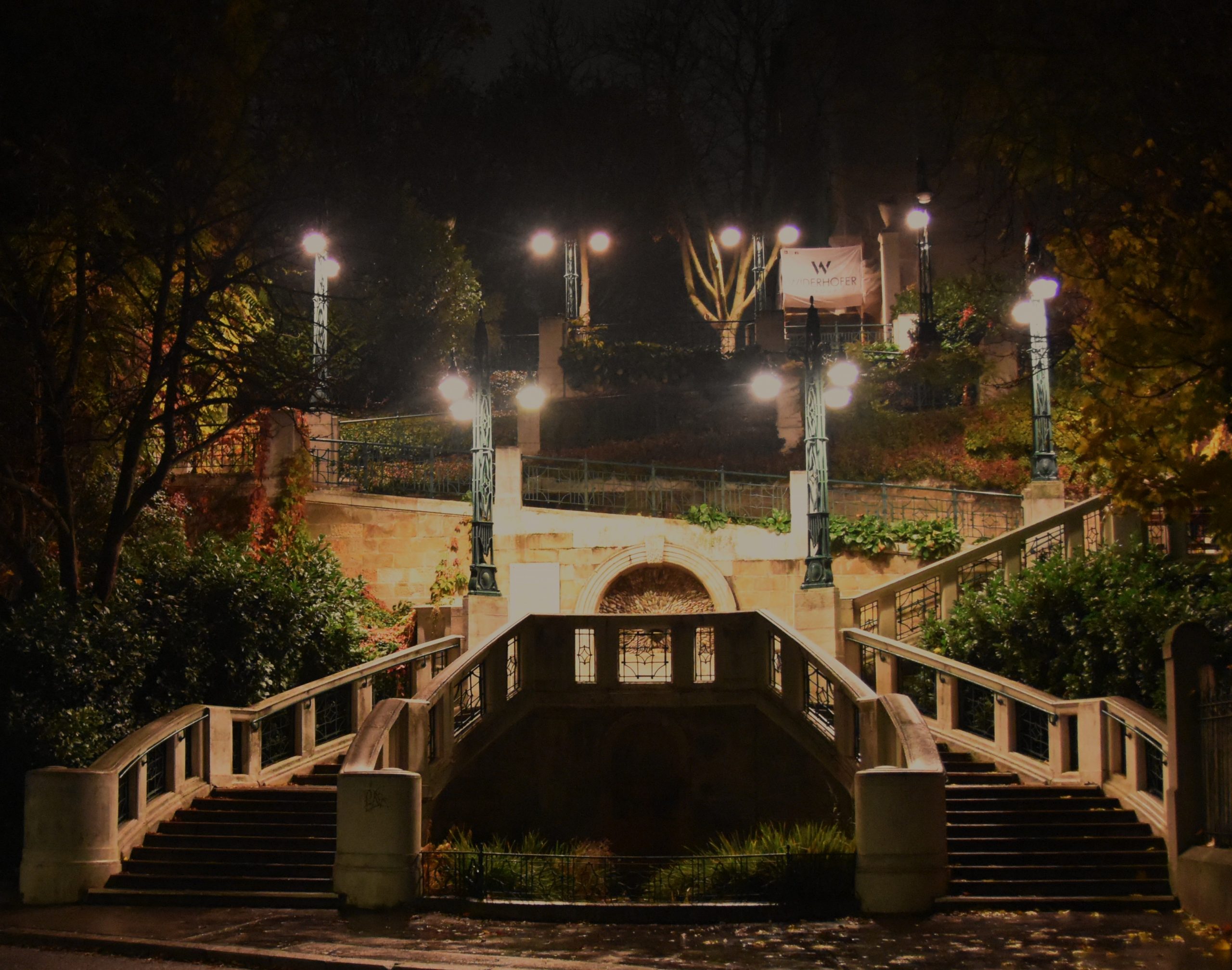
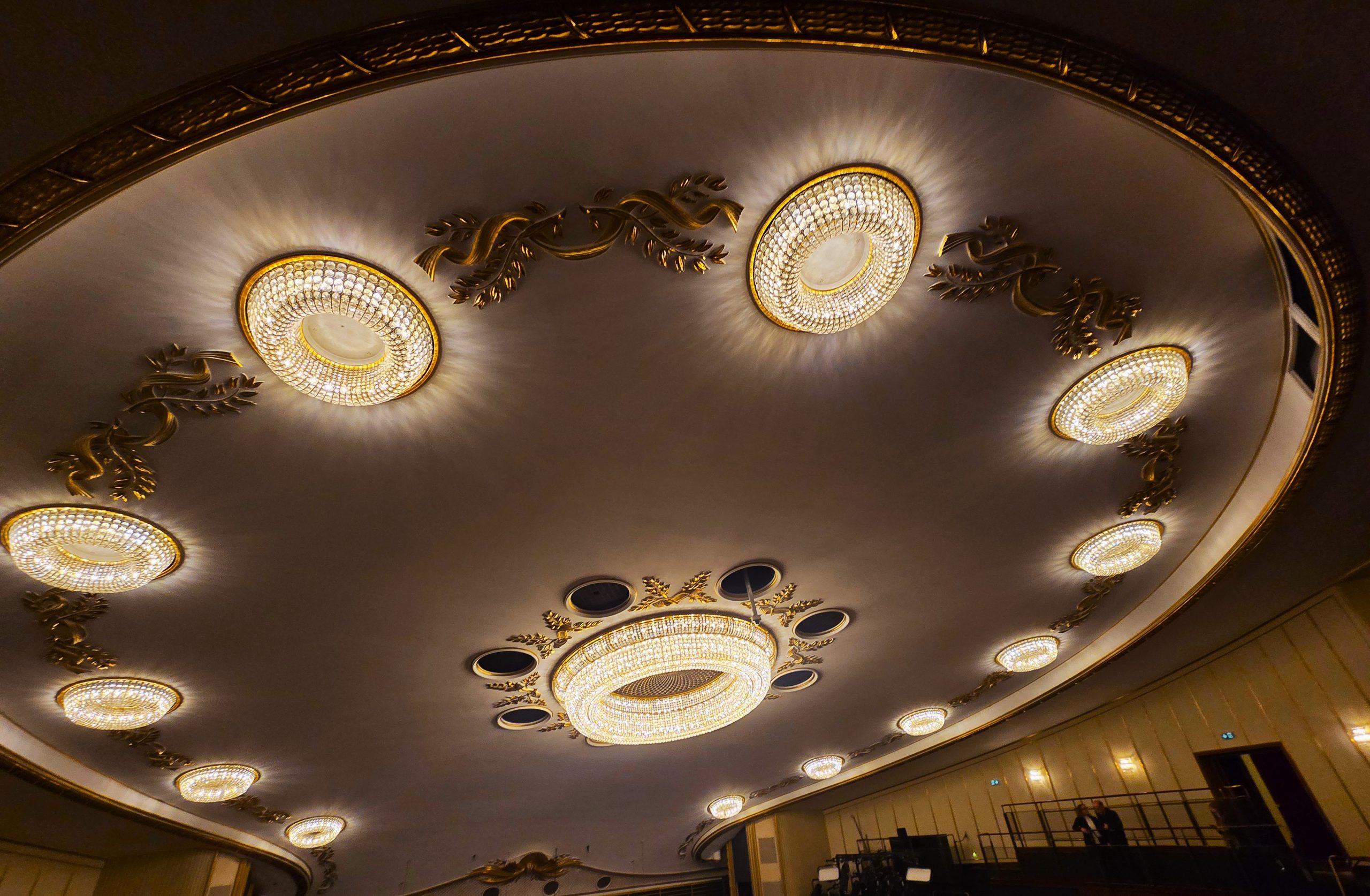
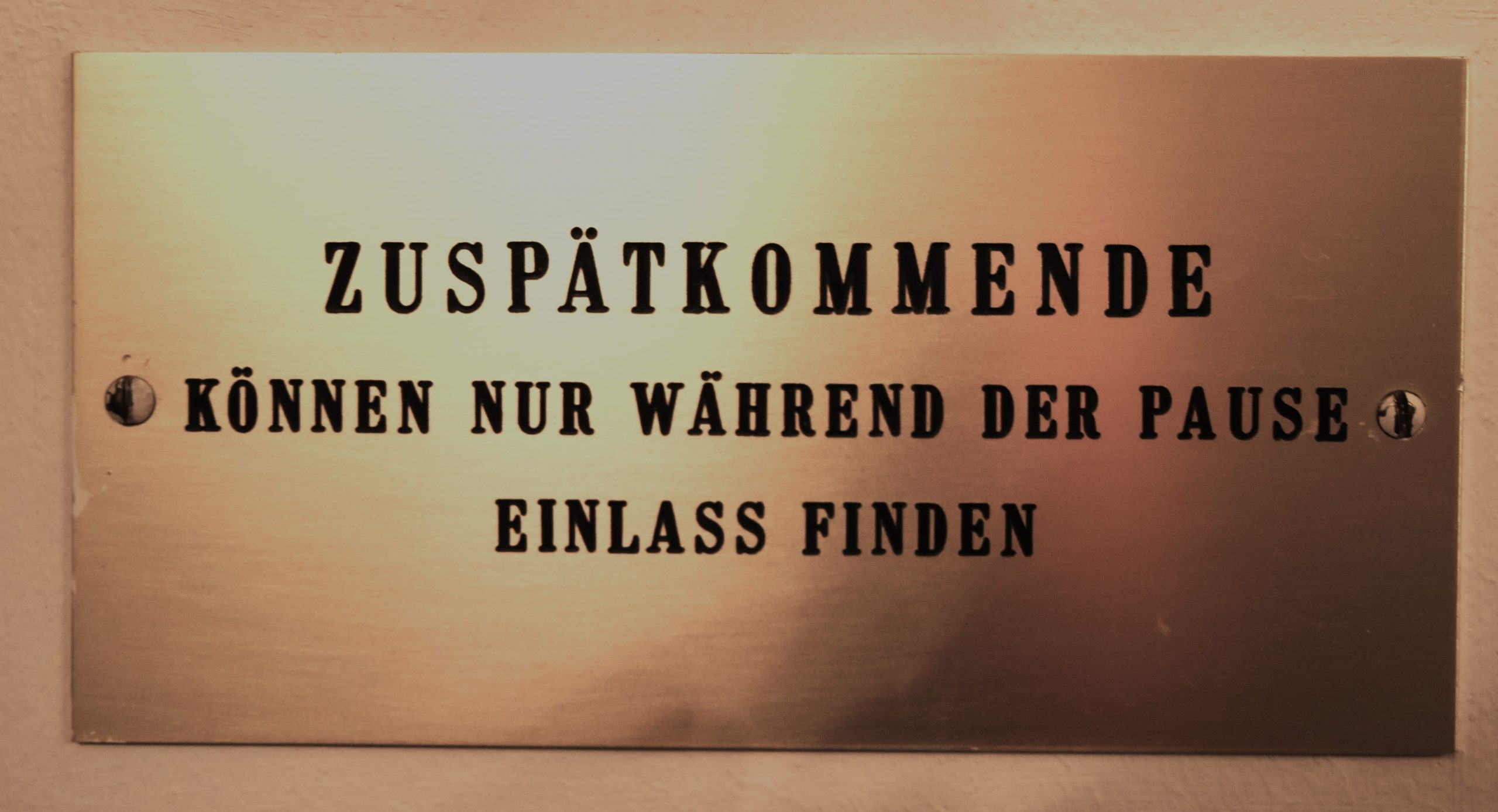
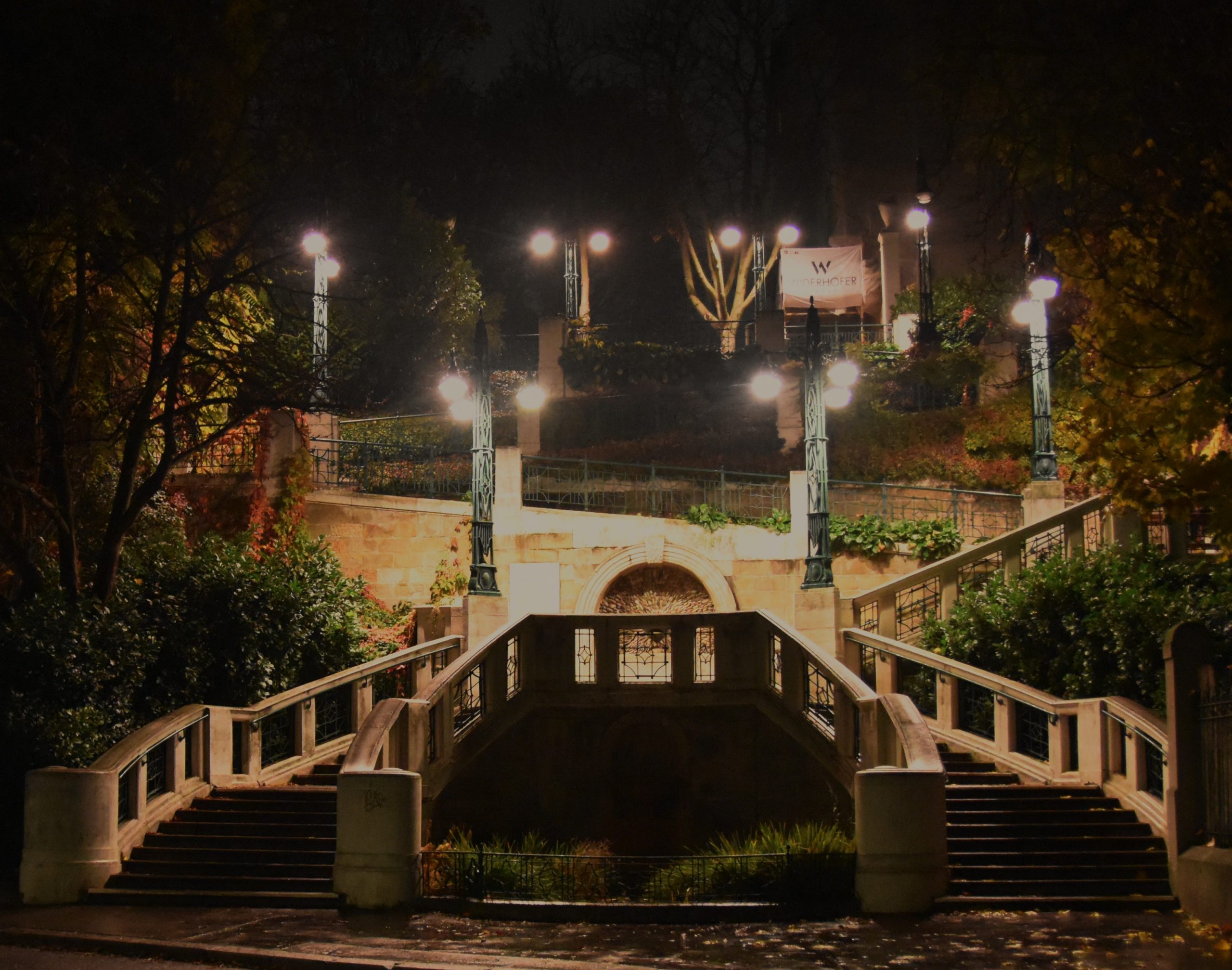
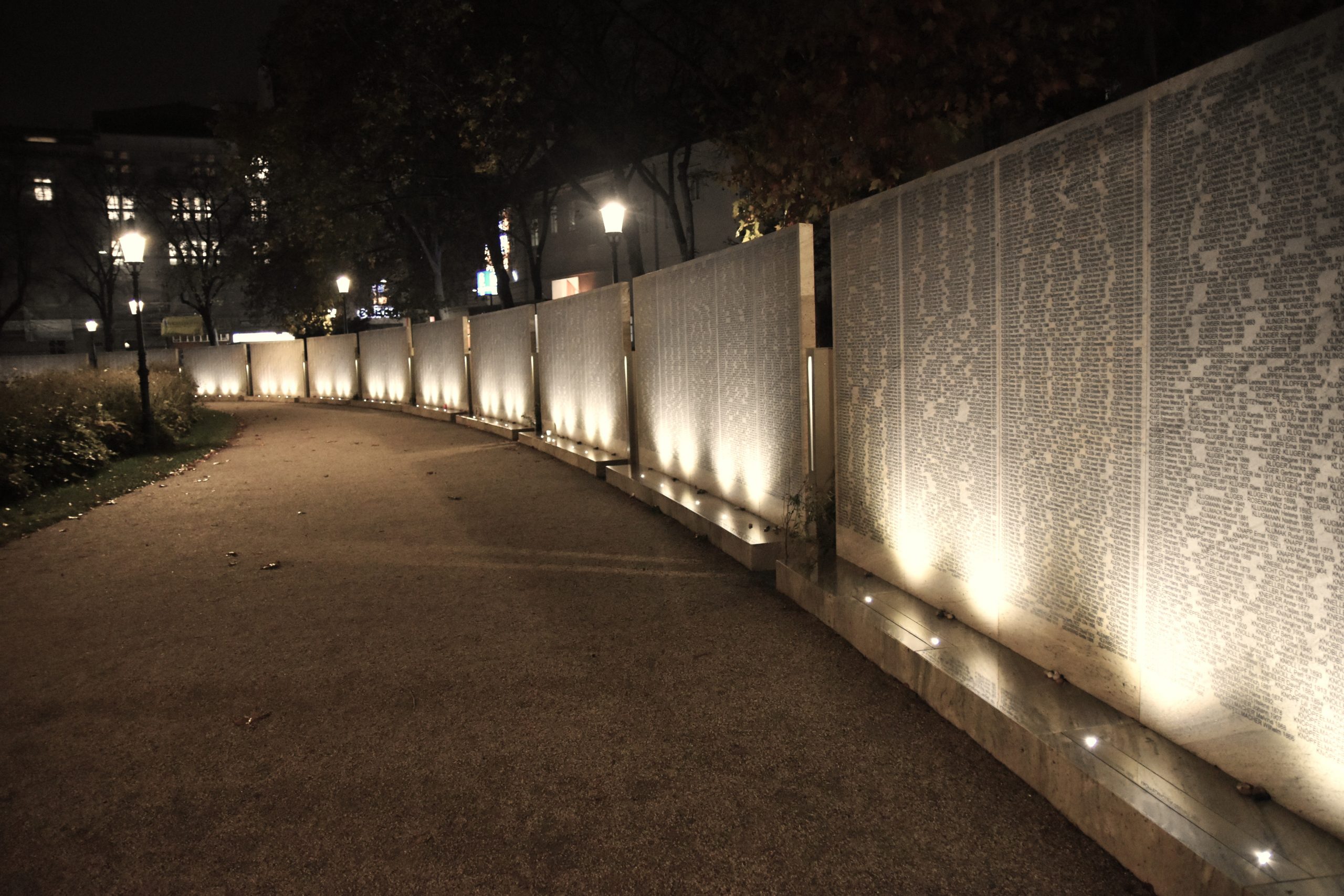
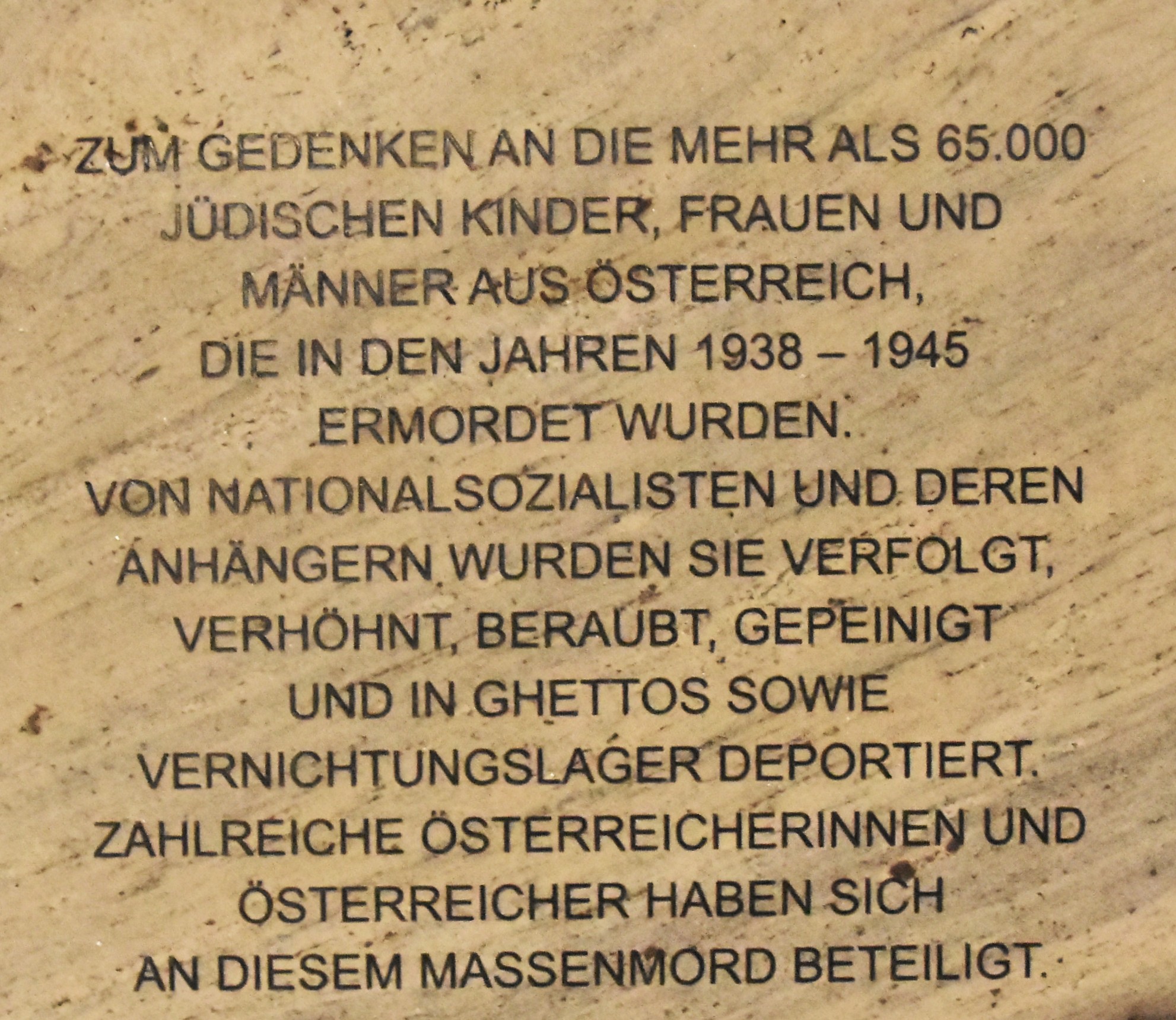
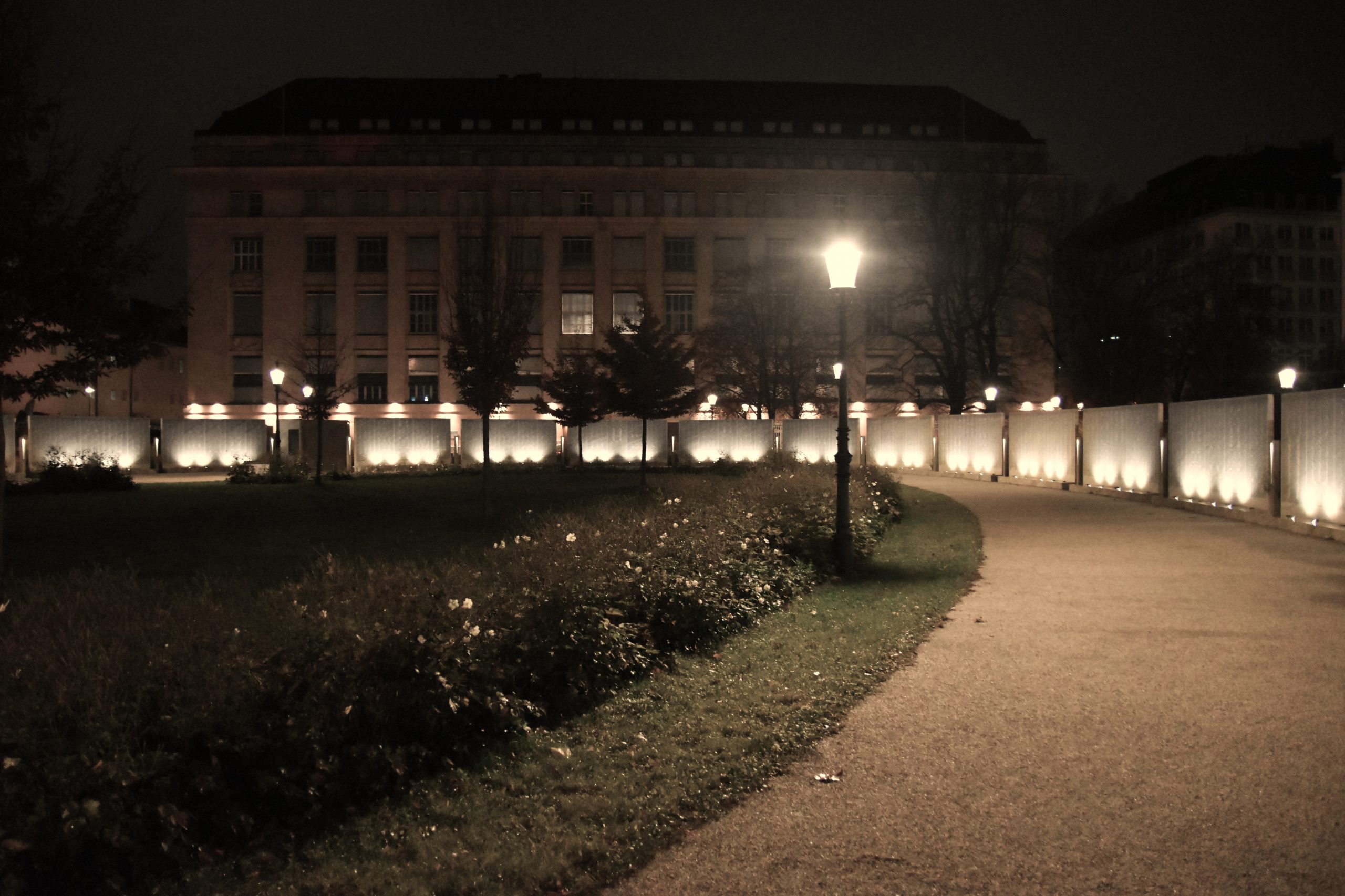
Burgtheater insideBurgtheater outsideStrudlhofstiegeShoah Wall of Names Memorial
It’s no big deal to get from Berlin to Vienna—and no, you don’t need to take a plane. Several train connections run from the river Spree to the Danube. The night train even saves you one night of accommodation in Vienna, which can mean quite a bit of money, since the city is notoriously expensive when it comes to places to stay. Still, I strongly recommend reserving a seat; otherwise, you might end up wandering from seat to seat, always hoping the next one will stay free until Vienna…
Vienna feels enchanted, like traveling through time. The grandeur of the imperial era still lingers everywhere. Of course, Vienna has its issues, but there’s a reason it repeatedly wins the title of the most livable city in Europe.
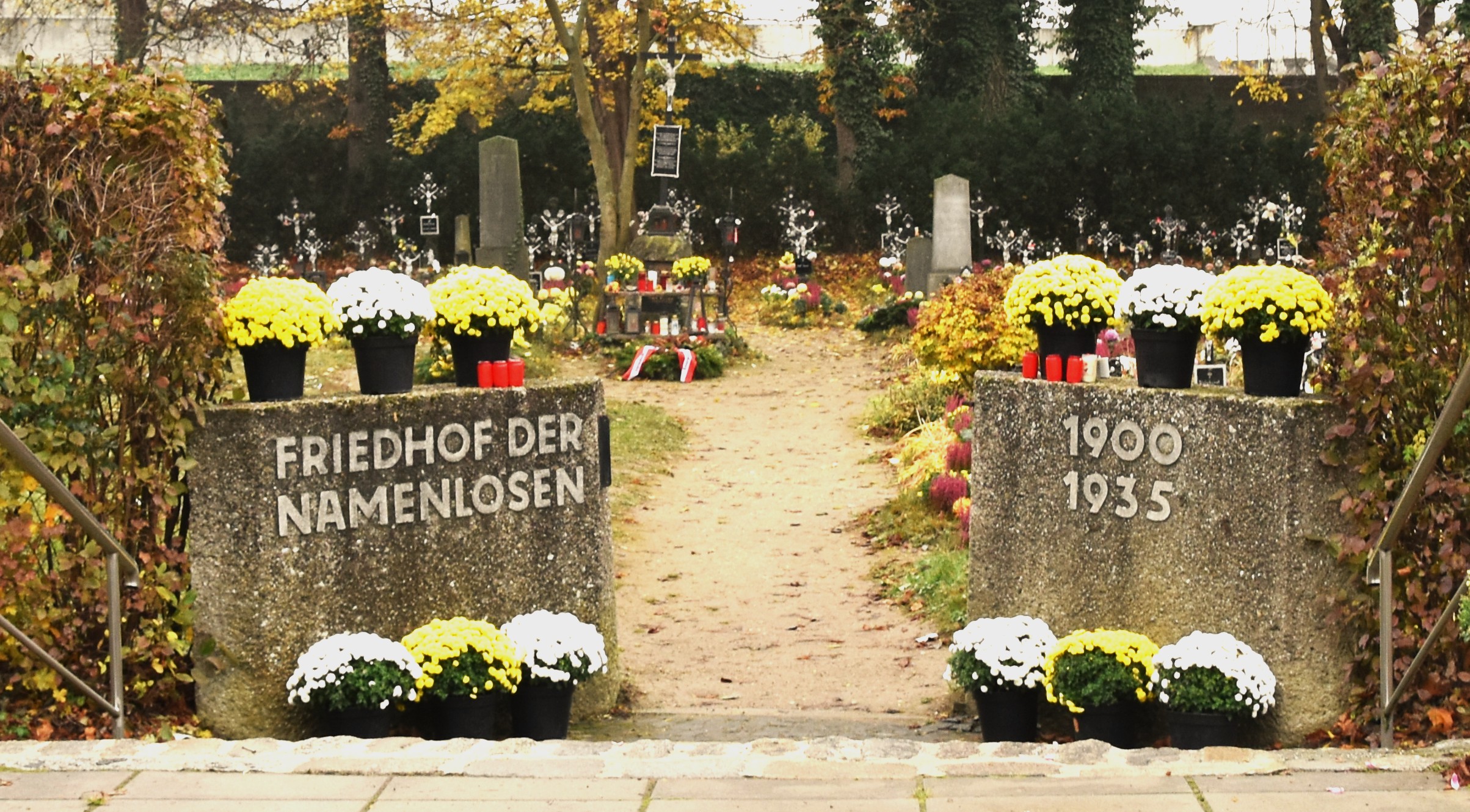
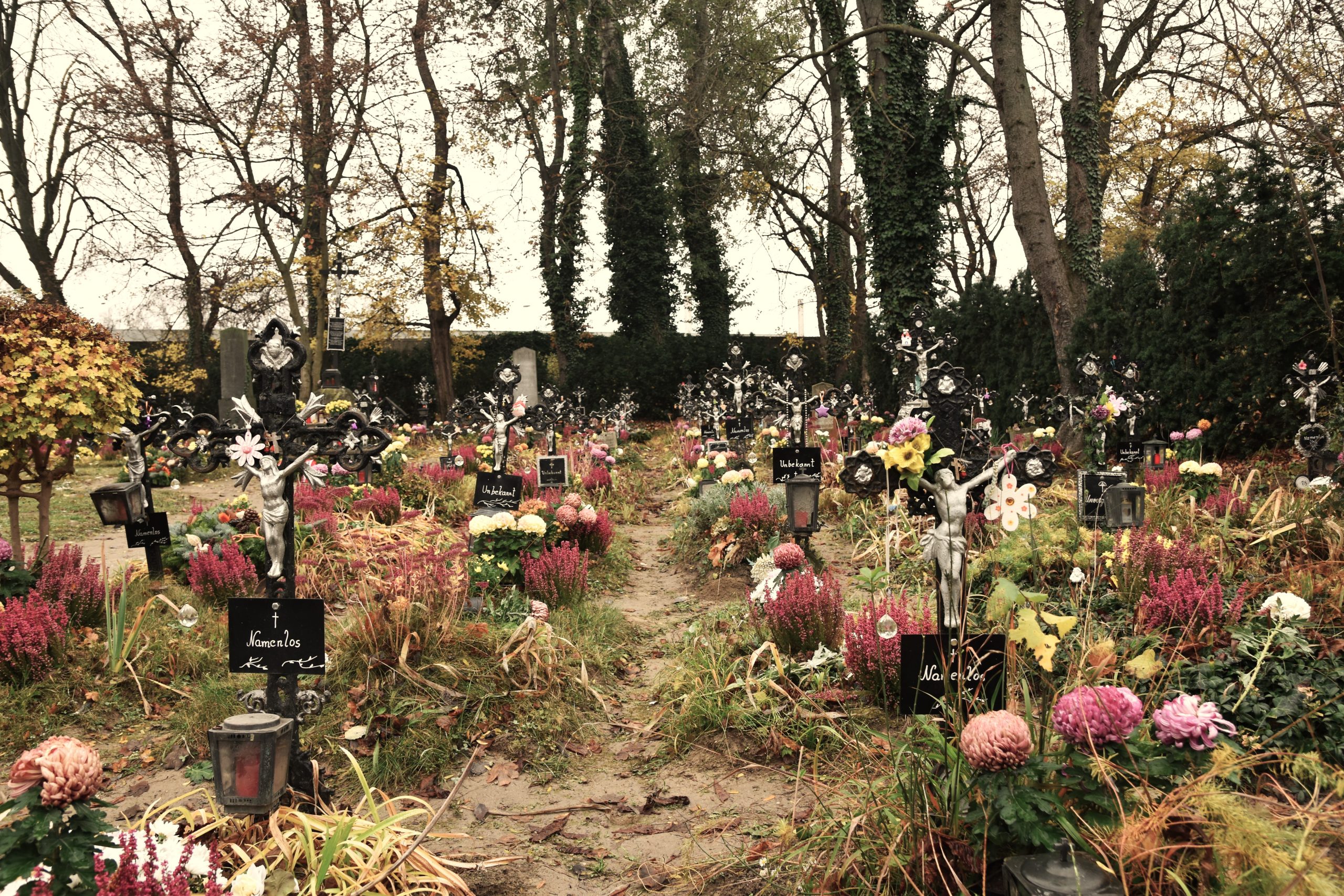
One place I truly love is the Cemetery of the Nameless. Here, a vortex of the Danube used to wash ashore the bodies of people who had drowned—often unidentified. Starting around 1840, an improvised cemetery was created, and it grew over time. Because the river flooded the site regularly, a new cemetery was established at a safer distance in 1900. More than 100 people were buried here. Only half were victims of the river; the others were people who had died by suicide. Since the Catholic Church at the time condemned suicide as a sin, those individuals were buried here as well.
It was the locals who kept the cemetery alive. A carpenter always provided coffins, people brought flowers, and the community cared for the site. Eventually they even financed a small chapel. Today, all the graves have fresh flowers, donated by Vienna’s flower shops. They’re planted by florist apprentices who, throughout the year, also bring wreaths they’ve made as part of their training. Locals bring toys to the graves of the two children buried here.
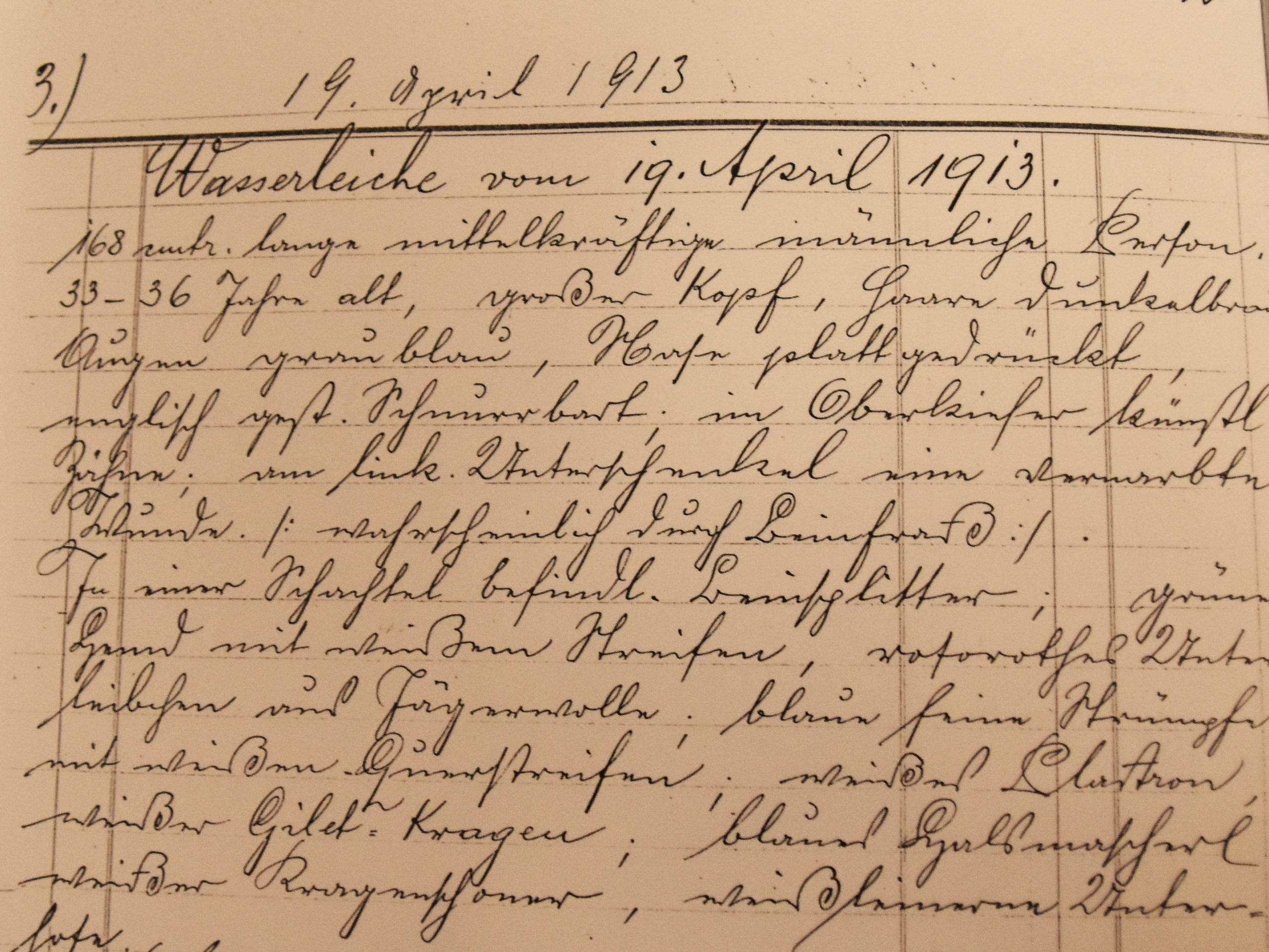
When I visited today, I had the privilege of meeting a member of the family that has cared for the cemetery for decades. His grandfather, a professional undertaker, looked after the site even after it stopped being used in 1940—when the nearby harbor was expanded and the dangerous vortex disappeared. He did so without pay. The family has remained responsible for the cemetery ever since. One of them, whom I met today, was explaining the history to a group of locals. He showed a folder containing notes from the original files about those who were found. He shared many stories: how all the crosses come from abandoned graves across Vienna, how the necklaces and small objects adorning the graves are donations from locals who still care.
I couldn’t help but wonder why they care so much. Those buried here have been gone for a long time; it’s not grieving families tending to their own. Perhaps it’s a feeling all humans share: however successful, beautiful, wealthy, or celebrated we may be in life, in the end we are all the same. Caring for the nameless may, in a way, be caring for all of us.
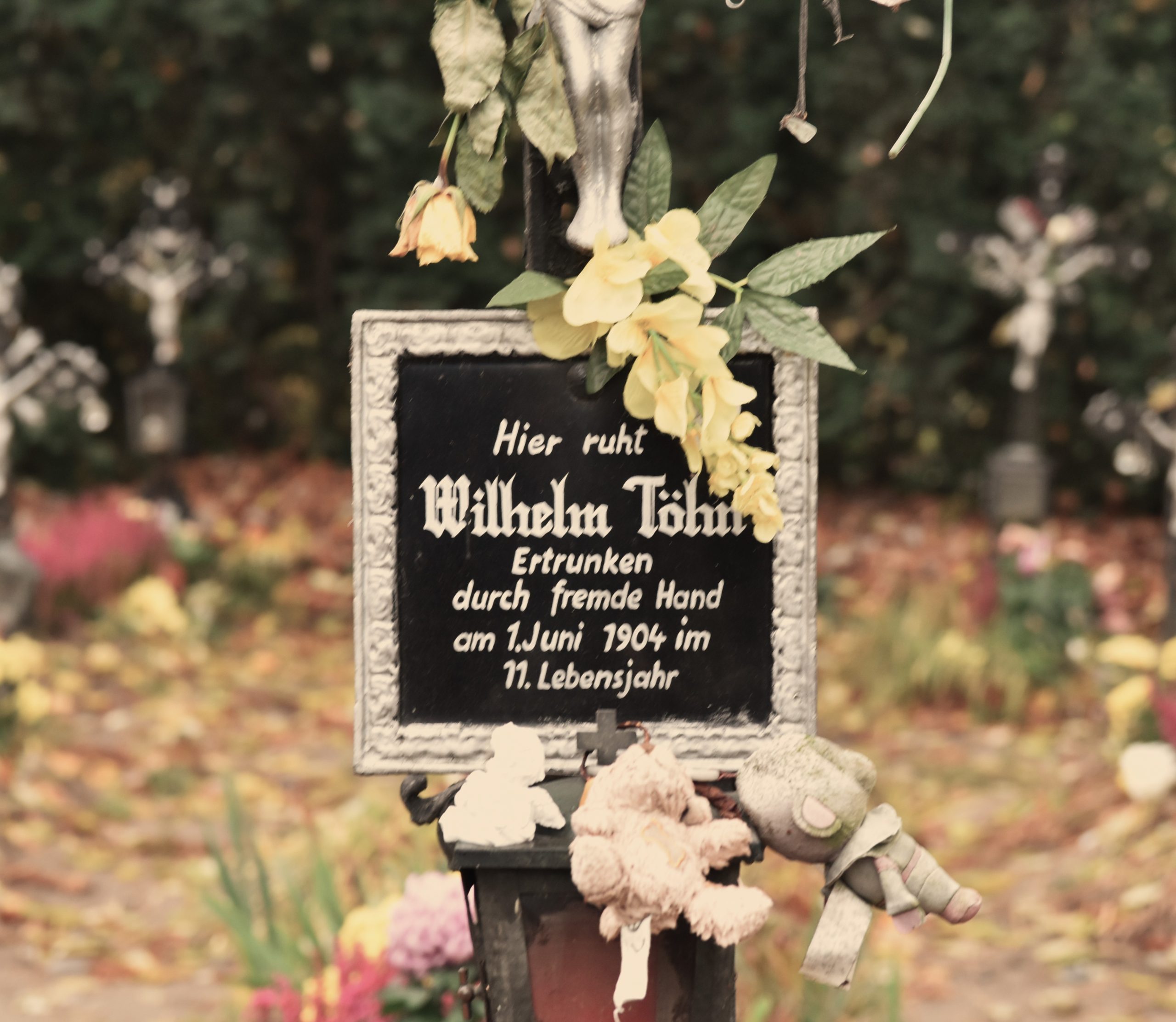
“Here rests Wilhelm Thön, drowned by another’s hand on June 1, 1904, 11 years old.”files containing sparse information about those who drowned
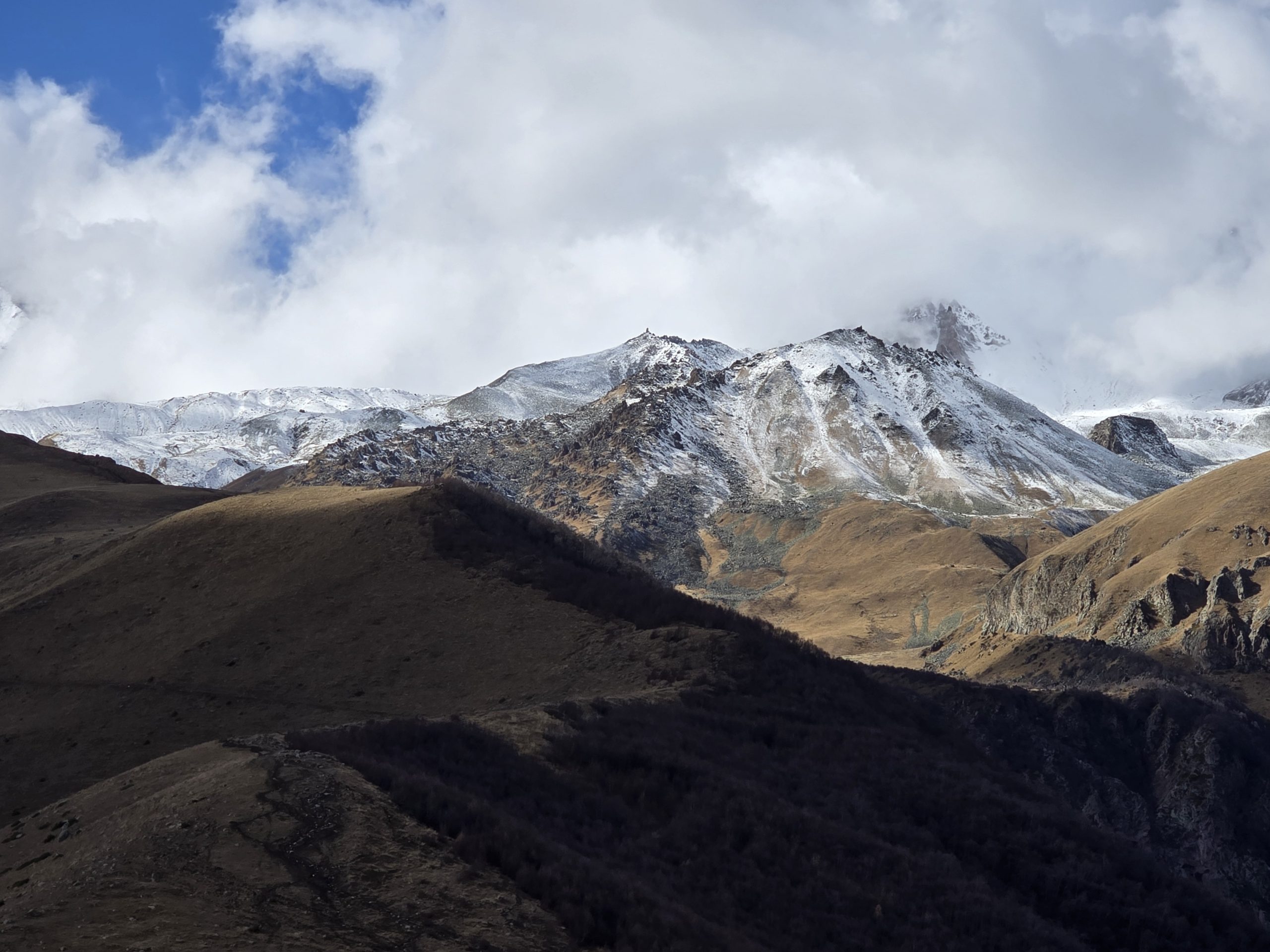
When staying in Tbilisi, there are several possible day trips. Number one on the list must be a ride into the high mountains of the Caucasus and the stunning Gergeti Trinity Church. The trip takes about 12 hours in total and is most easily done by rental car.
The drive follows the former Georgian Military Road, the main connection between Russia (north of Georgia) and Turkey and Iran (to the south). Given the importance of that connection, one might assume it’s a huge highway. It’s not. The road’s surface is clean and drivable, yet there is a lot of traffic—truck after truck heading south to north, supplying Russia with whatever it needs from Iran and Turkey.
Careful driving is necessary, particularly as local drivers sometimes attempt overtakes rather hastily, even with oncoming traffic. Along the way, one learns that there is indeed enough space for three cars side by side…
Smart move: start very early, around 6 a.m., so traffic is not too bad.
It’s a journey of roughly 100 miles. Elevation in Tbilisi is 450 meters (1,500 ft), while the church sits at 2,170 meters (7,100 ft) – so for most of the drive, the road leads uphill.
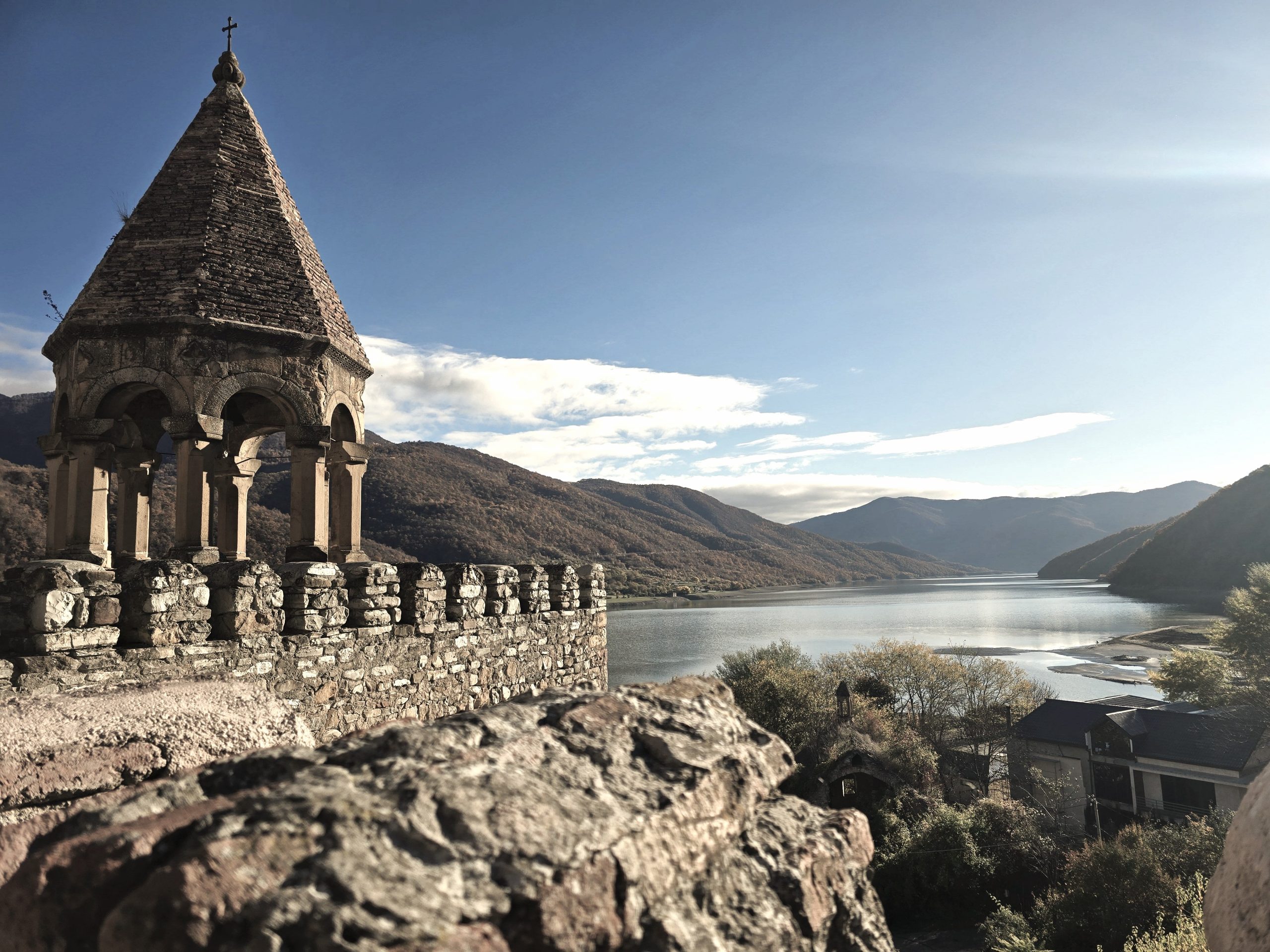
The first stop should be Ananuri Fortress, whose oldest parts date back to the fourteenth century. It combines several churches and fortification works. The fortress once served as the seat of local rulers and controlled access via the Military Road to Tbilisi. The views here are beautiful, the modern reservoir certainly contributes to that..
The water here is for Tbilisi. Seeing the huge capacity here it is clear that the malfuntions of the water supply in the capital have nothing to do with a lack of water. Again, it’s the infrastructure… .
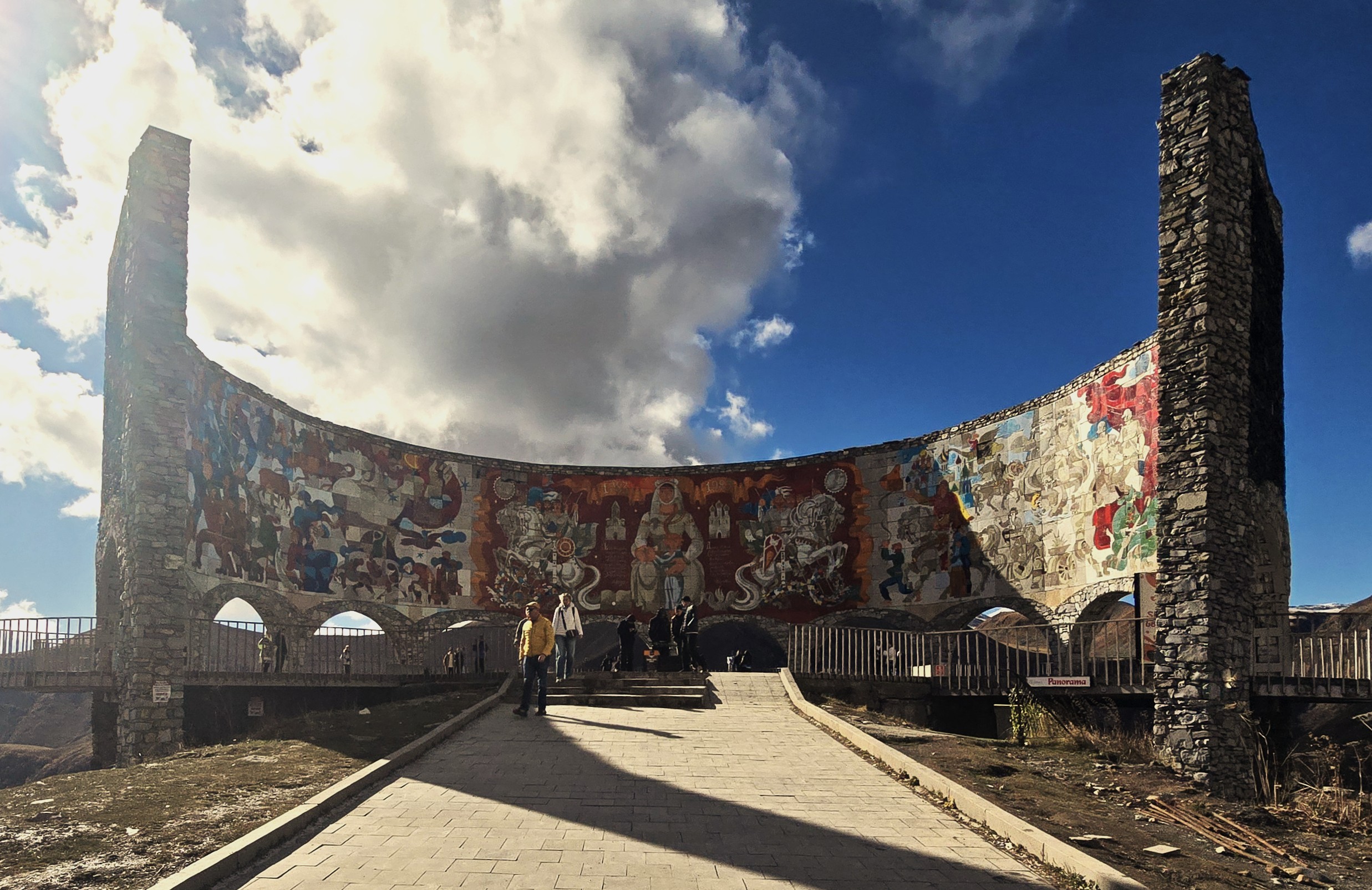
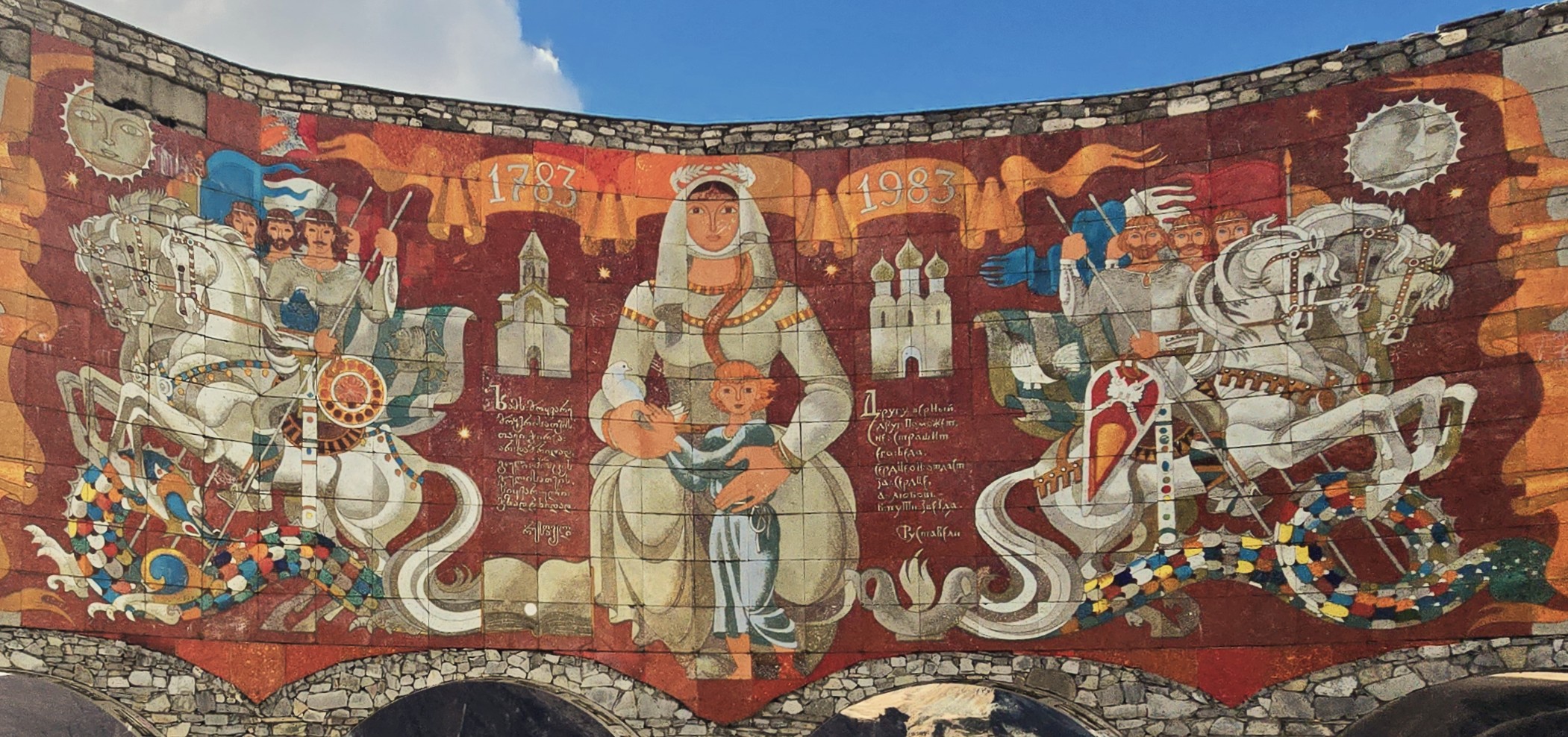
Farther up the road lies a massive rotunda on a mountain pass. It’s windy up here, and the view down the valley is spectacular. The main attraction, however, is the rotunda of the Memorial for the Georgian – Russian Friendship and its mosaic.
Opened in 1983, it was meant to symbolize the friendship between Russia and Georgia. The year was no coincidence—it marked the 200th anniversary of the Treaty of Georgievsk, a much-debated agreement in which the King of Georgia accepted Russian supremacy in exchange for the Tsar’s protection.
The Russian Empire, however, did not protect the Georgians when the Turks and later the Persians attacked. Still, in 1982 (!) the Soviet Union referred back to the treaty to remind Georgians of their supposed obligation to obey Russian (i.e., Soviet) rule. As the Russian–Georgian relationship has deteriorated significantly since then, the place today bears a cynical undertone.
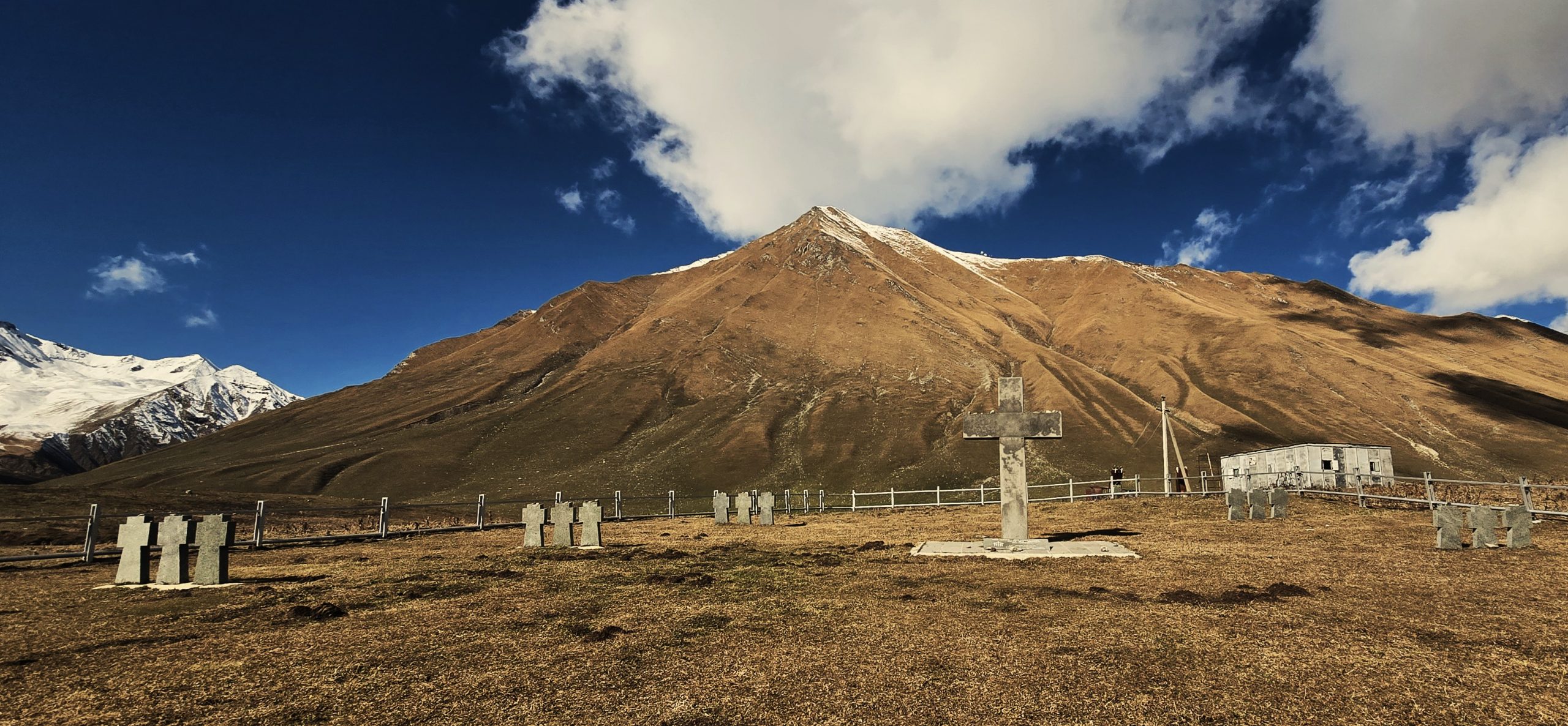
Next stop, easy to oversee: The German cemetery. After 1945, German POWs worked on the Military Road in the mountains not far from the memorial of Georgian–Russian friendship. Living conditions in the mountains are harsh, particularly in winter… .
That is what memorials are for: not to forget. Not to forget even those whose stories are not considered as worth to remember by those in power.
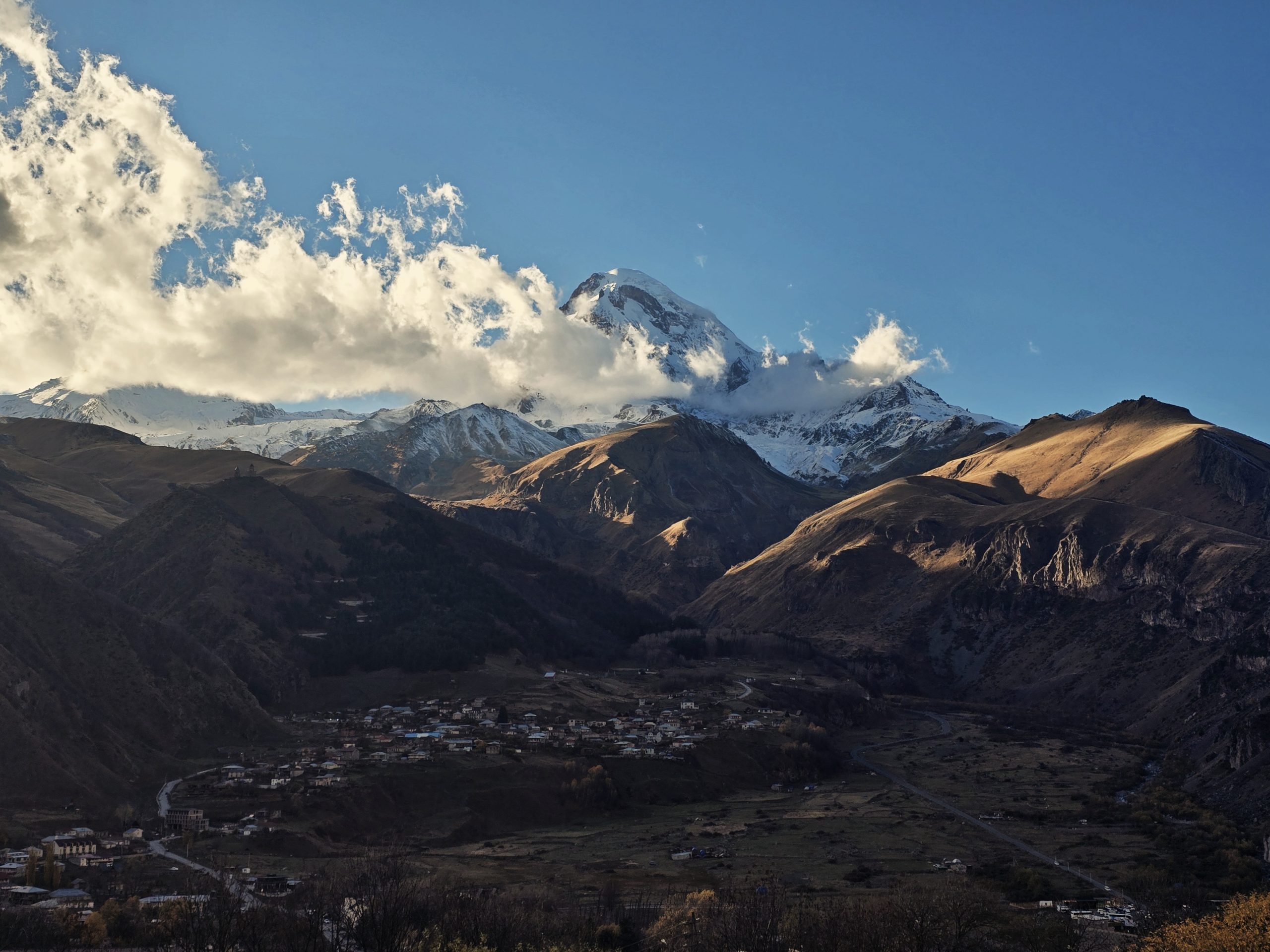
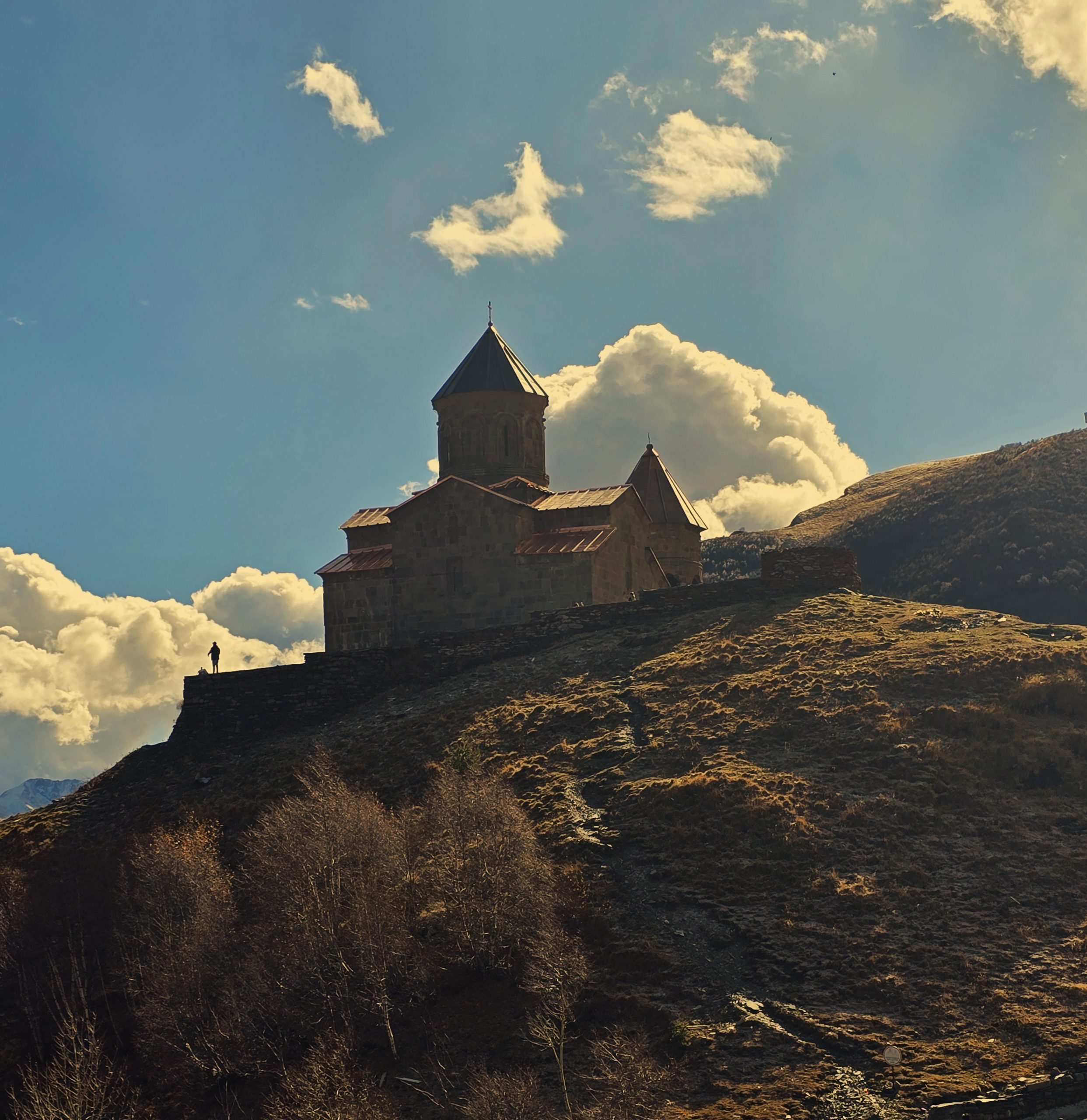
Finally, Gergeti Trinity Church itself is an absolutely stunning chapel high up in the mountains on a peak. It takes a few steep serpentines to drive there. It’s off-season now, so there weren’t the crowds that surround the church in summer. Luckily there also was no construction work and the inevitable scaffolding that comes with it. The church was built in the fourteenth century—and it looks as if not a single stone has changed since then. In the past, it often served as a place to hide the state treasury and religious artifacts when yet another conqueror invaded Georgia. Today, it has become the symbol of Georgia. Religion still plays an important role in the country, the vast majority of citizens say that faith (in the version of the Georian Orthodox Chruch) plays an important role in their life.
On the way back to Tbilisi (before I fell asleep after the rather long day) I couldn’t help but think what a beautiful country Georgia is … .
Liked this post? Email me to say hi and I’ll sign you up for more articles like this: send mail
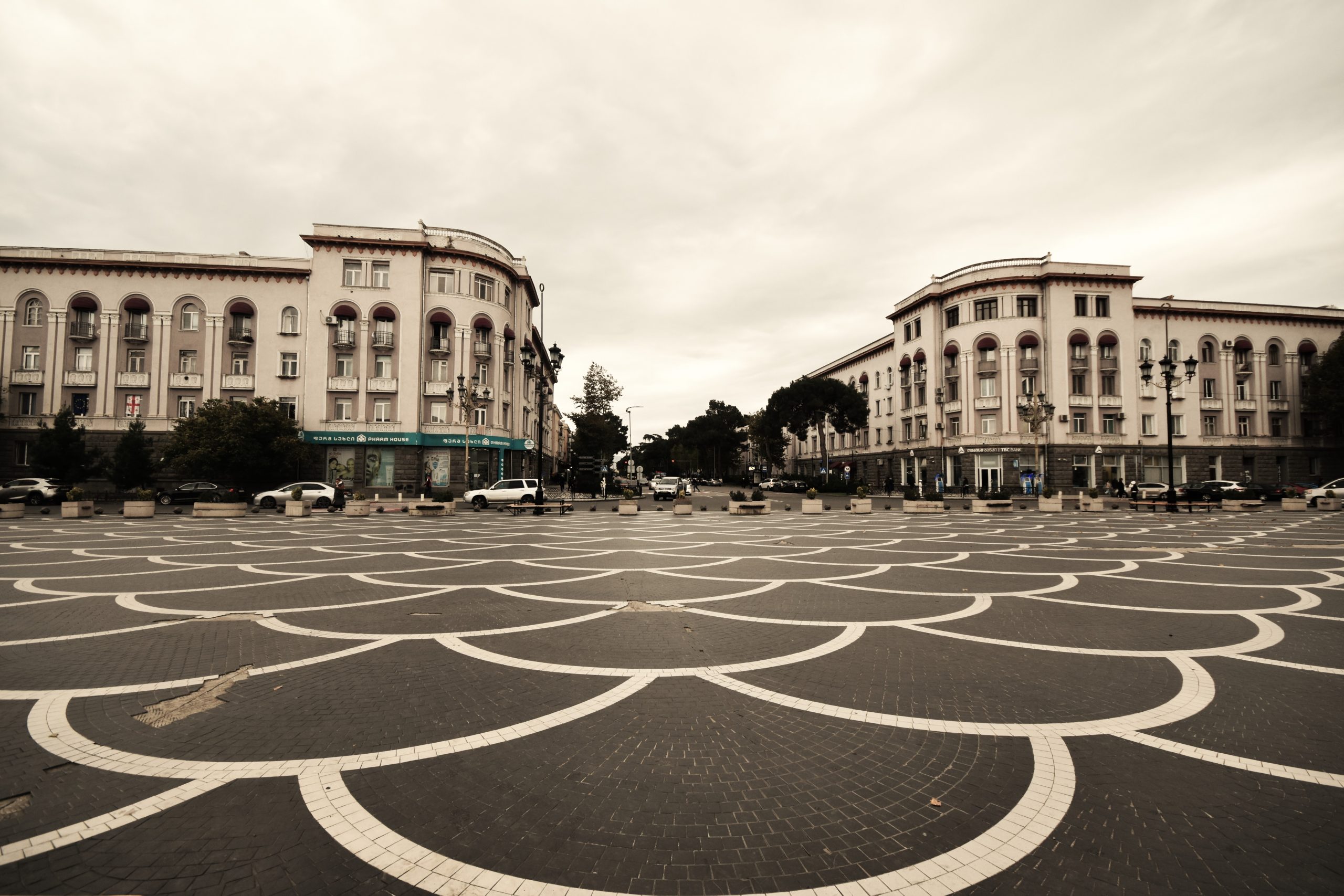
The city of Rustavi lies about a forty-minute drive south of Tbilisi and is home to roughly 130,000 residents. It is the fourth-largest city in Georgia and offers an intriguing mix of architectural styles. There are, in fact, almost no tourists here—simply because there seems to be nothing to see.
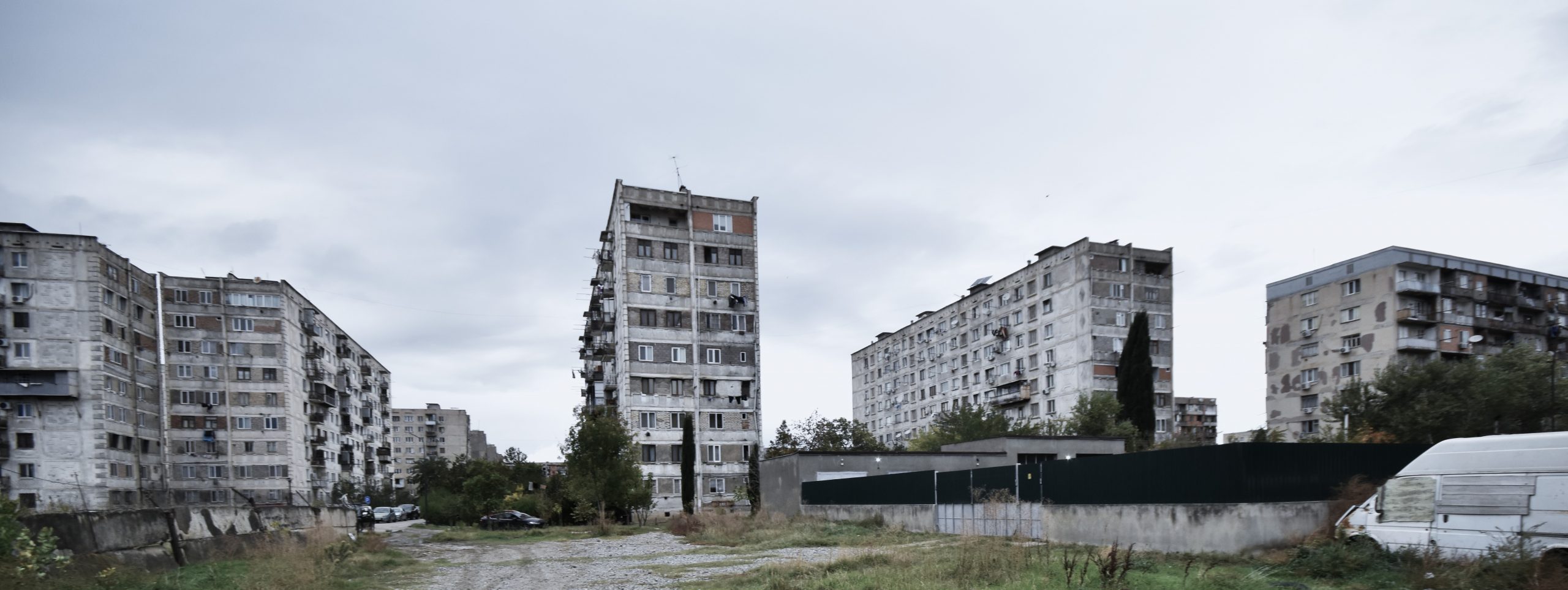
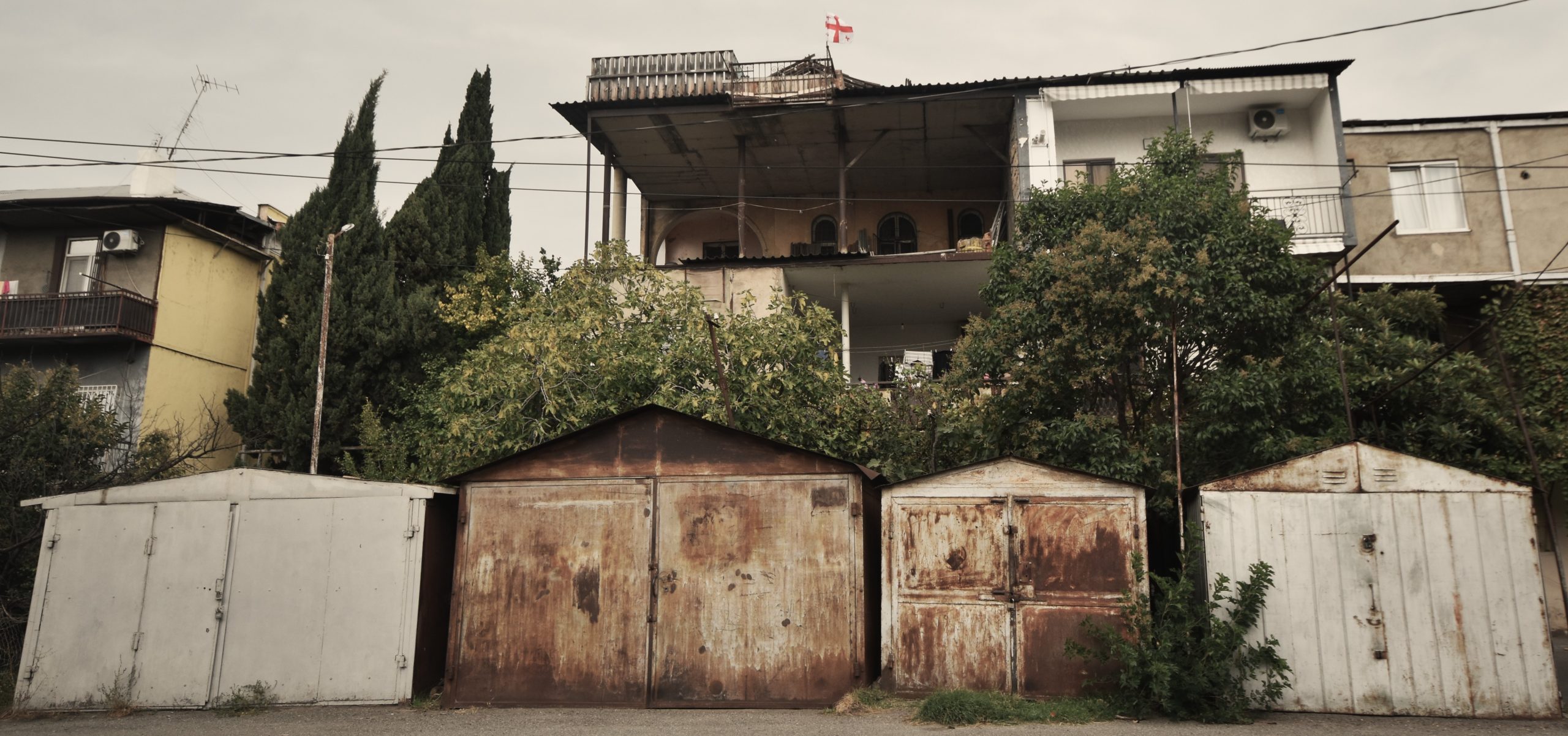
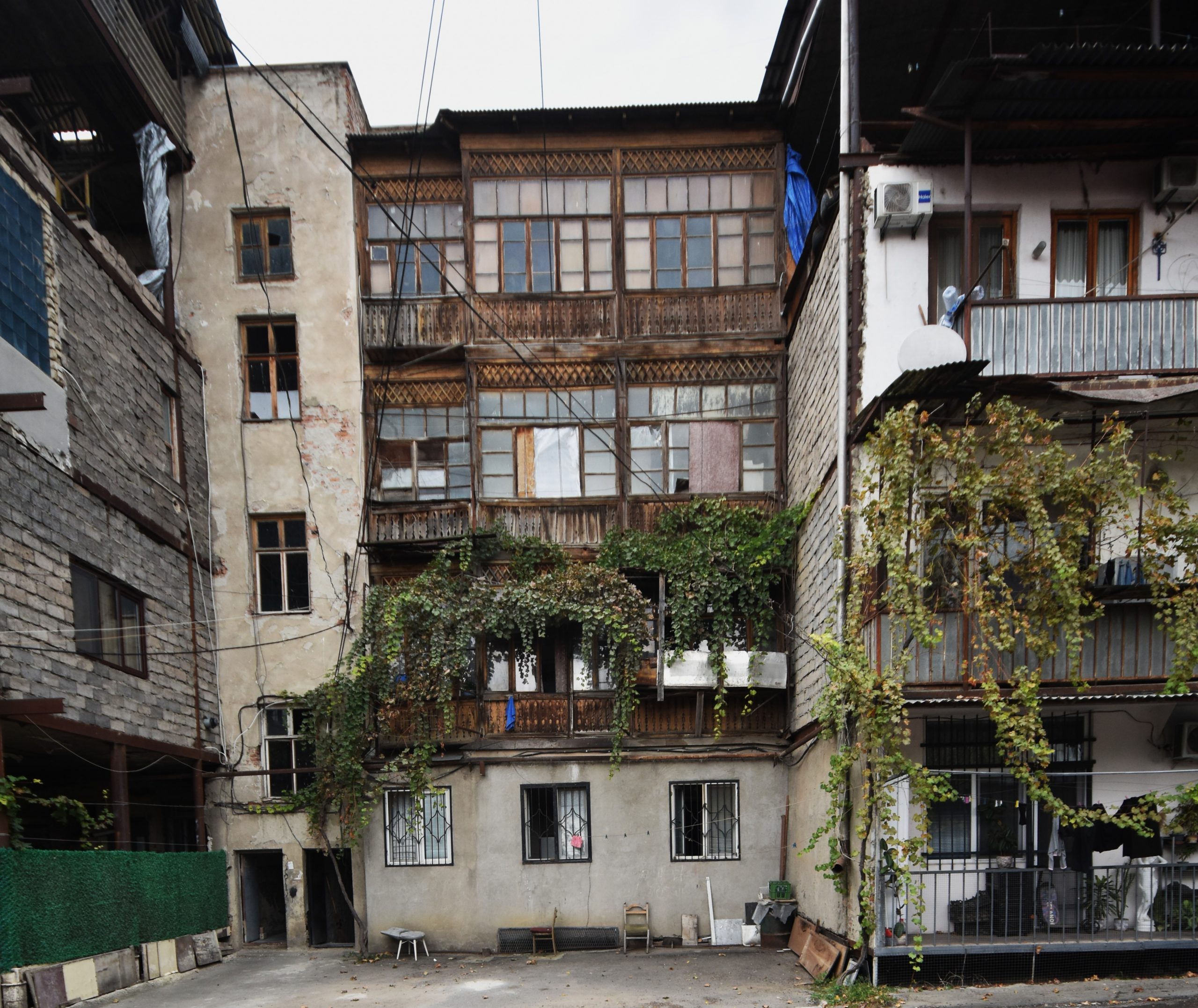
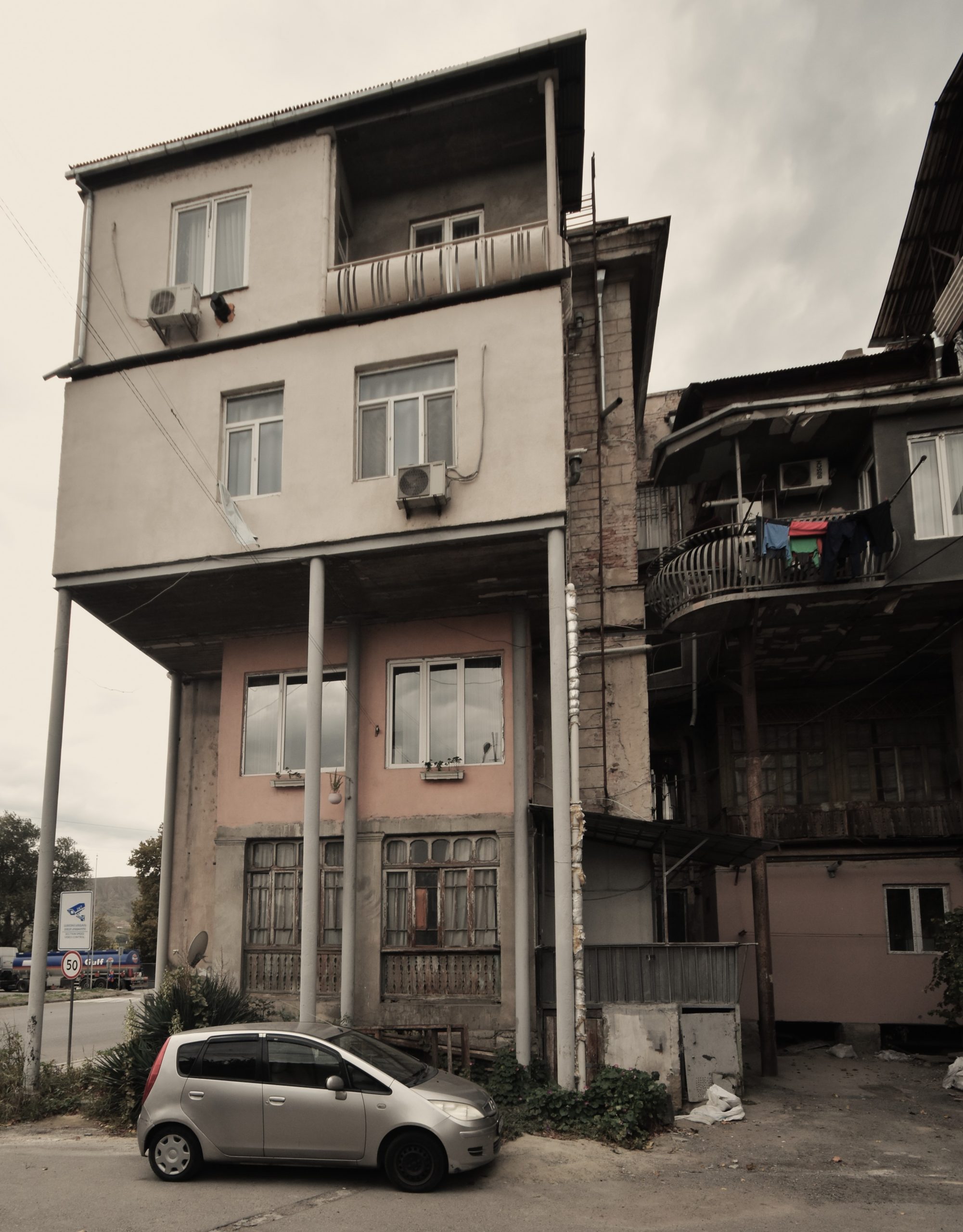
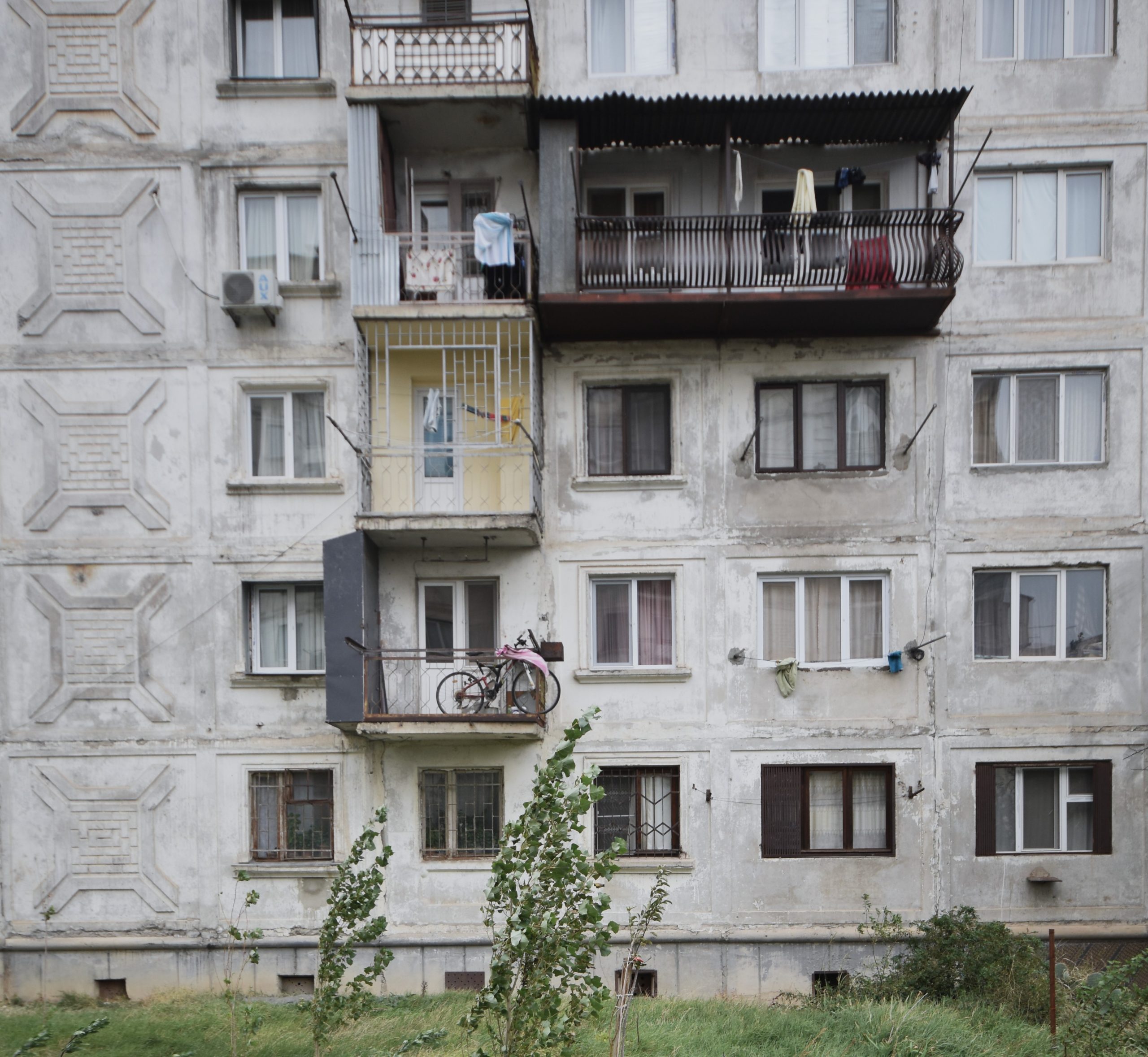
Downtown Rustavi consists of well-maintained Soviet-era architecture, built in the late 1940s and early 1950s. But that impression holds only along the main avenues. The moment I turned off those streets and walked behind the façades, Rustavi appeared worn down, lived-in, and as charmingly old as many other places in Georgia. I’m aware that this is an outsider’s perspective; in reality, I wouldn’t be happy if the building I lived in looked like that. I can’t imagine the infrastructure inside these apartments being of particularly high quality. For example, tap water isn’t drinkable in Georgia—not because of the water itself (which is excellent) but because of the pipes.
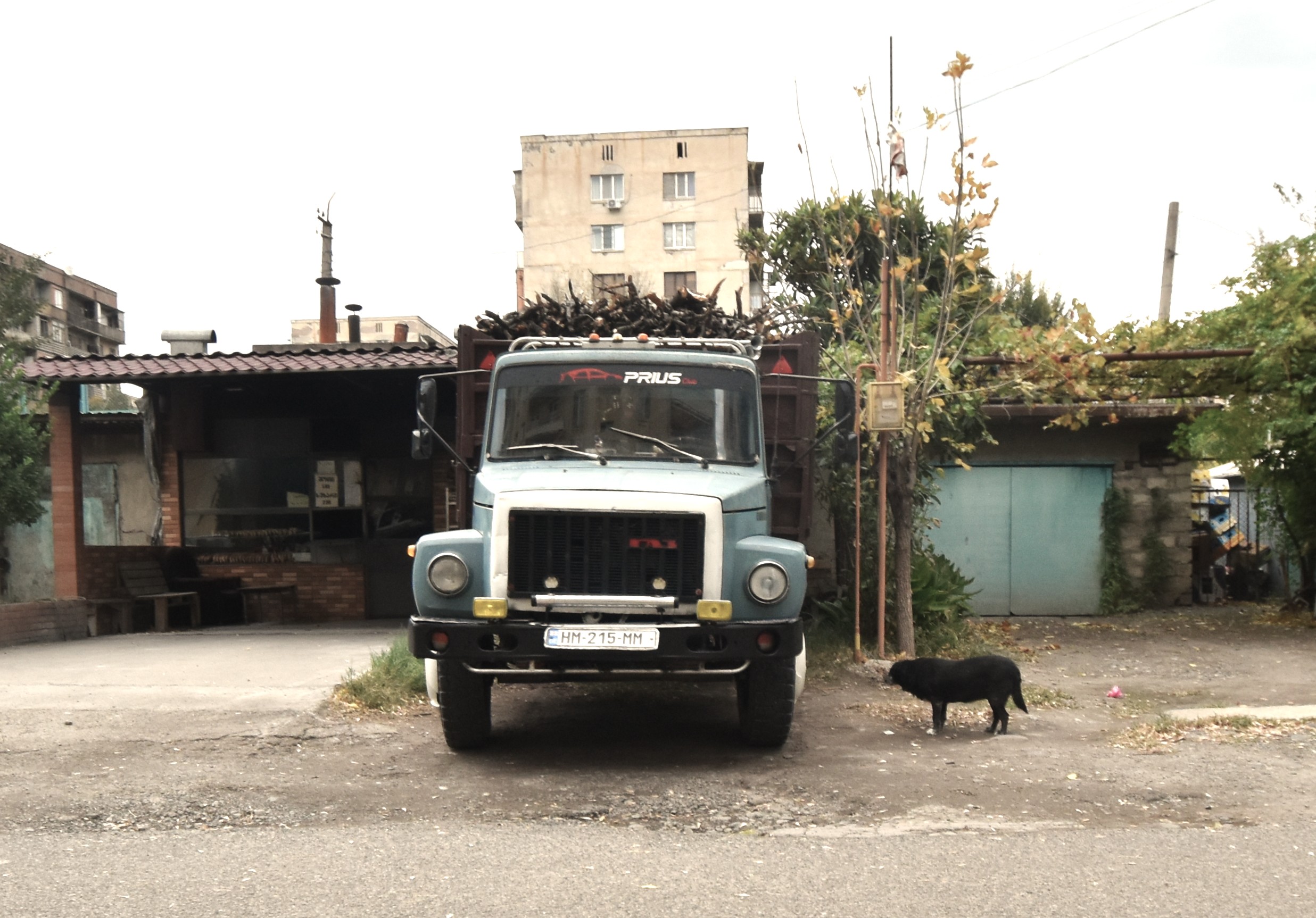
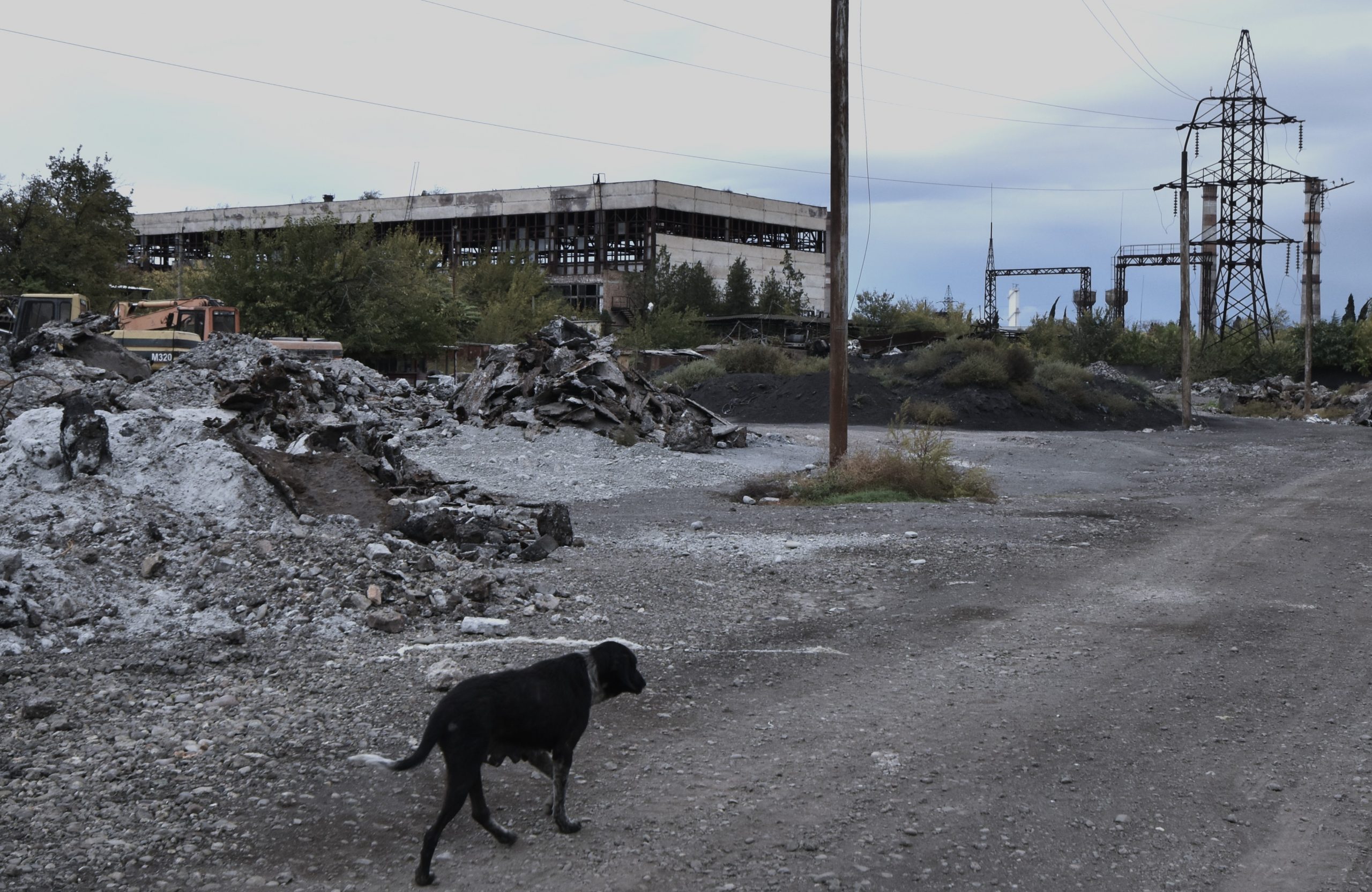
Just like in Tbilisi, dogs are everywhere in Rustavi. But unlike in the capital, here they aren’t tagged. I like dogs, so I didn’t think much of it at first. That, as it turned out, was a rather naïve assumption.
Rustavi underwent massive changes after World War II. First came the construction of the Rustavi Metallurgical Plant between 1948 and 1953. Then housing was needed for the workers. Many German prisoners of war took part in building both the steelworks and the surrounding infrastructure. German architects also helped design “New Rustavi,” inspired by the early-twentieth-century idea of the garden town.
According to this concept, cities were to be built from scratch as self-contained sections—unlike the grim industrial cities of the nineteenth century. In a garden town, workers were not supposed to live in overcrowded tenements next to smoking factories. Instead, they would have their own neighborhoods with shops, childcare, and above all, green spaces to relax in after work. Public transport would take them to the factories, where they’d be ready to “serve the people.”
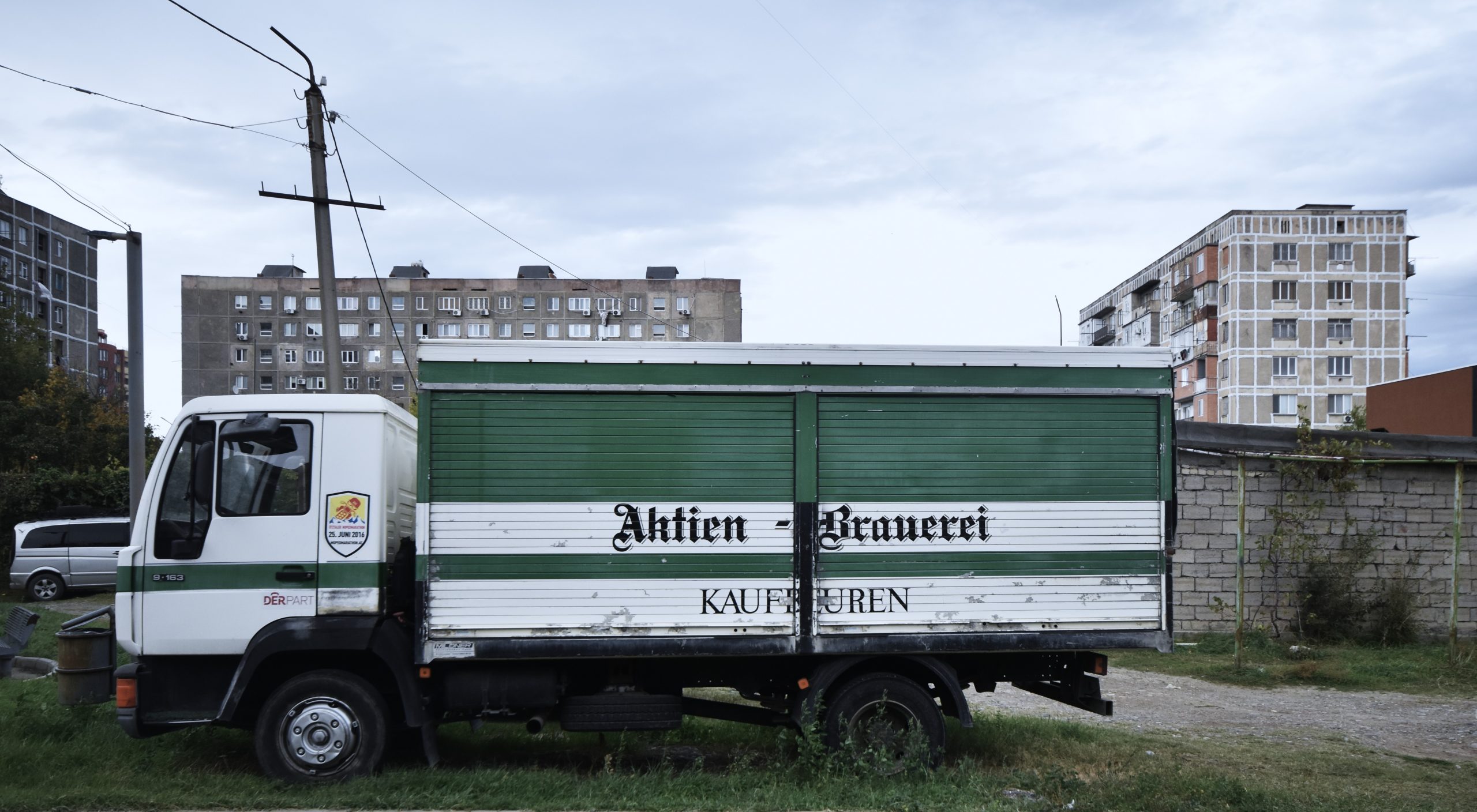
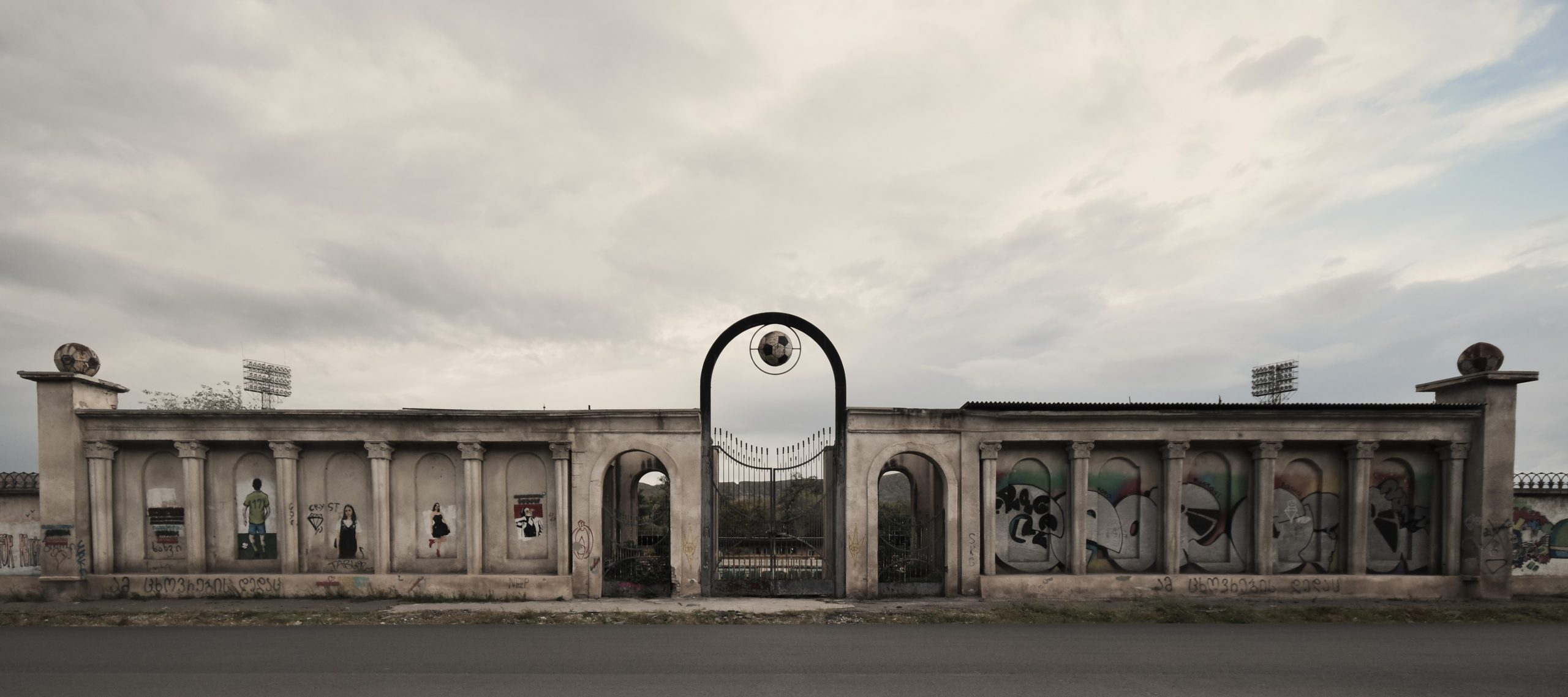
So, in Rustavi they built massive high-rises for the workers, away from the steel works. They still stand today, but without much maintenance they now resemble a dystopian future more than a socialist paradise. Upkeep remains one of the city’s greatest challenges. After the collapse of the USSR, 60 percent of Rustavi’s working population became unemployed, crime rates skyrocketed, and many residents left for good. The economy has improved since the 1990s, yet decay is still visible everywhere. Funding is scarce—even the local football stadium is in poor condition.
Eventually, I visited the old, abandoned Rustavi Steel Works. I hardly noticed yet another stray dog at first—until the situation escalated. The dog didn’t like me and called for his friends, and soon I found myself surrounded by a pack of growling dogs. Luckily, the guard appeared and chased them off. He didn’t like me either, to be precise: He didn’t like my camera. So I gave up, called a Bolt, and waited—standing perfectly still—as another pack circled nearby. I have never been so happy to see a car pull up.
Liked this post? Email me to say hi and I’ll sign you up for more articles like this: send mail
Thank you for making me "discover" Trieste through your wonderful and balanced description your and stunning pictures. I may not…
I spent more than month in Trieste back in 2012, falling in love with its liminality. I actually toyed with…
Very interesting. Reminds me of Kurt Körber and his company. Large player in supply chain management who created a foundation…
Laurie, Thanks so much, your words are very encouraging!
Bernhard - I love your little bite sized bits of history! I’ve been to Syracuse and probably heard how it…