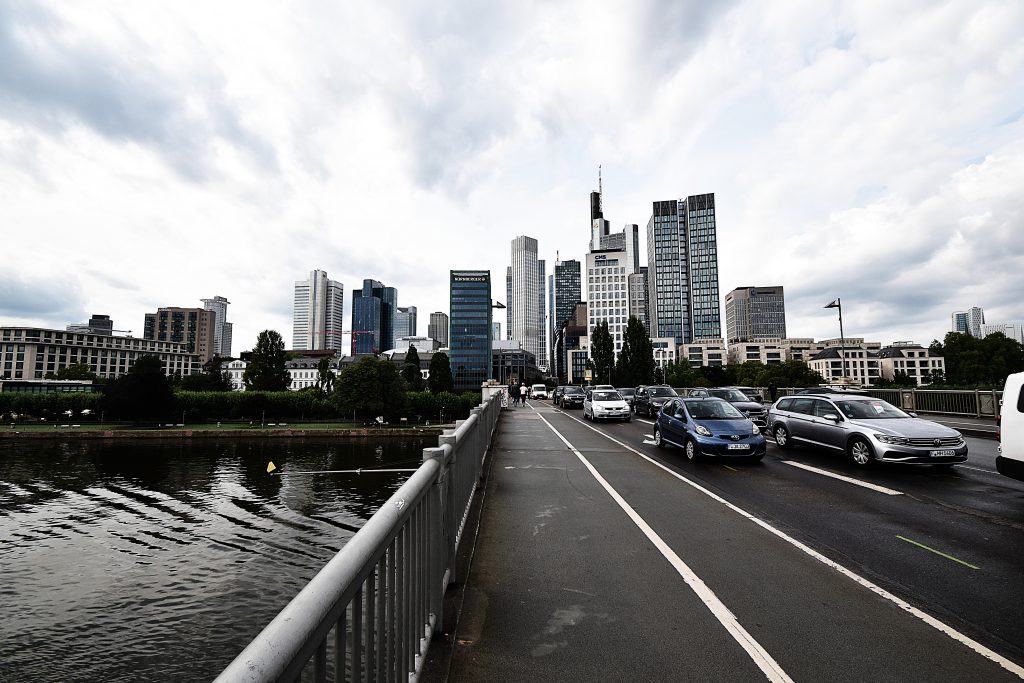
Germany’s only city with a skyline like an American big city – this is Frankfurt. So, people often think Frankfurt really is a big metropolis — but it doesn’t really feel like one. It comes across more like a mid-sized state capital. The skyline is impressive, no doubt. And the city’s diversity is almost on par with Berlin. But the city centre can be crossed on foot in about 20 minutes, and the street life has a somewhat provincial feel.
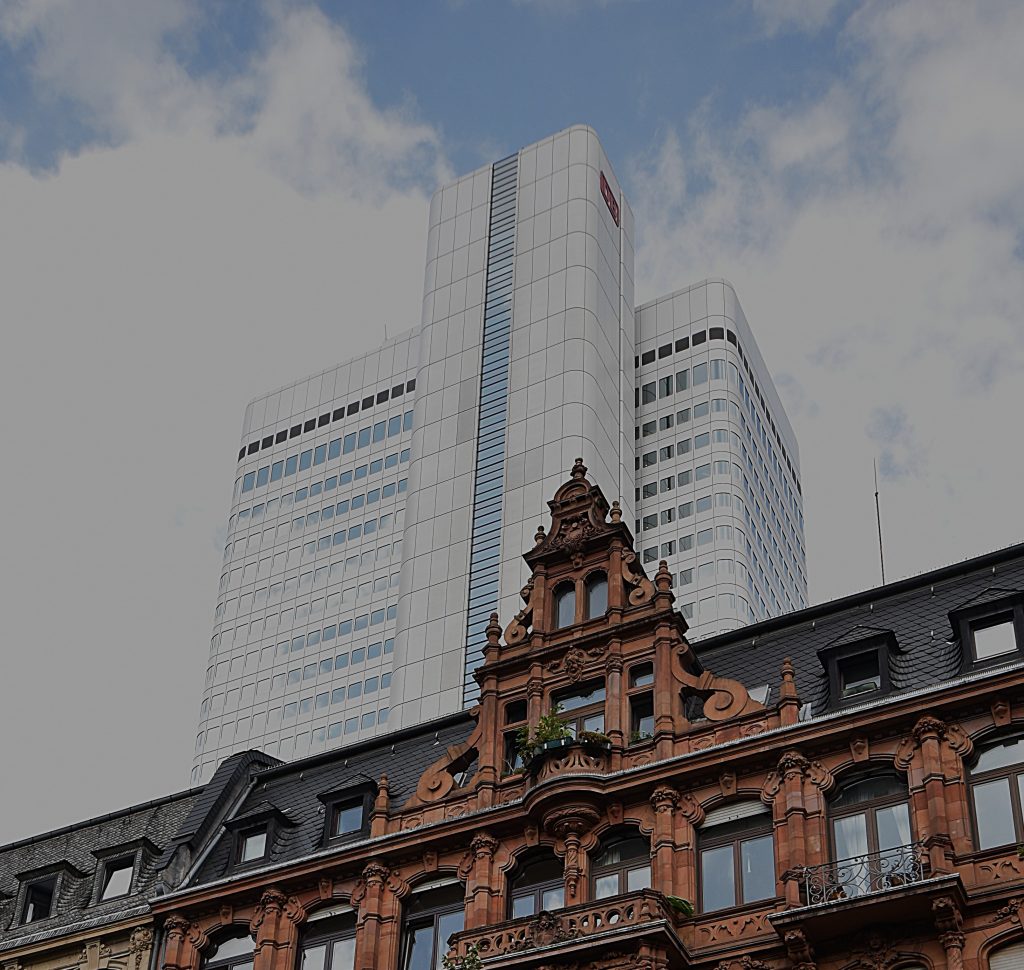
Frankfurt is a mix—not just of people, but of architecture too. Styles from various origins come together here. Before World War II, elegant apartment buildings lined the main roads. During the war, about 80% of these were destroyed by Allied bombs. A few survived or were reconstructed later—like the “Römer” and the market square, rebuilt in a rather half-hearted attempt to restore Frankfurt’s medieval charm.
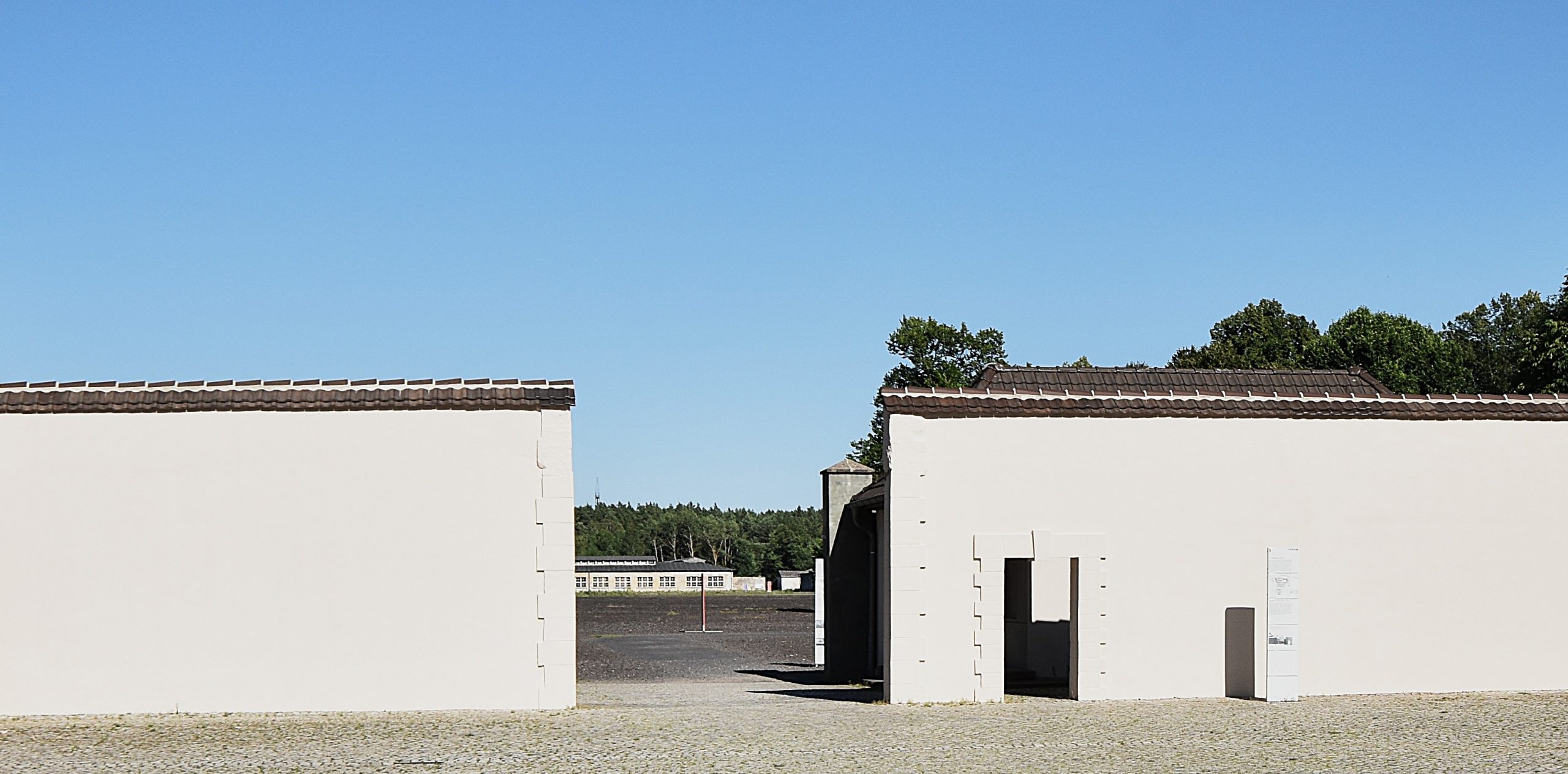
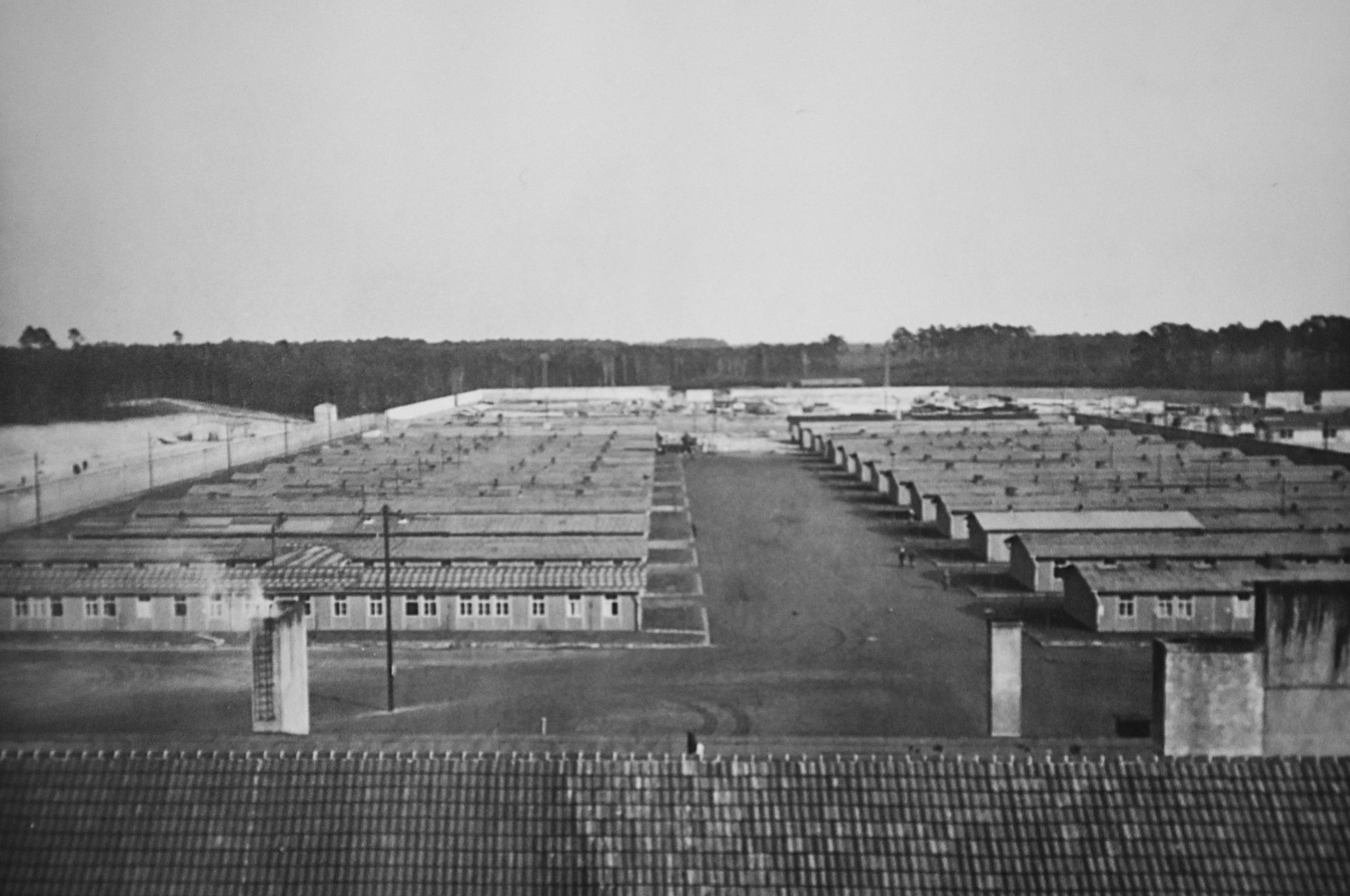
In January 1939, the SS decided to set up another concentration camp, about 60 miles north of Berlin, next to a small village named Ravensbrück. This camp was designated for women, who were exploited, tortured, and — approximately 30,000 of them — murdered.
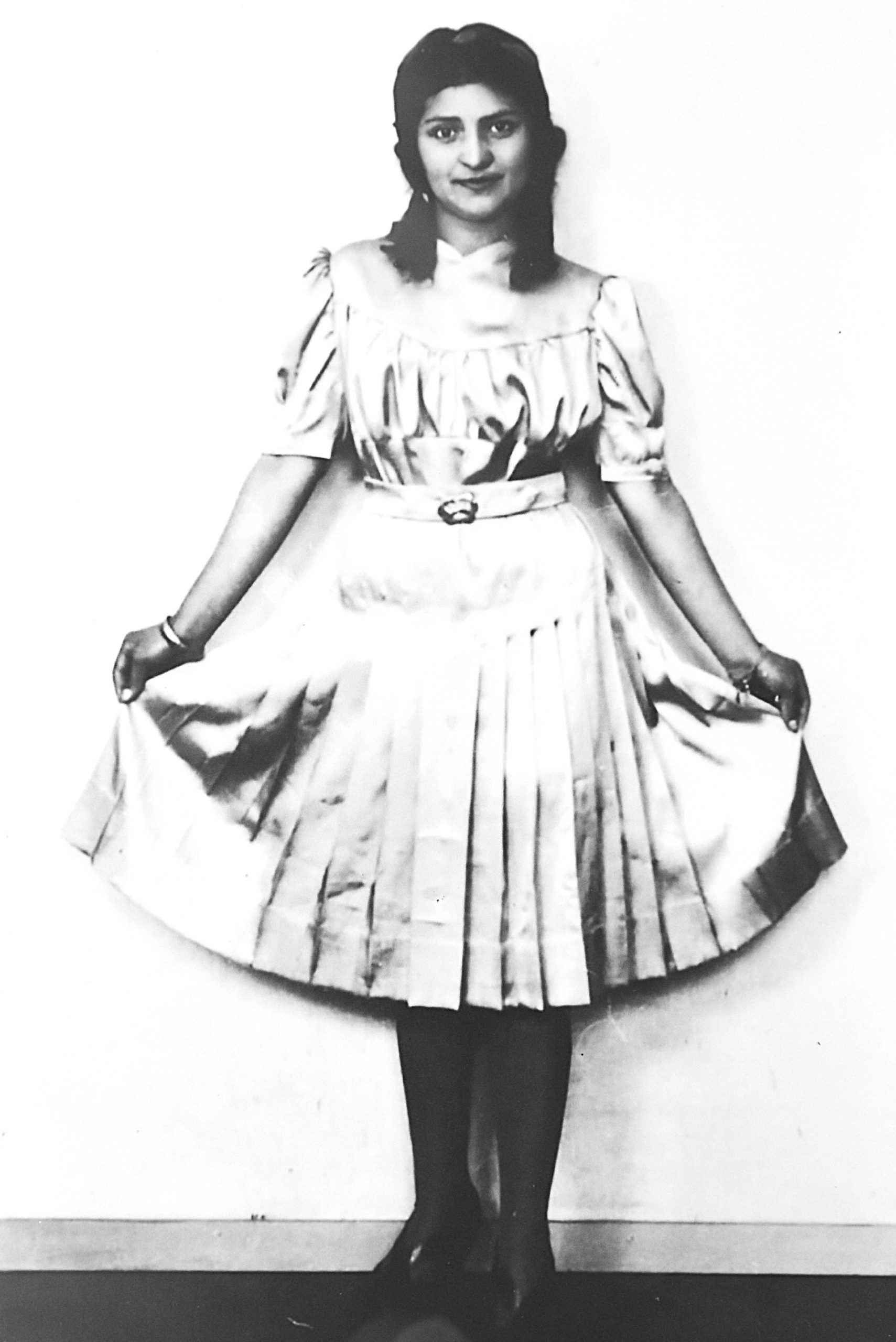
One of the prisoners was Wanda F., a Sinti woman. She was arrested in Hannover in 1943. It’s unclear why exactly, but most likely simply because she was Sinti. At the time, “gypsies” were considered racially inferior, and Sinti women in particular were seen as immoral. That was a common accusation faced by many of the women in the camp: living lives considered too liberal by the standards of what society defined as “decent.” These women often had changing jobs, changing partners, or maybe an illegitimate child — any deviation from conservative norms. Such freedoms had long been criticized, and the double standard of the time rarely held men to the same expectations. Under the Nazis, public disapproval of these women was twisted into justification for persecution — and murder.
Wanda was first taken to Auschwitz. She had a one-year-old baby boy with her, but he died during their first winter there — she couldn’t feed him and barely survived herself. After about a year, she was transferred to Ravensbrück. Upon arrival, her head was shaved — just one of many degrading measures enforced by the SS. But Wanda collected the hair they had cut off and made a wig, which she wore on special occasions.
Soon after, she found out that her fiancé was imprisoned in the men’s camp nearby. Somehow, she managed to meet him at the gate separating the two camps. They stayed in touch that way, even though the SS caught them several times and beat them severely.
In January 1945, Wanda was subjected to forced sterilization — an act of violence committed by SS doctors to keep women as a labor force while preventing any future offspring. Wanda survived the procedure, and she survived the camp. So did her fiancé, and the couple reunited in Hannover shortly after the end of the war.
Today, the place is a memorial. Most of the original buildings were torn down, as the Soviets used the camp as a military base until 1993. So now, it’s a wide, open space — somber, and full of memories, with sad stories looming everywhere. Several exhibitions can still be visited in the few remaining buildings. So it’s certainly worth the one-hour train ride from Berlin — not least to honor Wanda.
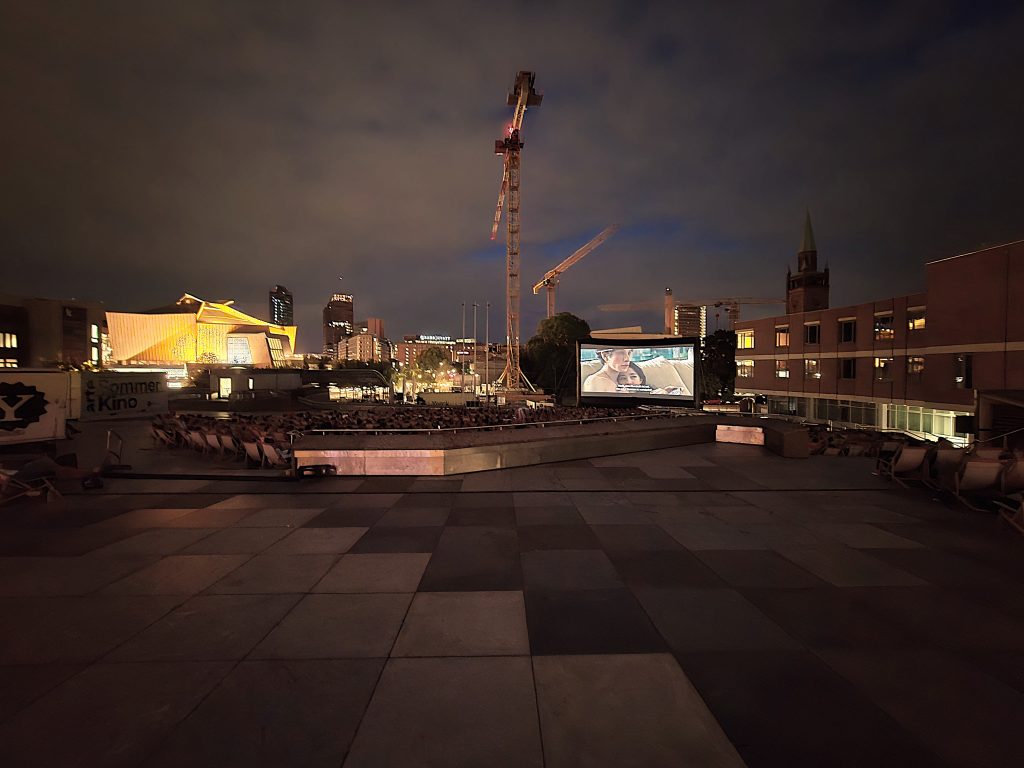
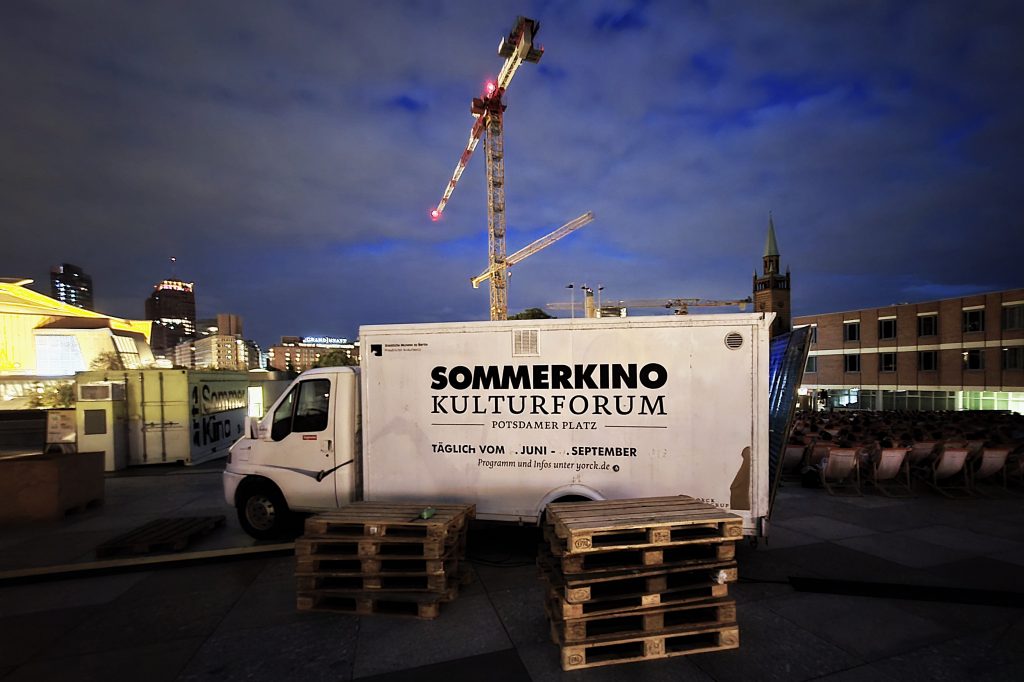
Every summer, from June to August, Berlin’s Kulturforum transforms into the Sommerkino – an open-air cinema experience under the stars. Imagine rows of (more or less) comfy deck chairs set up in front of a massive screen, with the city’s skyline unfolding just behind it. This year, the view includes a towering construction crane – a fitting symbol, really. After all, Berlin is always building, always becoming. As they say, it’s “a city condemned never to be, but always to become.”
The nights are mild, the films reliably worth the ticket, and often in English – because, well, again: This is Berlin. You can grab a wildly overpriced drink at the concession stand… or just bring your own bottle, yet in secret! You’ll know the movie’s starting because the sound of popping corks. Buy tickets here: https://www.yorck.de/en
If you think art can only thrive in free and open societies, think again. In East Germany—the German Democratic Republic—art was actually pretty subversive sometimes. And it wasn’t just about artists openly fighting the dictatorship. Even big names like Werner Tübke and Bernhard Heisig didn’t always paint a rosy picture of communism.
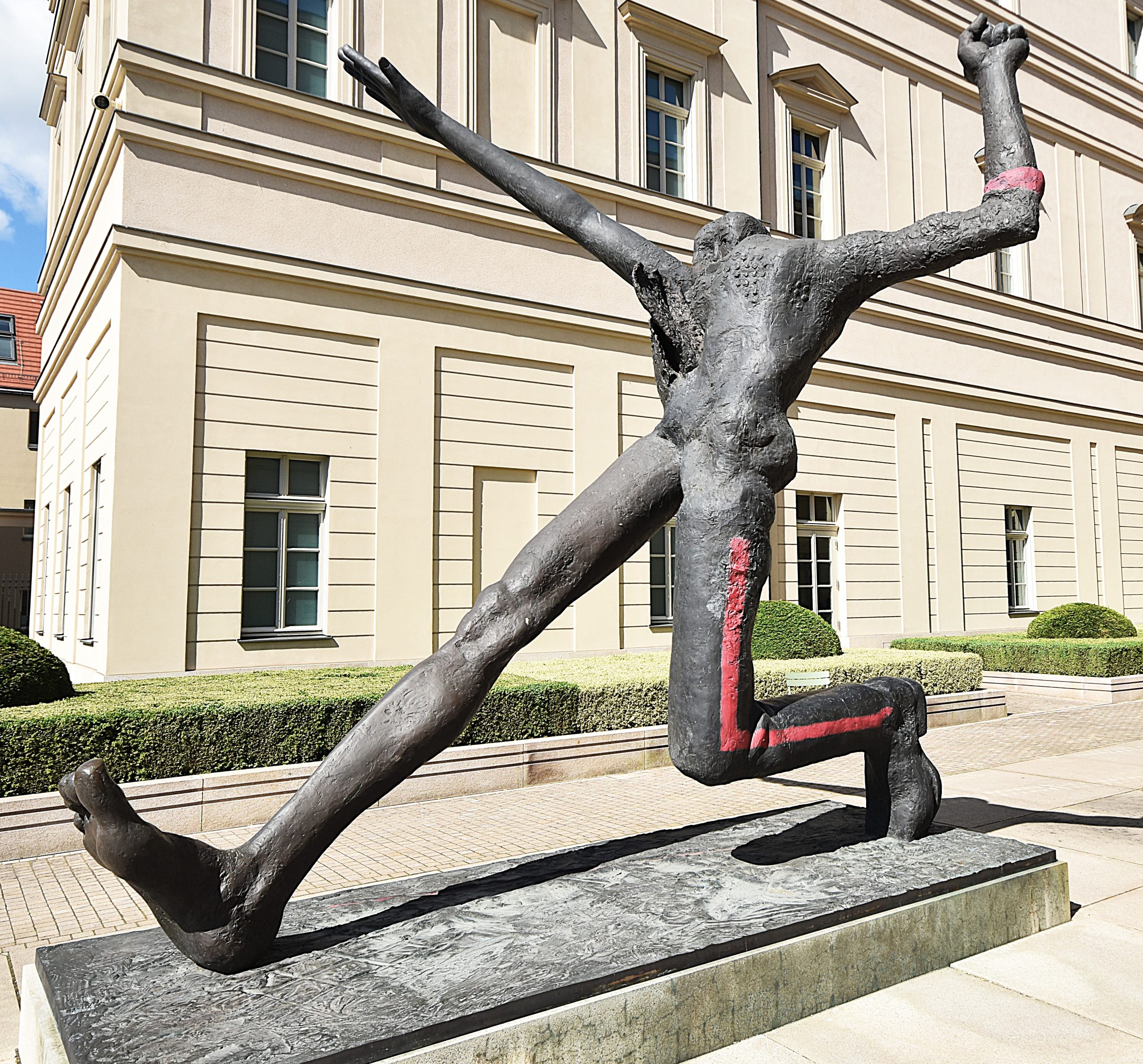
One artist who got more and more critical over time was Wolfgang Mattheuer. His most famous work stands in the yard of the Museum Barberini in Potsdam. You don’t even have to buy a ticket to see it because the yard is open to the public. The bronze sculpture, called Der Jahrhundertschritt (“Step of the Century”), is about sixteen feet tall. It shows a figure with one arm raised in a Nazi salute, while the other ends in a fist—that was the communist salute back in the 1920s. One foot is bare and stepping forward, the other wears a military boot and stays firmly on the ground. The clothes have stripes like uniforms, but there’s no head—just a skull sticking out from a blown-up chest.
There are lots of symbols here, but the message is pretty clear. It’s about the 20th century—Germany torn apart by two big ideologies that justified two dictatorships: the Nazis (1933 to 1945) and the communists (1945 to 1989). And the real victims? The people caught between those two awful regimes—broken, scared, hiding, but still trying to step into the future.
Just southwest of Berlin is the city of Potsdam, where about 185,000 people live. It’s a beautiful place that got famous worldwide when Frederick the Great, King of Prussia, built his palace, Sanssouci, there back in 1747. Honestly, the palace and the park around it alone are worth checking out.
But what most people don’t know about is the Telegrafenberg (that just means Telegraph Hill). Originally, this hill was supposed to be a stop on a line of optical telegraphs running all the way from Berlin to Koblenz—around 400 miles. Kind of like those signal beacons in The Lord of the Rings when Gondor calls Rohan for help against Mordor, remember? The line was set up in 1832 but by 1849, electric telegraphs made it useless. But that wasn’t the end of the hill’s story—it was just getting started.
In the 1870s, after Germany became a unified country, science suddenly became super important to the government. And it paid off: German scientists went on to win about 20% of all Nobel Prizes, including 8 out of the first 31 in physics alone. That golden age came to a tragic halt in 1933, though, when the Nazis started persecuting scientists who didn’t fit their twisted racial ideas.
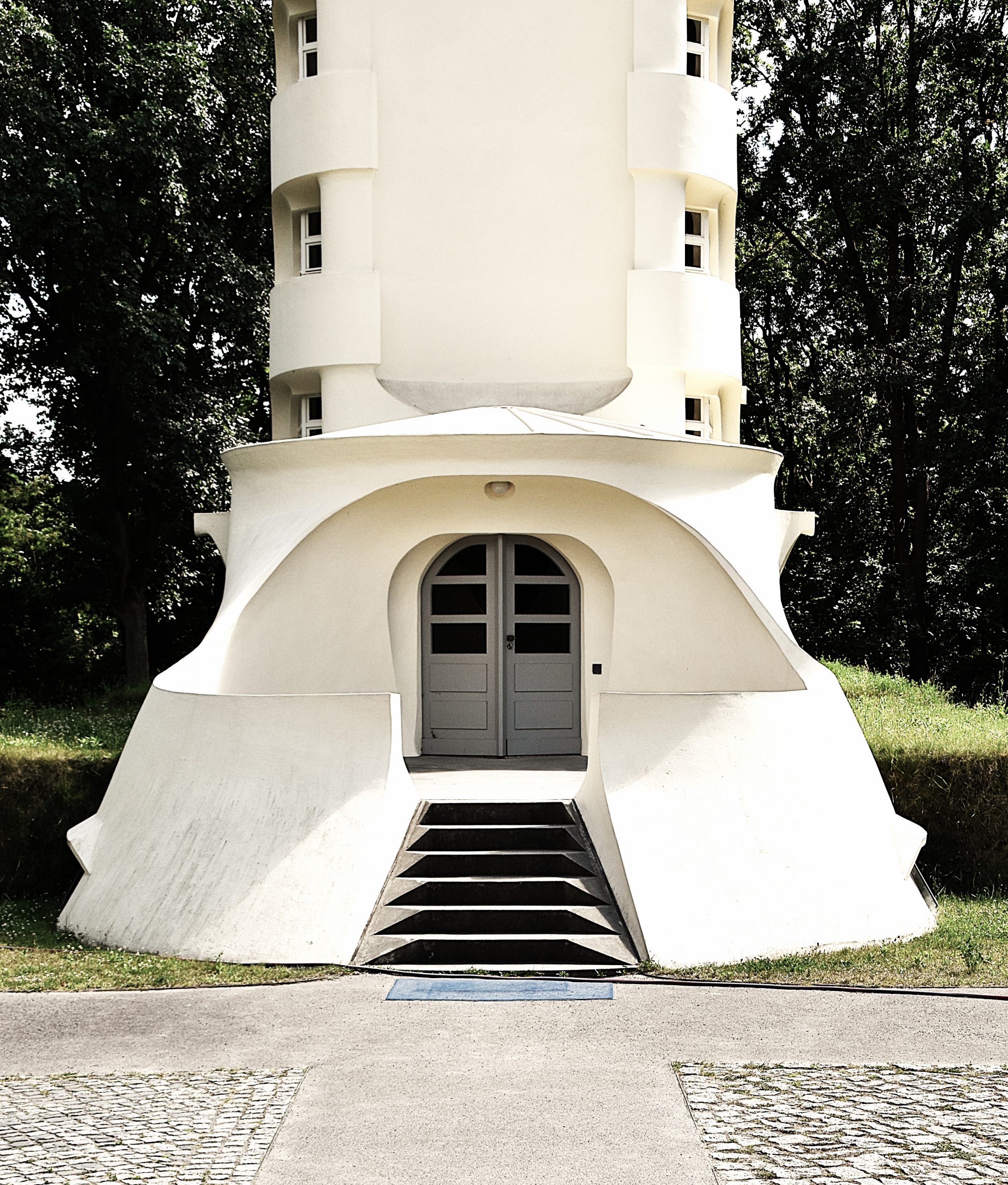
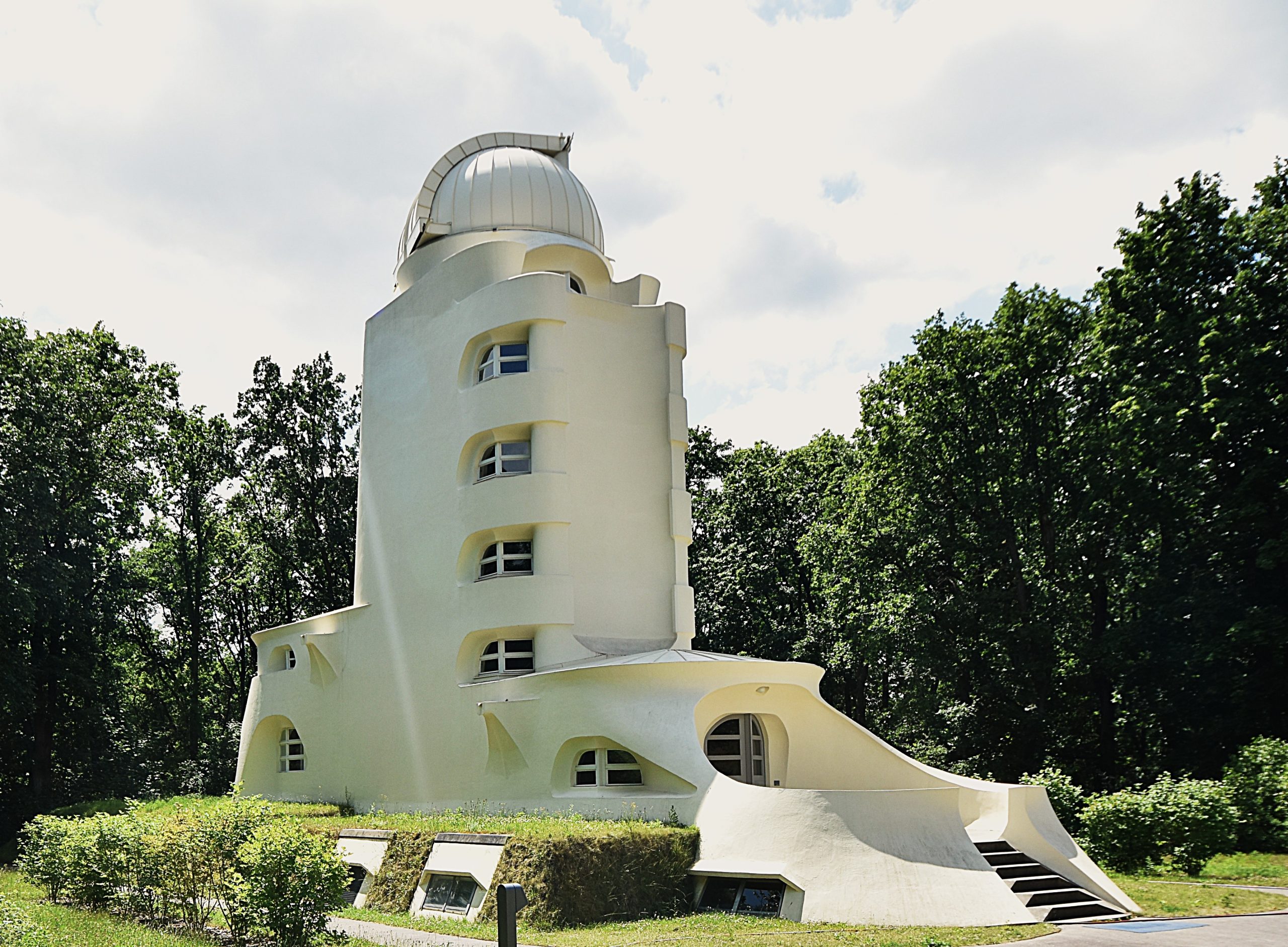
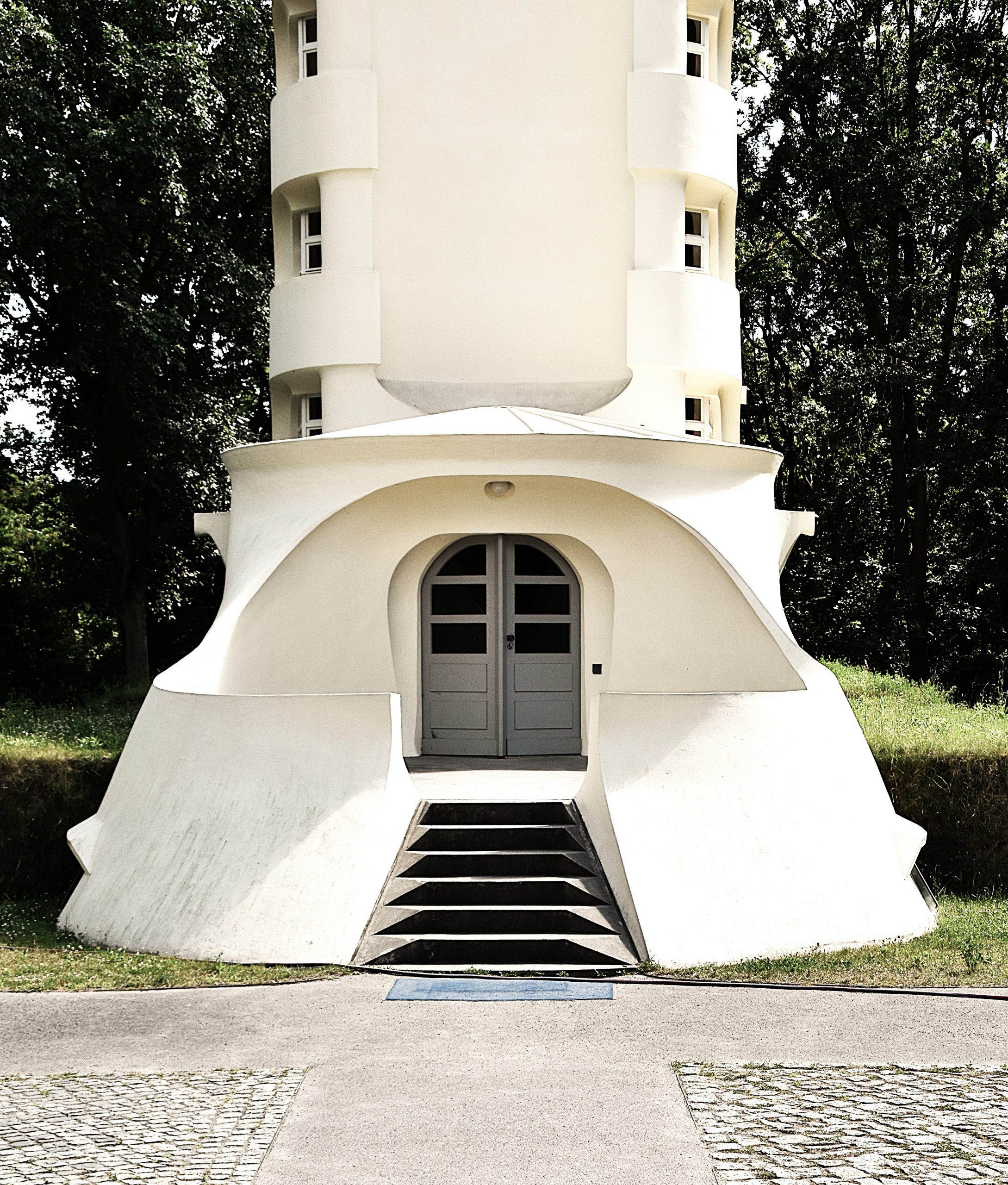
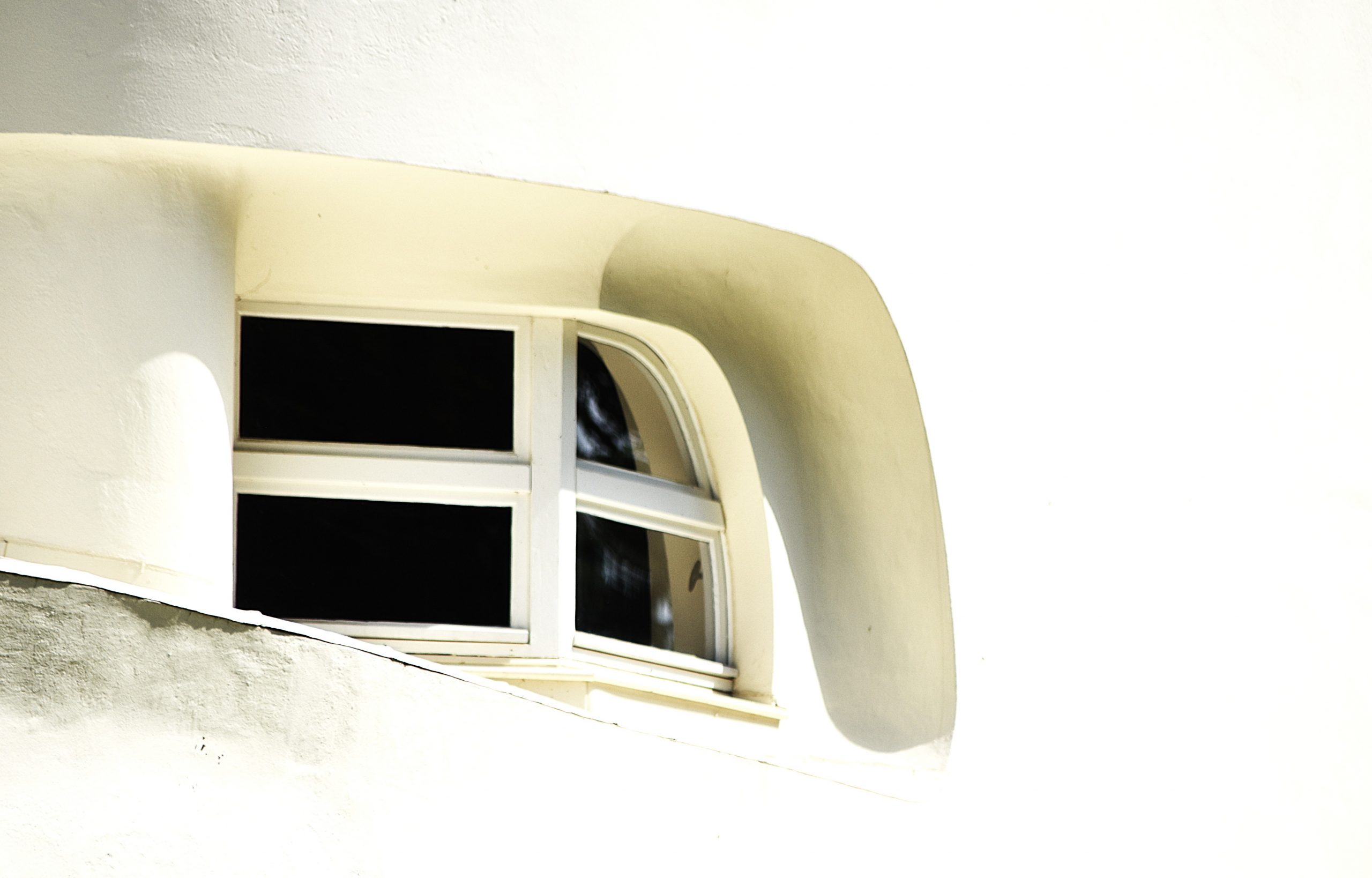
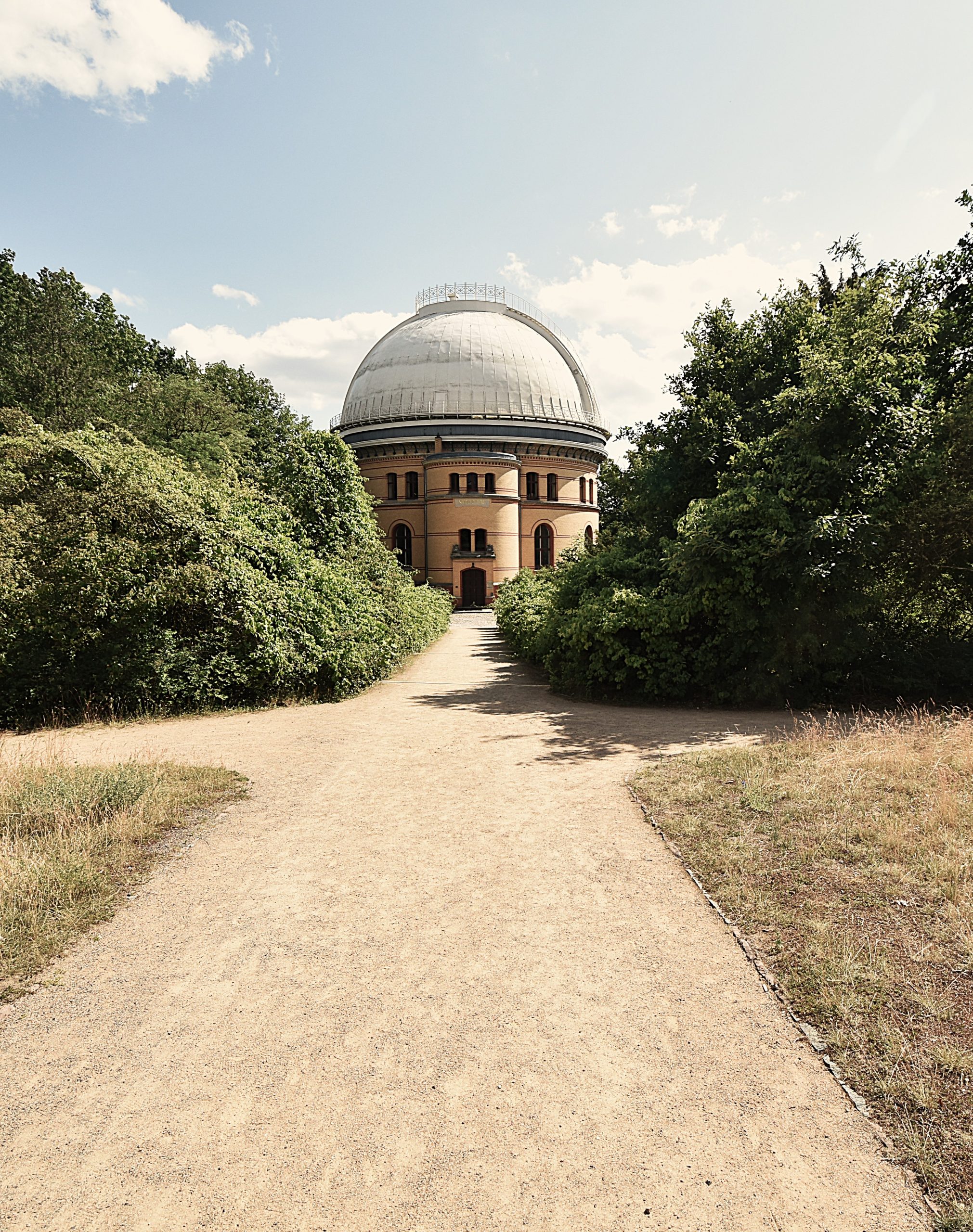
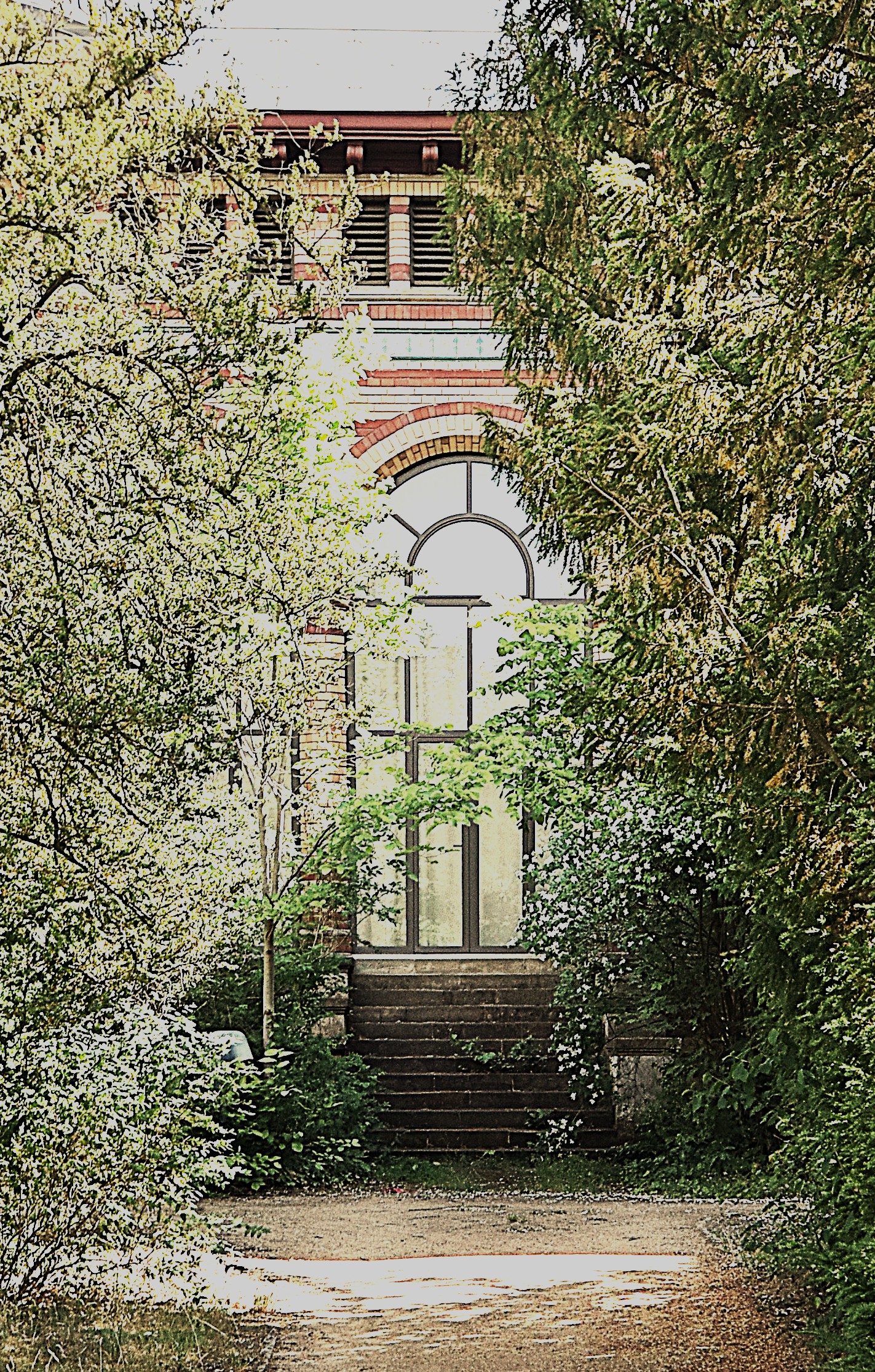
Before these dark years, in the 1870s, the hill turned into a hub for science. Institute after institute popped up, building after building went up. The most famous spot is the Einstein Tower, named after Albert Einstein because it was built to test his theory of relativity. Inside, there’s a solar telescope that’s still in use today. The tower was built in 1922 and its expressionist style is pretty eye-catching—the building looks fragile and vulnerable, but that actually gives it a kind of beauty.
During the Cold War, East Germany kept the place running. Then, after the Berlin Wall came down and Germany reunited in 1990, the hill became a science hotspot again. The government poured billions into new buildings and research centers. Two of the most famous are the Alfred Wegener Institute for Polar and Marine Research and the Potsdam Institute for Climate Impact Research.
The hill is open to everyone. With its unique architecture and the many signs in German and English, it’s a great spot if you’re into science, history, or architecture — past and present.
In early November 1918, it had become clear that the war was lost.
Morale had already been low — for four years, sailors in the German High Seas Fleet had endured hardship. They had been mistreated by their officers, gone hungry, and lived in fear. And now, even with the end of the war in sight, the Naval Command clung to the idea of “honor.” The battleships were ordered to set sail for one last mission against England — a suicide mission for a lost cause.
The sailors had had enough. They rose up, arrested their officers, and tore off their insignia. Then they took control of the ships and quickly found allies on land: workers who shared their frustration. This mutiny became the spark that ignited the Revolution of 1918 — the end of the Empire and the beginning of the Weimar Republic.
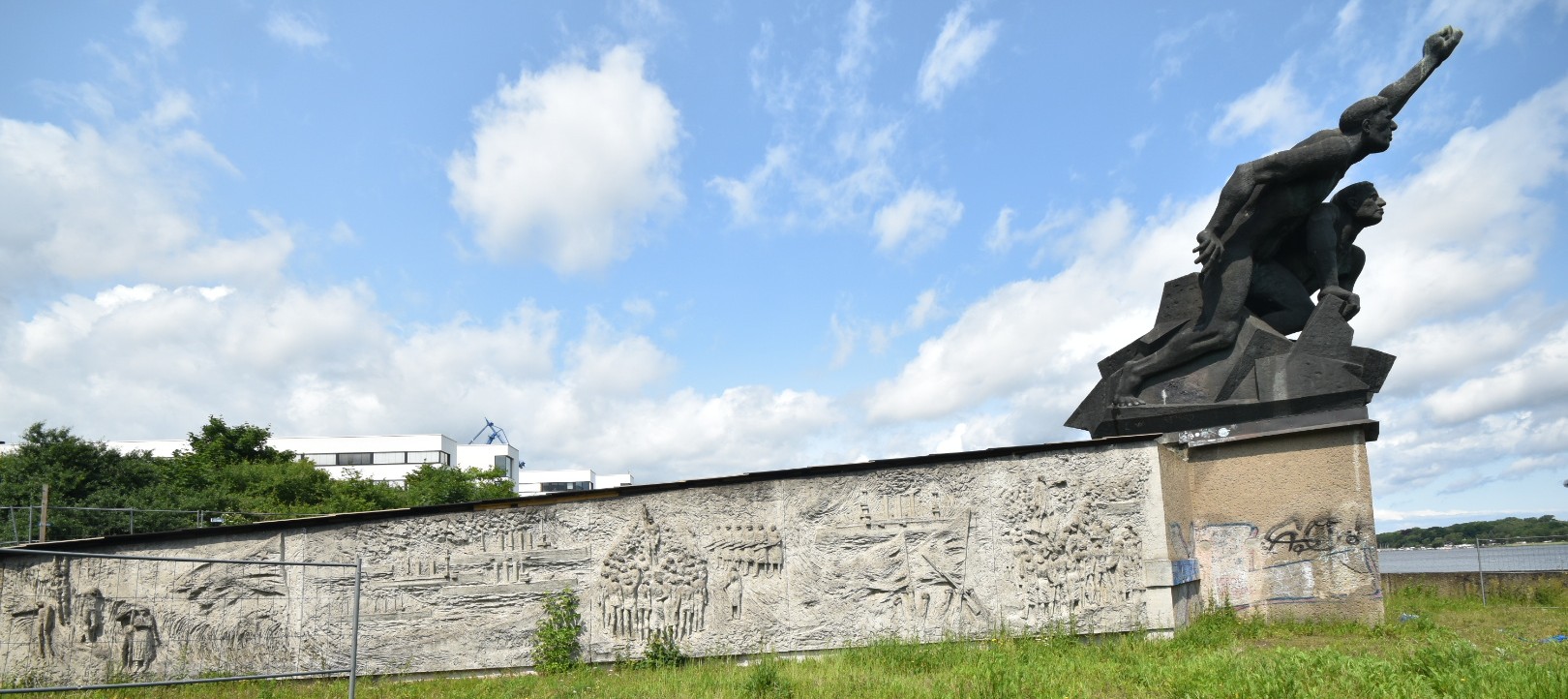
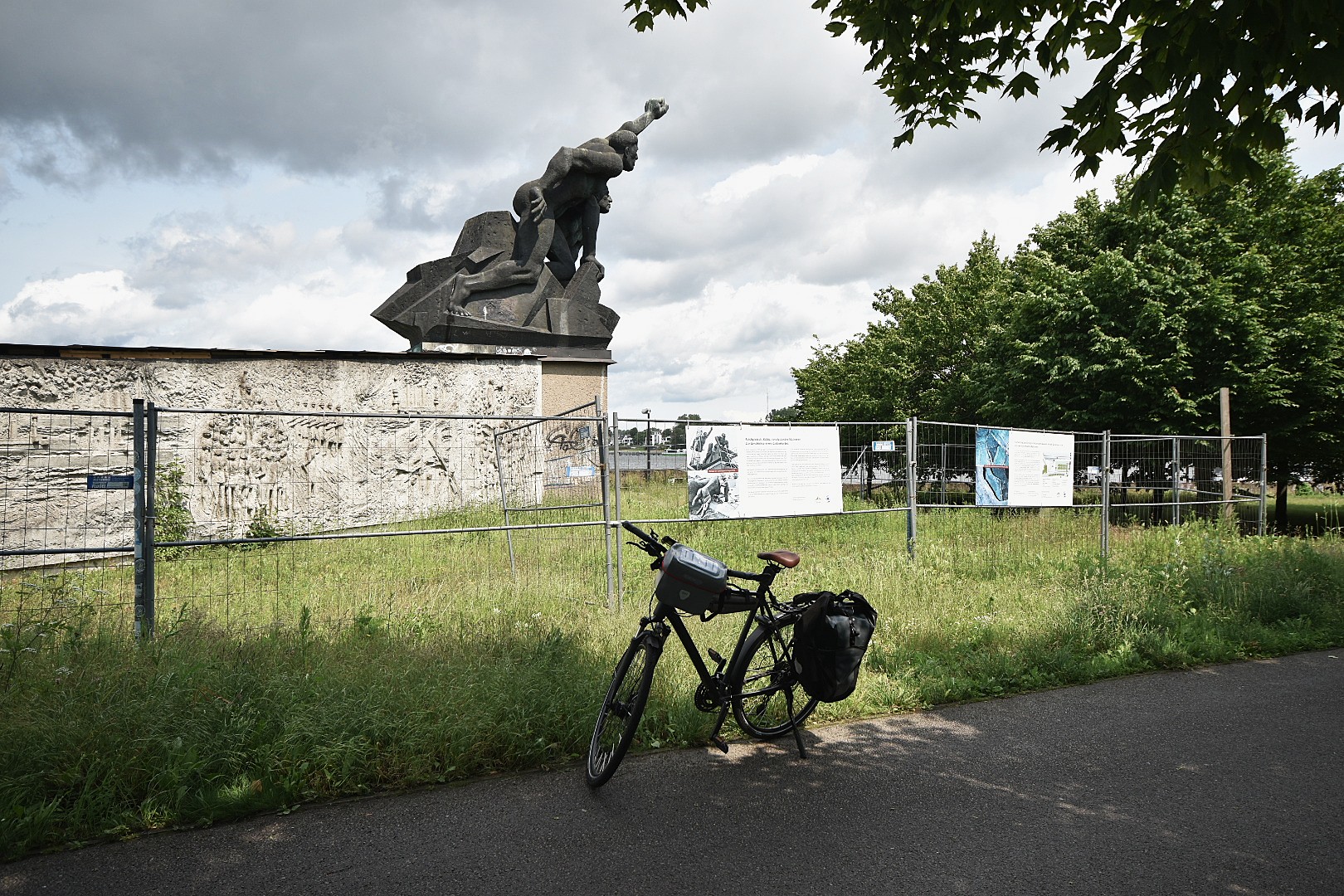
Fast forward to 1977. Rostock, a city in the north of the German Democratic Republic (East Germany), lies on the shores of the Baltic Sea. Because of this historical connection, the communist government decided to honor the rebellious sailors of 1918. They built a massive monument: two sailors charging forward, cast in steel, 30 feet tall.
“Forward” was the key message. Communism liked to present itself as the force of progress — inevitable and scientific, just as Marx had envisioned. According to this view, history followed a law-like path, culminating in a society where all people were equal and no one exploited another for profit. The East German regime liked to see itself as the realization of that dream.
So it rewrote history to fit the narrative. In the official version, the sailors of 1918 had been early heroes of the GDR. A neat way of turning the past into a justification for the present.
But the reality in 1978 was far removed from Marx’s vision — and from the ideals of the mutineers. East Germany had become a repressive state: shooting people who tried to flee, spying on its citizens, and imprisoning anyone who dared to speak out.
One has to wonder what the sailors of 1918 would have thought of such a regime.
One thing is certain: the GDR’s rewriting of history revealed its own insecurity. What kind of government needs to reshape the past to justify its existence?
And finally, it’s worth remembering: the brave resistance of the sailors in 1918 deserves every bit of steel their memorial is made of. That’s why today, the city of Rostock is investing nearly four million euros to restore the site.
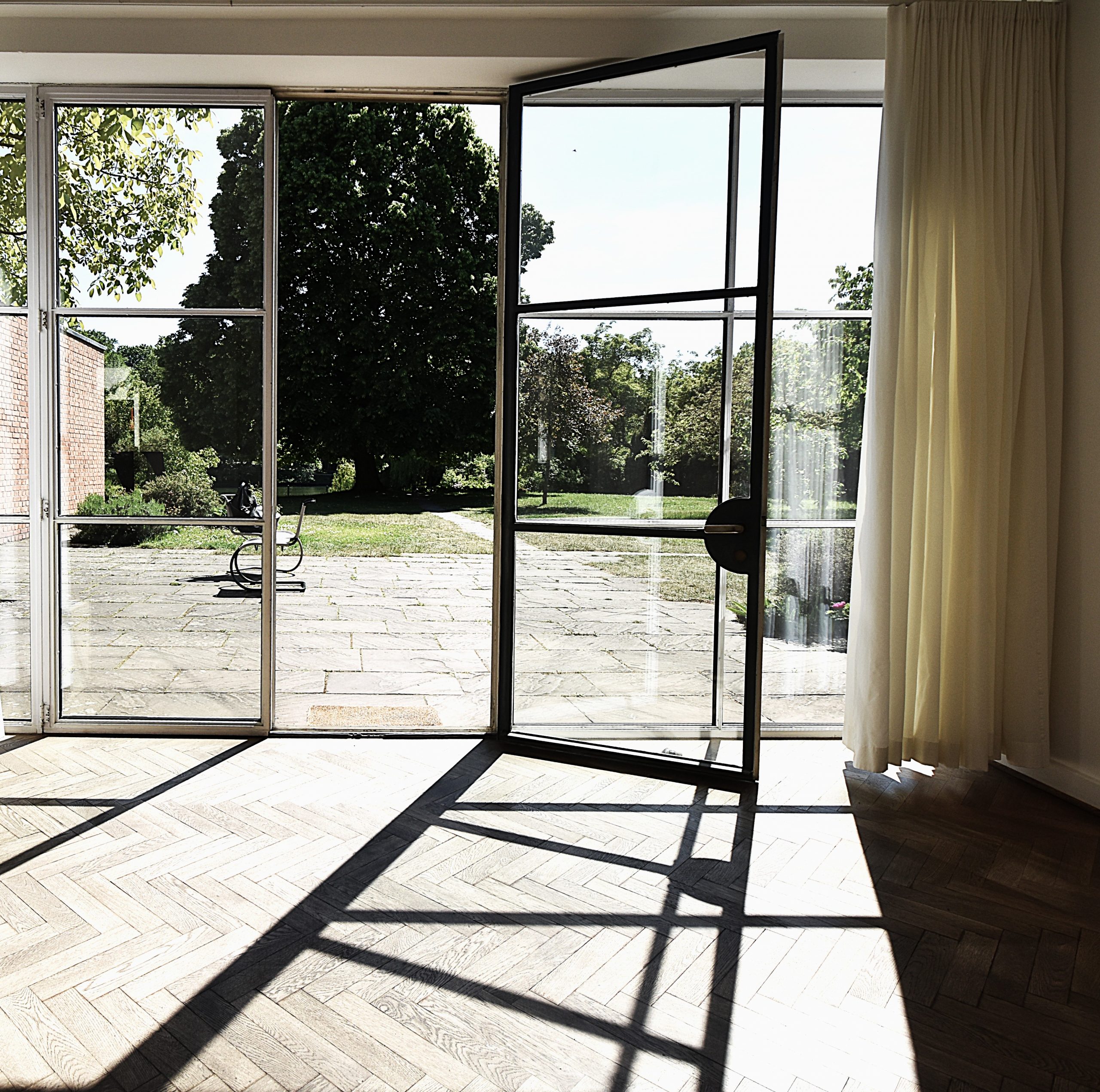
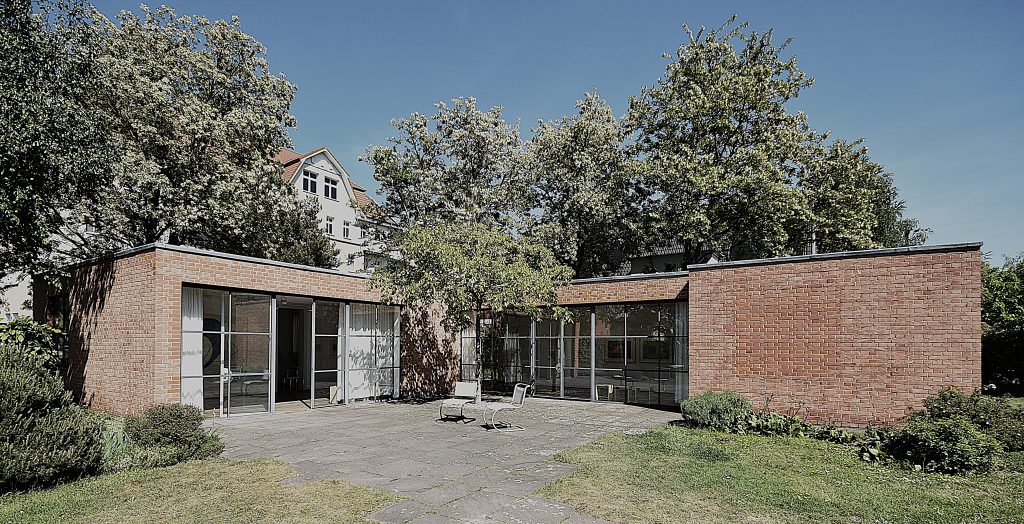
This is a rather little-known spot in Berlin, and from the street, it doesn’t look like much. The front view is actually quite underwhelming.
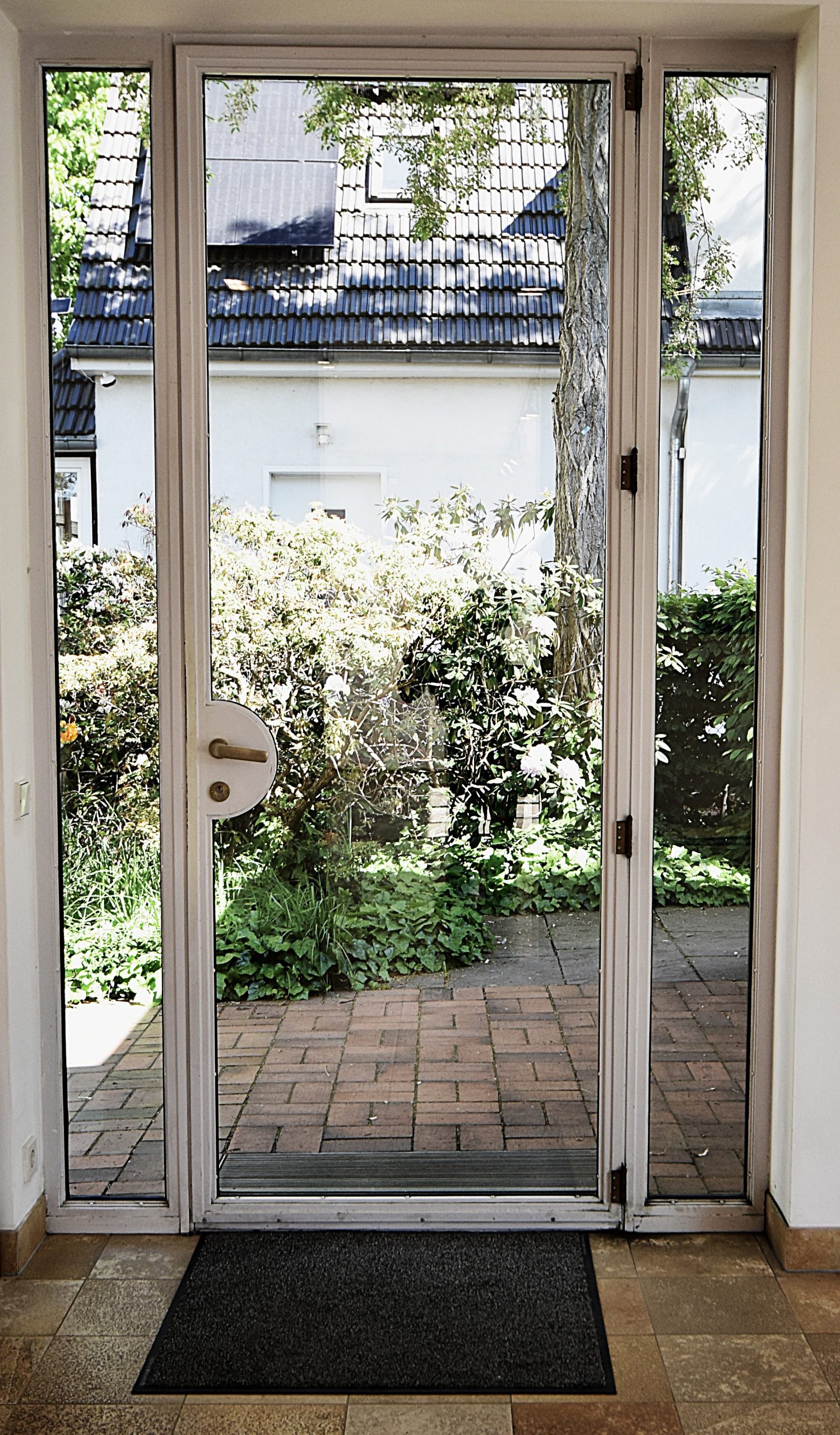
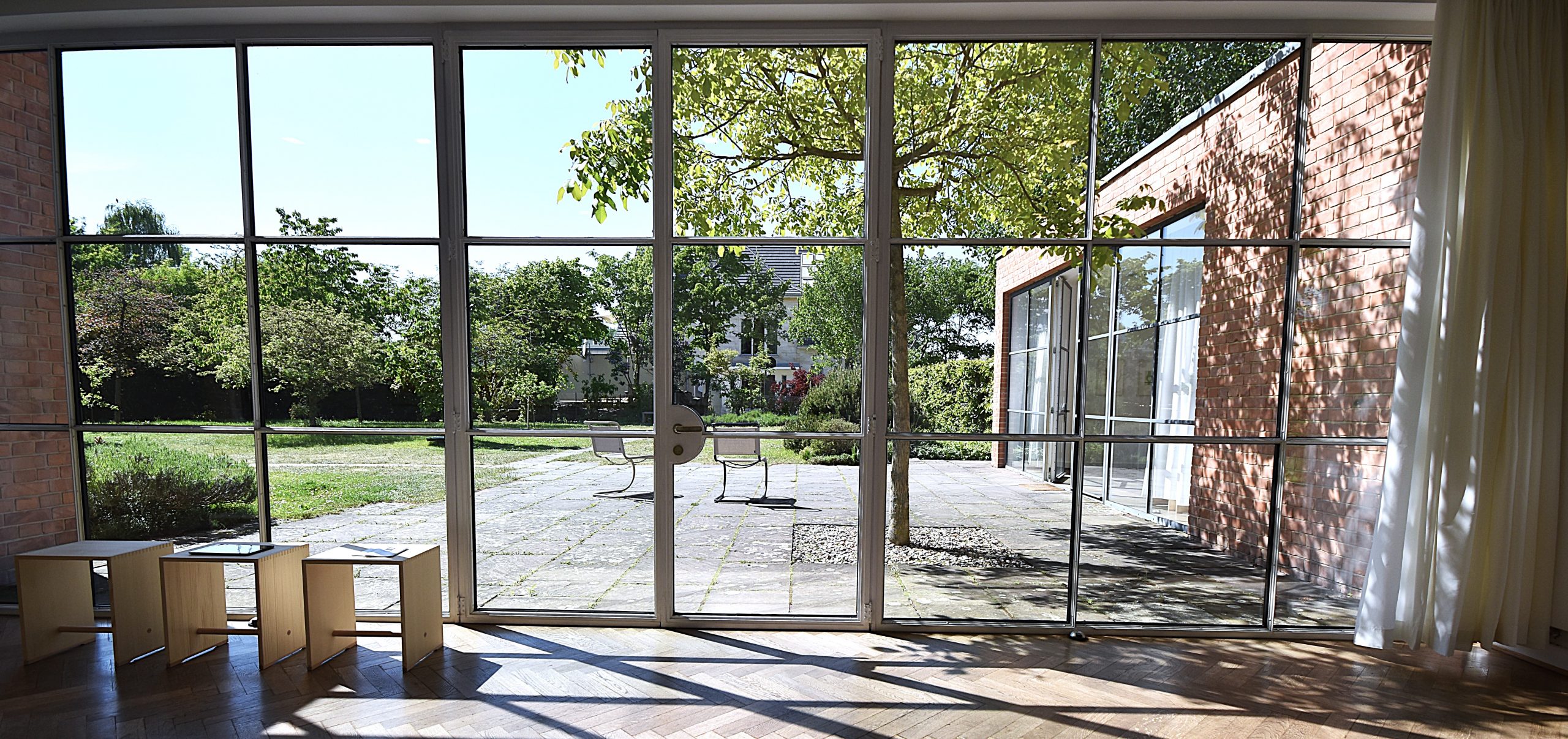
But once I stepped inside — a single-story house — I immediately felt at home. I wanted to move in, stay forever, and never leave.
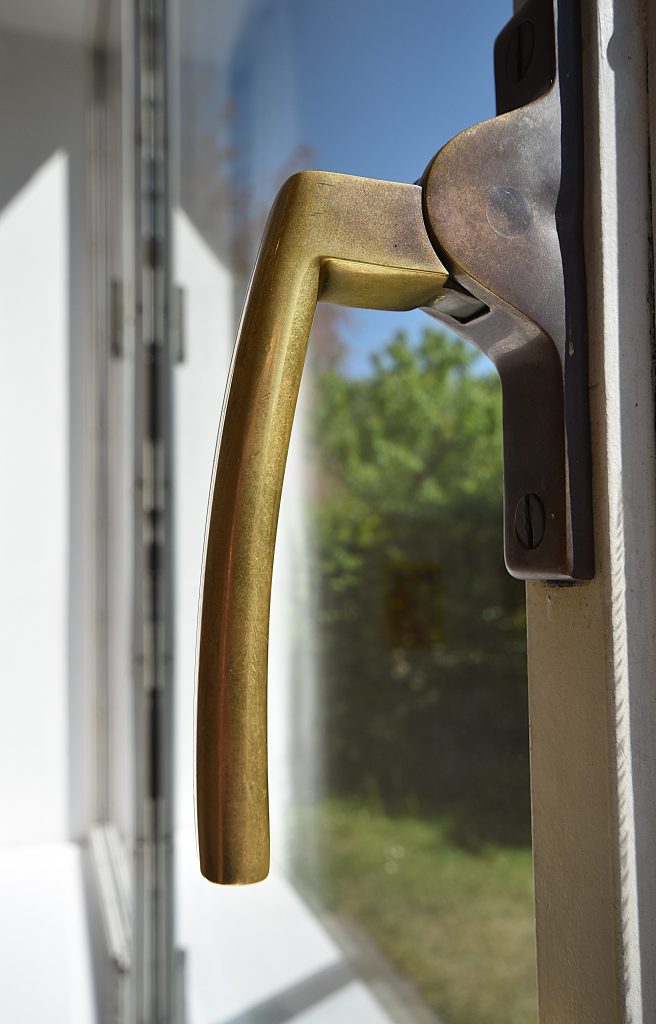
This is where Mies van der Rohe, in 1933, designed his last building in Germany before leaving the country — almost for good — in 1938. He had been commissioned by a wealthy couple who needed a new home. On the surface, it was just another project. But Mies turned it into something extraordinary: a composition of lines and proportions so full of quiet harmony.
It feels like there are no walls — only glass. No clear boundary between indoors and out. Just one seamless world.
So if you think of Mies van der Rohe as the guy behind all those cold, dull high-rises in Chicago — come here. This place will change your mind.
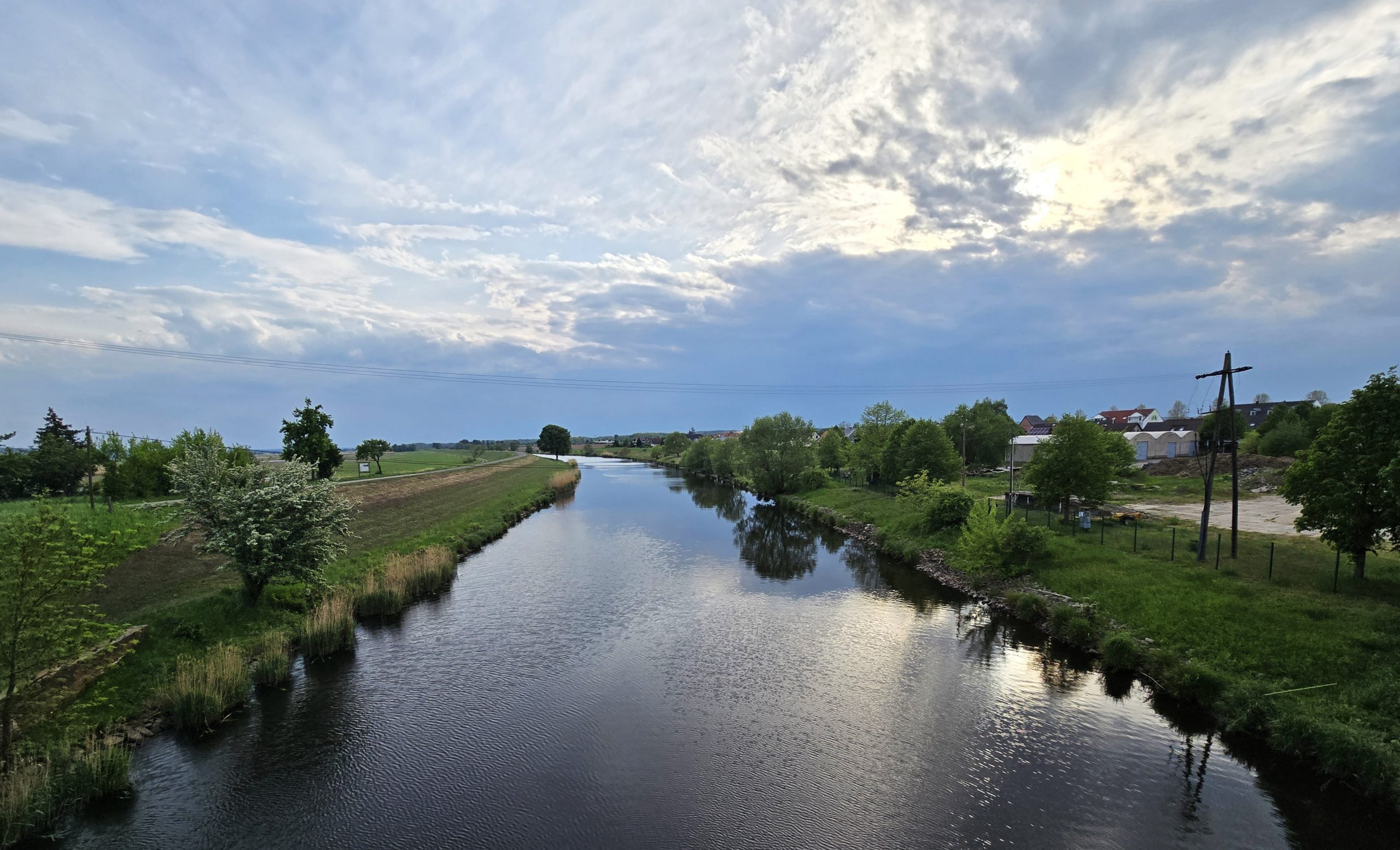
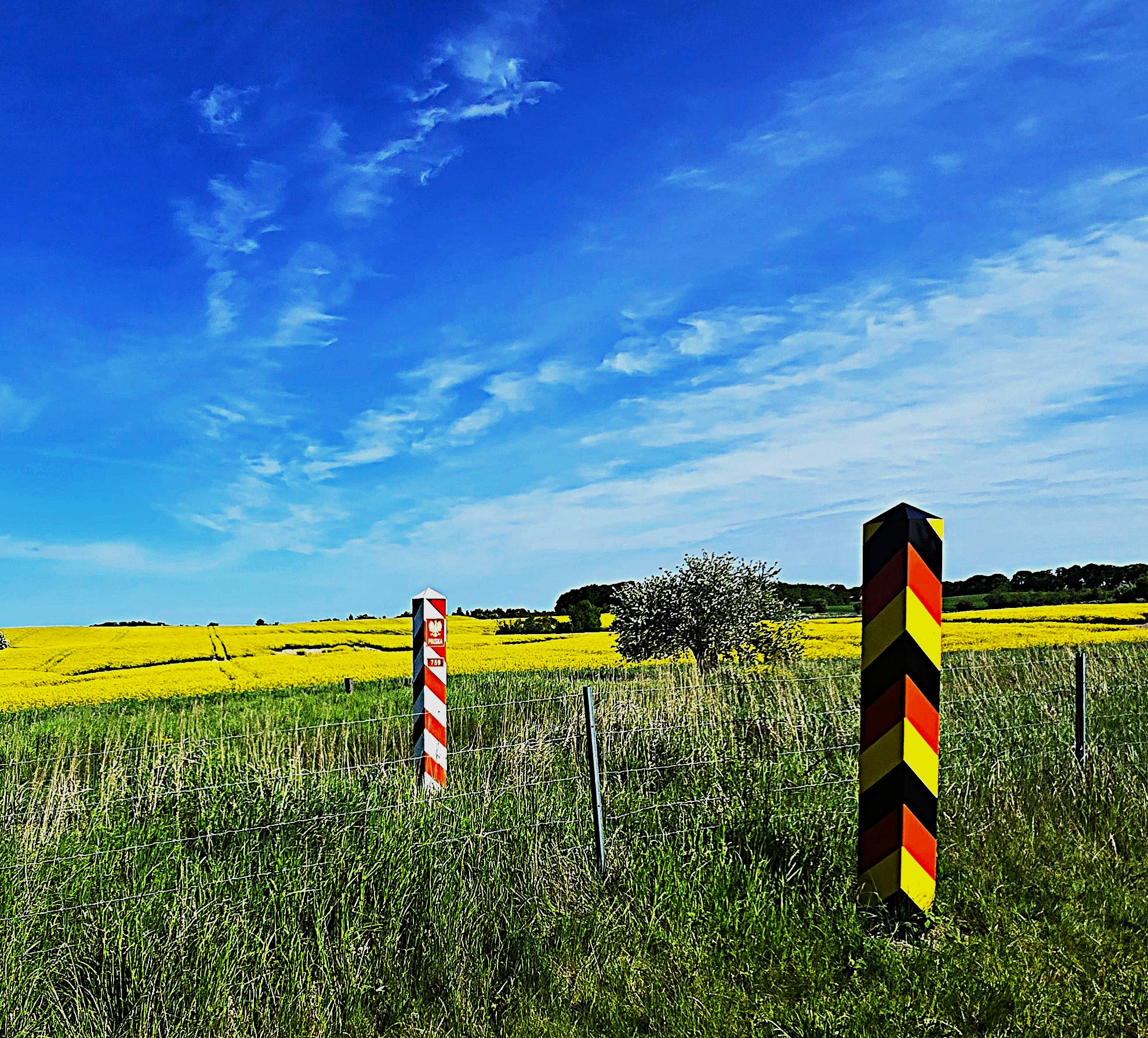
As part of a longer bike tour, I rode from Eberswalde to Schwedt. I hadn’t expected so many hills — there was a lot more climbing than I’d imagined. But once the bike path reached the Oder River (which forms the border between Germany and Poland), it felt like entering a fairy tale — and, thankfully, the hills were behind me.
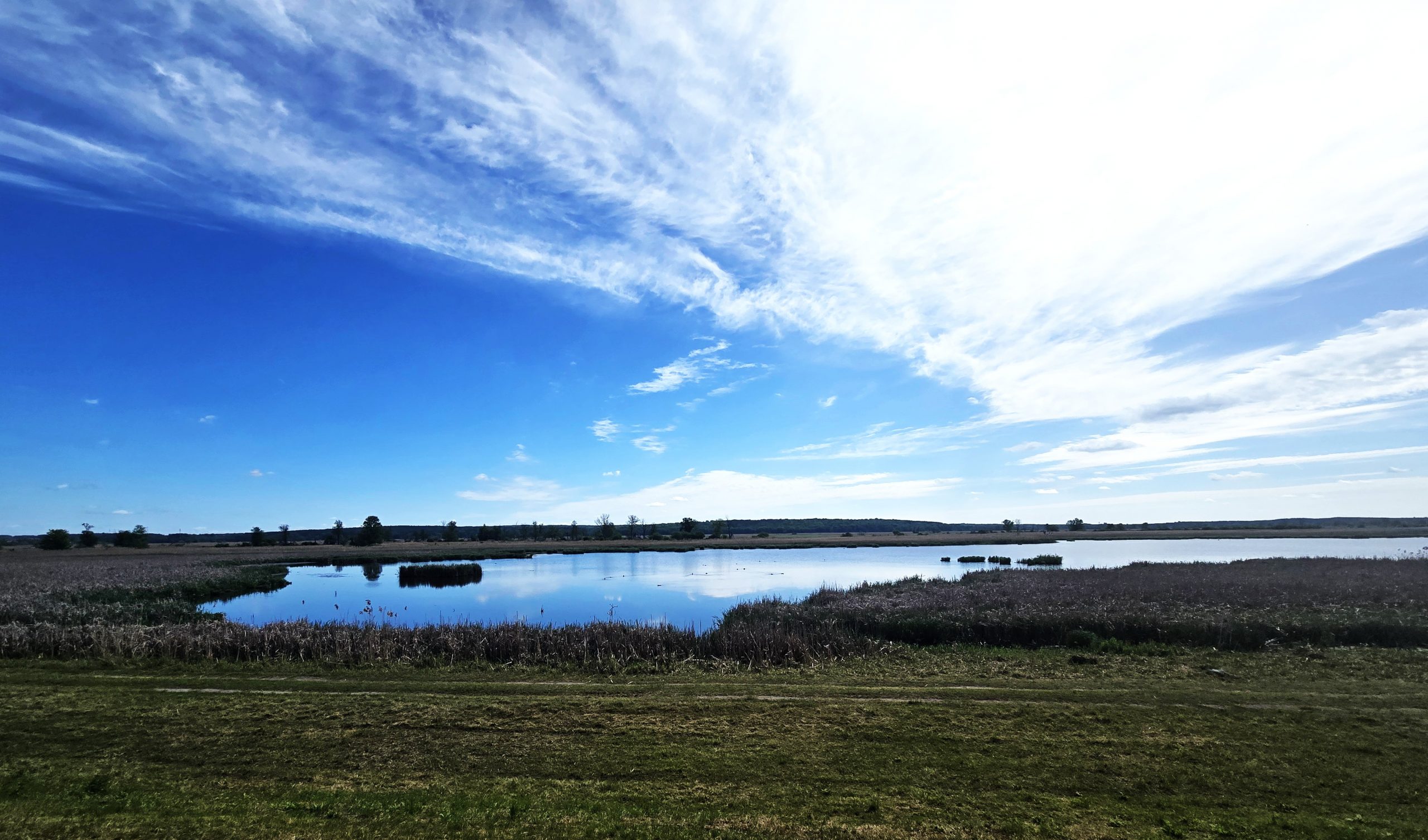
The stretch from the village of Stolzenhagen to the city of Schwedt runs along a polder — a strip of land between two dikes, originally a Dutch innovation designed for flood management. Most polders are found near the sea, but here in Brandenburg, they exist right next to the Oder River.
In this case, the first, lower dike runs along the river’s edge. A second, higher dike was built farther west. The land in between — the polder — serves an important function: it protects the villages beyond the second dike from flooding. In winter and spring, the locks in the first dike are opened, allowing water to flood the polder. In summer, when the river level drops, the locks are closed, and the land can be used for farming or grazing.
However, this area is now part of the Lower Oder Valley National Park (Nationalpark Unteres Odertal), a strictly protected environment. So, most of the agricultural activity has been phased out, and the polder — which stretches between 1-5 mi (2-8 km) wide, and around 40 mi (60 km) long — has been returned to nature.
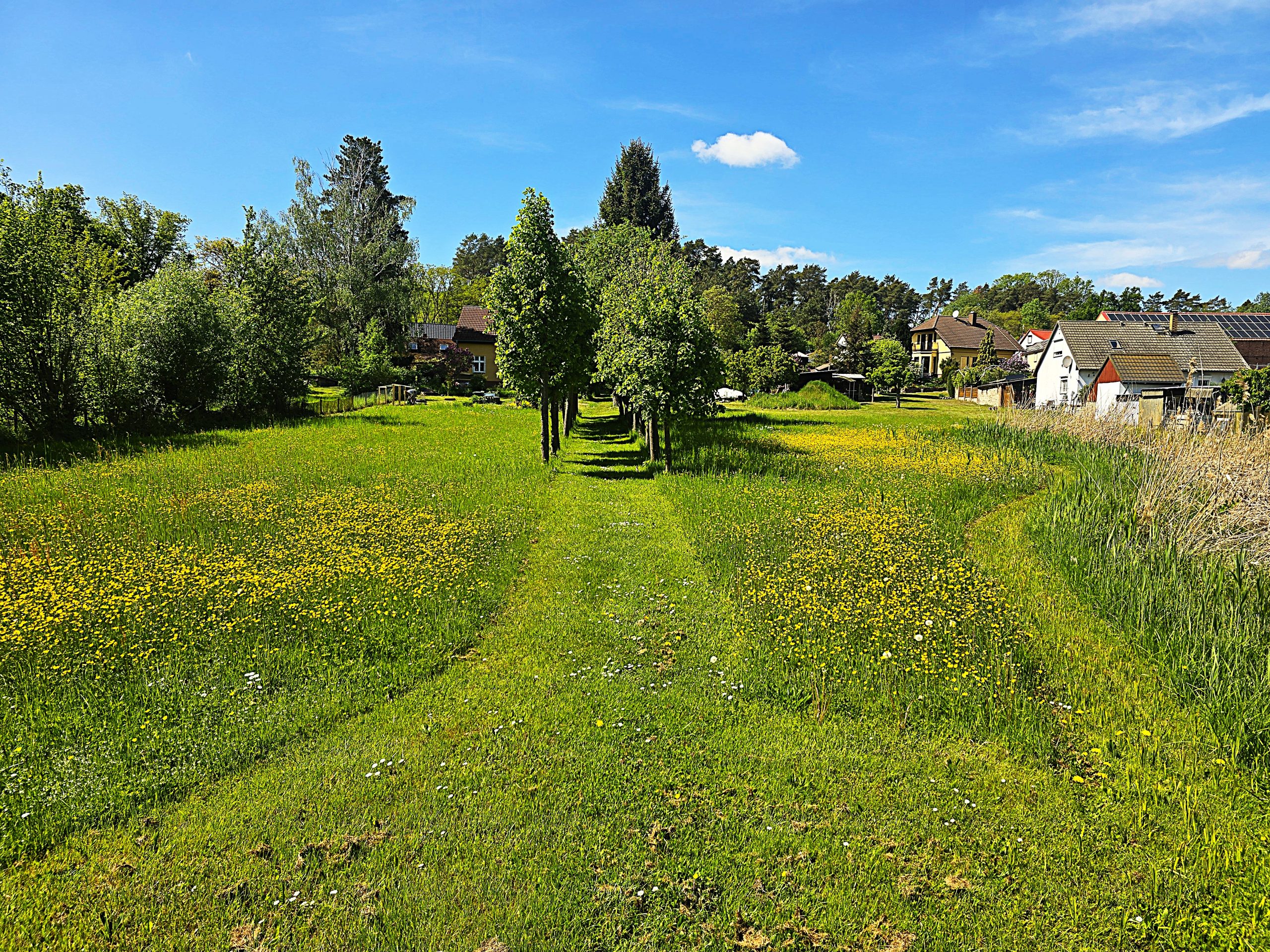
The result is a wild, untouched landscape. No one interferes; everything grows, decays, and renews itself freely. Frogs croak by the thousands, birds of every color fill the air with sound and motion. It’s a place where nature moves at its own rhythm — unhurried, undisturbed, unquestioned.
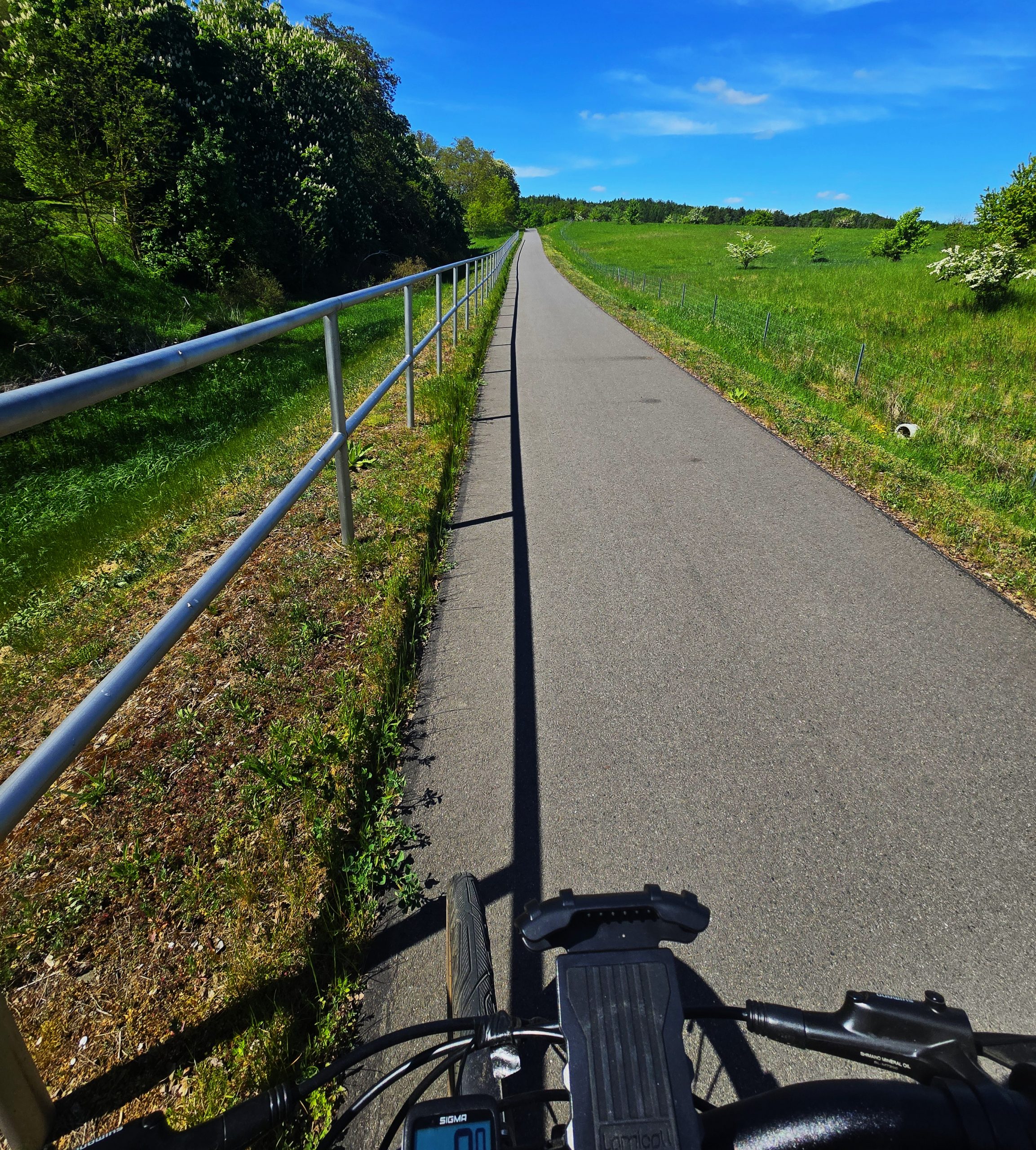
And one more thing: there’s a fantastic network of bike paths running right along the tops of the dikes.
Thank you for making me "discover" Trieste through your wonderful and balanced description your and stunning pictures. I may not…
I spent more than month in Trieste back in 2012, falling in love with its liminality. I actually toyed with…
Very interesting. Reminds me of Kurt Körber and his company. Large player in supply chain management who created a foundation…
Laurie, Thanks so much, your words are very encouraging!
Bernhard - I love your little bite sized bits of history! I’ve been to Syracuse and probably heard how it…